 Ghost Blogger
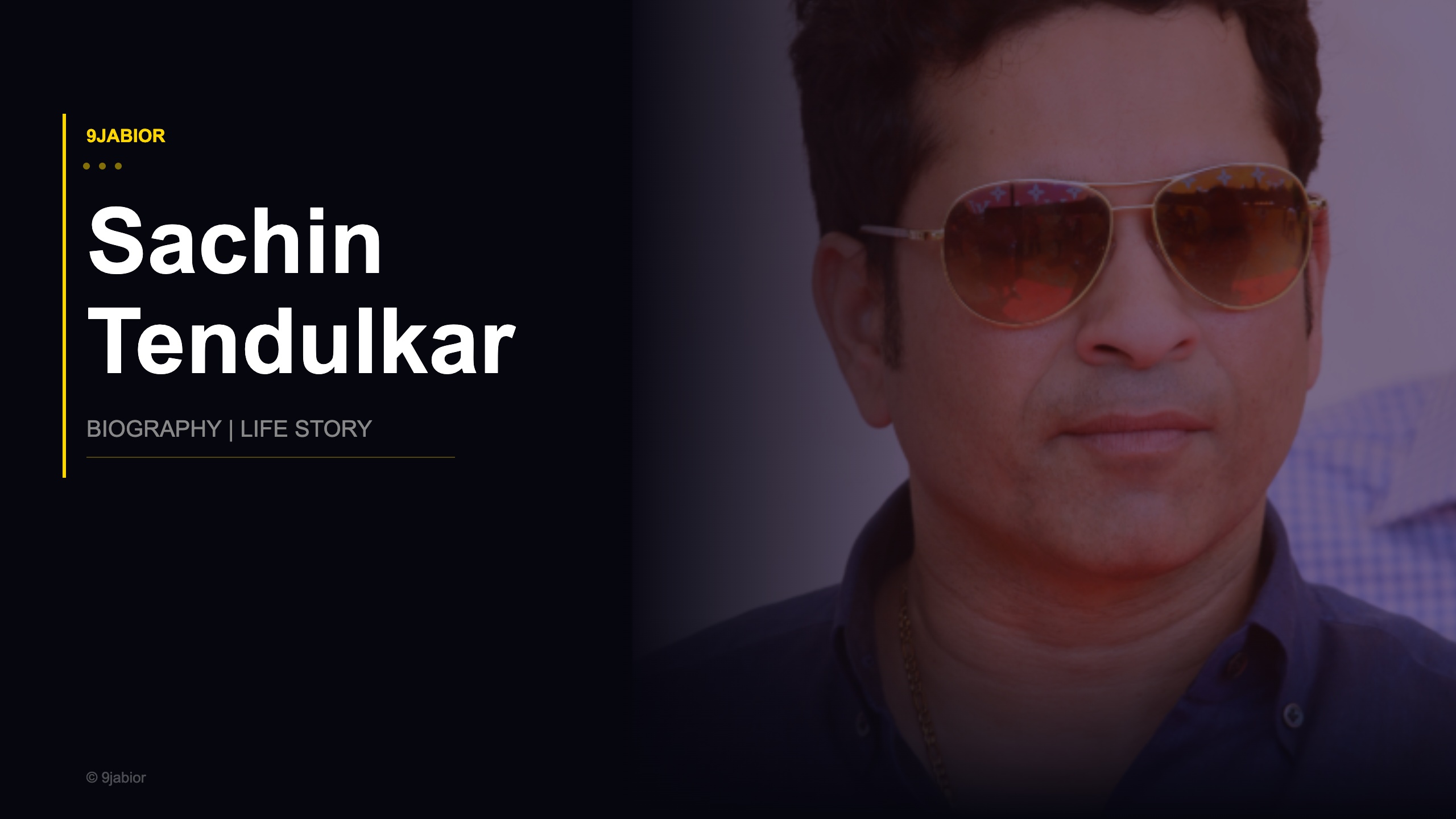
Sachin Tendulkar Biography-There’s a sentence that sums up what Sachin Tendulkar means to India better than any statistic can. Former Australian batsman Matthew Hayden once said, “I have seen God. He bats at No. 4 for India in Tests.” That’s not hyperbole. That’s just… how people feel.
Sachin Tendulkar isn’t just a cricketer. He’s a phenomenon. A religion. A shared memory that connects an entire generation of cricket fans, not just in India, but across the world. His sachin tendulkar biography reads like a movie script — a boy from a middle-class Mumbai family who picked up a bat at 11 and went on to rewrite every record book in the sport.
This isn’t just another list of his centuries and awards. This is the full story — the childhood, the struggles, the mental pressure, the records, the retirement, and the legacy. Let’s dive in.
Who Is Sachin Tendulkar? A Legend Beyond Cricket
Sachin Ramesh Tendulkar was born on April 24, 1973, in Mumbai (then called Bombay), India. He played international cricket for 24 years — from 1989 to 2013 — and by the time he retired, he had accumulated records that may never be broken.
He’s the only cricketer in history to score 100 international centuries. He’s the highest run-scorer in both Test cricket and ODIs. He played 200 Test matches — another number nobody else has reached. He scored a double century in One-Day International cricket when everyone thought it was impossible.
And yet, if you ask most Indians what makes Sachin special, they won’t start with the records. They’ll start with a feeling.
Early Life and Family Background
Born in Mumbai: The City That Shaped a Champion
Sachin grew up in the Sahitya Sahawas Cooperative Housing Society in Bandra East, Mumbai. It’s a city that never sleeps, never stops, and never lets you forget where you came from. For a young Sachin, those streets were both his playground and his first cricket ground.
His family wasn’t wealthy, but they were warm, close-knit, and deeply loving. His father, Ramesh Tendulkar, was a respected Marathi novelist and poet. His mother, Rajni, worked in the insurance industry. They weren’t a cricketing family — they were a family that supported their children’s dreams, whatever those dreams happened to be.
His Father’s Unusual Naming Story
Here’s something most people don’t know. Sachin’s father named him after his favourite music director — Sachin Dev Burman. Not after a cricketer, not after a sportsman. A music director. It’s a fun reminder that destiny doesn’t always announce itself.
He has three older siblings — half-brothers Nitin and Ajit, and half-sister Savita. His brother Ajit would later become one of the most important people in his cricket journey.
The Bully Who Became a Gentleman
Sachin’s own Wikipedia page says he was considered a bully as a young boy, often picking fights with new kids at school. He was restless, energetic, and a little rough around the edges. As a child, he was actually obsessed with tennis and idolised John McEnroe. He’d walk around with a tennis racquet, wearing wristbands and headbands. Cricket wasn’t even his first love — tennis was.
That changed when his brother Ajit stepped in.
The Turning Point: How Cricket Found Sachin
From Tennis Fanboy to Cricket Prodigy
It was Ajit Tendulkar who saw something in his younger brother that nobody else had noticed yet. Ajit took Sachin to meet Ramakant Achrekar, a legendary cricket coach at Shivaji Park in Mumbai. Sachin was 11 years old.
But there’s a twist in the story.
Meeting Ramakant Achrekar: The Coach Who Changed Everything
When Sachin first went to meet Achrekar, he was apparently so nervous that he hid behind Ajit and didn’t bat properly. Ajit went back alone later and told the coach to watch Sachin from a distance — because Sachin performed better when he didn’t know he was being observed.
Achrekar watched. And he was impressed.
That began one of the greatest coach-student relationships in sporting history. Sachin trained under Achrekar every single day, sometimes doing two sessions — before school and after school. Achrekar would place a one-rupee coin on the top of the stumps. If the bowlers got Sachin out, they’d claim the coin. If Sachin survived the session, he kept it. Sachin reportedly collected 13 such coins over the years and has called them his most prized possessions.
Rejected as a Fast Bowler — and Why That Was a Blessing
Here’s a story that most biographies either skip or mention in a single sentence: Sachin Tendulkar originally wanted to be a fast bowler. In 1987, at the age of 14, he attended the MRF Pace Foundation, which was run by none other than Dennis Lillee, the legendary Australian quick. Lillee assessed Sachin and told him, gently but clearly, that he should focus on batting instead.
It’s one of the most consequential rejections in cricket history. A different coach might have crushed a 14-year-old’s confidence. Lillee’s honesty pointed Sachin in the right direction, and the rest, as they say, rewrote history.
The World-Record School Innings That Started It All
As a 14-year-old at Sharadashram Vidyamandir, Sachin partnered with friend Vinod Kambli in a school cricket match. The two of them put together a partnership of 664 runs — a world record at the time. Sachin’s contribution? A staggering 329 runs.
Think about that for a second. A 14-year-old. In a school match. Scoring 329 runs. That partnership didn’t just win a match — it announced to Mumbai, and eventually to all of India, that something extraordinary was happening in cricket.
School Days and Domestic Cricket Career
Sharadashram Vidyamandir: The School That Produced a God
Sachin studied at Sharadashram Vidyamandir High School in Dadar, Mumbai. It’s not a fancy school. It’s a hard-working school with a proud cricket tradition, and it shaped Sachin’s discipline and love for the game.
His coach Achrekar was also connected to this school, which meant Sachin had access to serious cricket training while still doing his schoolwork. That balance — discipline in education and obsession with cricket — is a combination that would define him throughout his career.
First-Class Debut at 15: Youngest Century Scorer in Bombay History
On December 11, 1988, a 15-year-old Sachin Tendulkar scored a century on his first-class debut for Bombay against Gujarat. He became the youngest player to score a century on debut in Bombay’s cricket history. That record still stands.
Just think about the boldness that takes. First game at the senior level, against experienced adult cricketers, and he walks out and scores a hundred. Not nervously, not by scrapping and grinding — but confidently.
Serving as a Ball Boy at the 1987 World Cup
Before Sachin ever played in a World Cup, he served as a ball boy at the 1987 Cricket World Cup, specifically at the Wankhede Stadium in Mumbai during the match between India and Zimbabwe. He was 14.
Nobody on that ground that day could have imagined that the boy chasing down balls would one day lift the World Cup trophy as a player on that very same ground.
International Debut: Sixteen, Fearless, and Facing Pakistan
The 1989 Karachi Test: Waqar Younis, Blood, and Bravery
In November 1989, Sachin Tendulkar made his Test debut against Pakistan in Karachi. He was 16 years and 205 days old — India’s youngest Test cricketer at the time.
Pakistan in 1989 had one of the most fearsome bowling attacks in world cricket. Wasim Akram was already a superstar. And a young tearaway called Waqar Younis was making batsmen flinch worldwide. In the fourth Test, Waqar hit Sachin flush on the nose with a short-pitched delivery. It was a brutal blow. Blood poured from the injury.
Sachin refused to leave the field. He refused medical help. He kept batting.
That moment told the entire cricket world something important: this boy has no fear.
First International Half-Century: The World Takes Notice
Despite the tough debut, Sachin bounced back in the second match and scored his first international half-century. In a 20-over exhibition game that followed the Test series, he smashed 58 runs off just 18 balls. India took notice. The world took notice.
First Test Century at 17 — England Couldn’t Stop Him
August 1990. Old Trafford, Manchester. India were in trouble against England and desperately needed someone to dig in and save the match. Seventeen-year-old Sachin Tendulkar walked out and played an innings of 119 not out — a match-saving performance of extraordinary composure and skill.
He became the second-youngest batsman in history to score a Test century. He did it on the road. He did it under pressure. He did it like he’d been doing it for years.
The Rise of a Legend: Career Highlights Decade by Decade
The 1990s: Building a Foundation
The 1990s were Sachin’s decade of emergence. He wasn’t just promising anymore — he was essential.
First ODI Century and Opening the Batting
Sachin scored his first ODI century against Australia in 1994. That same year, he was asked to open the batting in ODIs against New Zealand — a move that changed everything. He thrived at the top of the order, giving India explosive starts and redefining what an opening batsman could do in white-ball cricket.
The Desert Storm Innings in Sharjah (1998)
If you talk to anyone who watched cricket in the late 1990s, mention Sharjah 1998 and watch their eyes light up. Australia were on tour, and the series was dominated by one player: Sachin Tendulkar.
In a defining ODI, a sandstorm interrupted play. When cricket resumed, Sachin came back out and launched one of the most ferocious counter-attacks in ODI history. He needed to score 90 runs in 46 balls to qualify India for the final — and he came within touching distance of that target, finishing with a brilliant 143. India qualified. Australia were stunned. And Sachin’s “Desert Storm” innings entered cricket folklore forever.
Sachin vs Shane Warne: The Battle of the ’90s
Shane Warne was arguably the greatest spinner who ever lived. His leg-spin bewildered every batsman in the world — except, more often than not, Sachin Tendulkar. During Australia’s 1998 tour of India, Sachin reportedly studied Warne’s action obsessively before the series, even practising against left-arm deliveries to simulate leg-spin. He then went out and scored two centuries in three Tests, taking Warne apart completely. Warne himself once said publicly that Tendulkar was the best batsman he ever bowled against.
The 2000s: Peak Sachin
First Cricketer to Score 10,000 ODI Runs
In 2001, Sachin became the first cricketer in history to reach 10,000 runs in One-Day International cricket. At the time, people thought it would be decades before anyone else got there. He got there first, and he got there fastest.
Equalling and Surpassing Don Bradman’s Test Centuries
In 2002, during a Test against the West Indies, Sachin scored his 29th Test century — equalling the legendary Don Bradman’s record. Remarkably, for that achievement, Ferrari sent him a 360 Modena through Michael Schumacher. Later that year in England, he went one better, scoring his 30th Test century at Headingley to surpass Bradman’s tally.
The greatest batsman of the 20th century’s record now belonged to Sachin Tendulkar.
The Tennis Elbow and Fighting Through Injury
Around 2004–2006, Sachin began struggling with a tennis elbow injury that would have ended many careers. He underwent surgery and came back stronger. The ability to fight through pain, to rehabilitate and return at the highest level, showed a mental and physical toughness that’s easy to overlook when you’re just scrolling through records.
The 2010s: The Final Chapter
First Double Century in ODI History (2010)
On February 24, 2010, in Gwalior, Sachin Tendulkar did something that cricket analysts had called “almost impossible.” He scored 200 not out against South Africa in an ODI. It was the first time in history any batsman had scored a double century in One-Day International cricket. So many fans visited ESPNcricinfo’s website to read about the feat that the server crashed — more than 5 million hits simultaneously.
100th International Century — The Long Wait
The wait for Sachin’s 100th international century became one of cricket’s great soap operas. After his 99th century, he went through a tortuous period, match after match, without reaching three figures in an innings. The pressure was immense — not just on him, but on the nation watching.
Finally, on March 16, 2012, against Bangladesh in the Asia Cup, Sachin Tendulkar reached his 100th international century. He became the first and only cricketer in history to reach that milestone. He dropped to his knees on the ground, overwhelmed. The entire cricket world breathed out.
2011 World Cup Win: His Greatest Moment
Ask Sachin what his greatest achievement was, and his answer is immediate: the 2011 ICC Cricket World Cup. India hadn’t won the tournament since 1983. Sachin had been chasing that trophy for over two decades. In 2011, playing on home soil, India made it to the final against Sri Lanka at the Wankhede Stadium in Mumbai.
India won.
His teammates — Virat Kohli, Yuvraj Singh, MS Dhoni — carried Sachin on their shoulders as a lap of honour around the ground. Virat Kohli famously said, “Sachin has carried the burden of the nation for 21 years. It was time we carried him.” That image — Sachin aloft on his teammates’ shoulders, the crowd roaring, tears on his face — is one of the most beautiful moments in sporting history.
200th Test Match and Retirement
On October 10, 2013, Sachin announced his retirement from all forms of cricket. His final Test series was against the West Indies. The BCCI arranged for the matches to be played at Kolkata and Mumbai — so that his farewell would happen on his home ground at Wankhede Stadium.
He played his 200th Test match in Mumbai on November 14–16, 2013. His final innings brought him 74 runs. When he was dismissed, there was barely a dry eye in the stadium. His retirement speech — delivered in Hindi and English — was emotional, personal, and deeply human. He thanked his father, his family, his coach, his teammates. He cried. The nation cried with him.
It was the end of an era that may never come again.
Sachin Tendulkar’s Batting Style: What Made Him So Special
Balance, Economy, and Precision — Explained Simply
If you’ve never watched Sachin bat and you’re trying to understand what made him different, here’s the simplest way to put it: he made batting look effortless. Not easy. Effortless.
His stance was compact and balanced. He didn’t waste movement. Every shot he played had a purpose. He didn’t slog wildly; he placed the ball. He read the bowler before the ball was bowled, anticipating what was coming. That anticipation — that ability to see the delivery before it happened — is what separated him from everyone else.
His Favourite Shot: The Straight Drive
Sachin’s straight drive is perhaps the most discussed shot in cricket. It’s pure, classical, perfectly executed. He drives the ball straight back past the bowler with minimal backlift and maximum timing. No fuss. No flourish. Just precision.
His back-foot punch — a distinctive upright hit through the off side — was also uniquely his. Nobody else quite played it the same way.
Why Even Don Bradman Said “He Bats Like Me”
Sir Donald Bradman, widely considered the greatest batsman who ever lived, was famously private in his opinions. But when it came to Sachin, he made an exception. Bradman reportedly asked his wife to watch Sachin on TV and told her, “He plays like I used to play.” Coming from Bradman, that’s not just a compliment — it’s the highest possible endorsement.
Scoring on Every Pitch, in Every Country
What truly sets Sachin apart is the geography of his runs. He didn’t just perform in India, where pitches are slower and spin-friendly. He scored big hundreds in Australia, South Africa, England, the West Indies, and Pakistan. Fast pitches, swinging pitches, seaming pitches — it didn’t matter. He adapted. He conquered.
The Captaincy Chapter: A Rare Failure
Sachin had two stints as India’s Test captain — from 1996 to 1997 and briefly again in 1999. Combined, he won just four of 25 Test matches as captain.
It’s the one chapter where most biographies get awkward, unsure whether to acknowledge it as a failure or carefully sidestep it. Let’s be honest: Sachin wasn’t a natural captain. He admitted as much himself. The enormous mental energy he gave to captaincy affected his batting form. He was a genius as a batsman, but leadership required a different kind of focus — a political, strategic, people-management focus — that didn’t come naturally to him.
He was relieved of captaincy in 1998. He returned to his natural role: the batsman India relied on above all else. And he thrived.
There’s no shame in that. Even the greatest players in the world have areas where they don’t excel. The remarkable thing is that Sachin recognised it, stepped aside, and channelled his energy back into what he did best.
Sachin’s World Records That Still Stand
Let’s put some numbers on the table.
100 International Centuries — He’s the only cricketer to ever do this. 51 in Tests, 49 in ODIs. The next closest is Ricky Ponting with 71. Sachin has 100.
34,357 International Runs — Across all formats of international cricket, nobody has scored more.
15,921 Test Runs — The most in the history of Test cricket.
18,426 ODI Runs — The most in ODI history.
200 Test Matches — The only cricketer to appear in 200 Test matches.
First ODI Double Century — 200 not out against South Africa in 2010. Possibly the most jaw-dropping single innings in limited-overs history.
Most Player of the Match Awards in International Cricket — Numbers upon numbers upon numbers.
Many of these records have stood for over a decade. Many may never fall.
Personal Life: The Man Behind the Bat
How He Met Anjali: An Airport Love Story
Sachin met his wife Anjali Mehta at Mumbai International Airport after returning from his first international tour in 1990. Anjali didn’t know who he was at the time — she had little interest in cricket. A common friend introduced them. They slowly got to know each other, and after five years of dating, they married on May 24, 1995.
Anjali was a paediatric doctor by training. She gave up her medical career to support Sachin’s cricket — a sacrifice that Sachin has publicly acknowledged and always spoken of with deep gratitude.
Together they have two children: daughter Sara (born 1997) and son Arjun (born 1999). Arjun has followed his father’s footsteps and plays professional cricket, representing Mumbai in domestic cricket.
Marriage, Family, and Being a Private Person
Despite being perhaps the most famous person in India, Sachin has always kept his family life intensely private. No scandalous tabloid stories. No controversies. He attends temples, lives close to his family, and has maintained the same humble, grounded personality that he had as a teenager.
That’s actually extraordinary. Twenty-four years of fame, wealth, and adulation — and the man remained unchanged.
His Devotion to Faith and Humility
Sachin is a deeply religious man. He’s a devotee of the Hindu spiritual teacher Sathya Sai Baba of Puttaparthi. Before every innings, he reportedly follows personal rituals and prayers. His faith, he has said, keeps him grounded.
Interestingly, he has also publicly pushed back on the “God of Cricket” title, saying clearly: “I am not the God of Cricket. I make mistakes — God doesn’t.” It’s the kind of humility that makes people love him even more.
Awards and Honours: A Trophy Cabinet Like No Other
Sachin’s awards collection reads like a very long and impressive list. Here are the highlights:
Arjuna Award (1994) — India’s second-highest sports honour.
Rajiv Gandhi Khel Ratna (1997) — India’s highest sports honour, now renamed the Major Dhyan Chand Khel Ratna Award.
Padma Shri (1999) — One of India’s top civilian awards.
Padma Vibhushan (2008) — India’s second-highest civilian award.
ICC Cricketer of the Year (2010) — Voted best cricketer in the world.
Bharat Ratna (2014) — India’s absolute highest civilian honour. Sachin became the first sportsperson in history to receive it. He was also the youngest recipient ever, at 40 years of age.
ICC Hall of Fame — Inducted as one of the game’s all-time greats.
Rajya Sabha, Member of Parliament (2012–2018) — Nominated by the President of India, becoming the first active athlete to hold that position.
UNICEF Brand Ambassador for South Asia (2013) — Appointed to advocate for children’s rights.
Life After Cricket: What Sachin Does Now
Mentoring the Next Generation
Sachin hasn’t disappeared from cricket. He’s deeply involved in nurturing young talent. He mentored Prithvi Shaw — a Mumbai batsman who showed many of the same early prodigious qualities that Sachin himself displayed as a teenager. He remains a visible presence at Mumbai Indians matches and events.
IPL Involvement and Mumbai Indians
Sachin captained Mumbai Indians in the IPL from 2008 to 2011. He remains closely associated with the franchise even after retirement, serving as a mentor and icon figure. Mumbai Indians have gone on to become the most successful franchise in IPL history — and Sachin’s DNA is all over that culture.
Brand Ambassadorships and Business Ventures
After retirement, Sachin has been associated with several brands and business ventures. He co-owns the ISL football team Kerala Blasters and has been involved in the MCC (Marylebone Cricket Club) — in 2014, he captained an MCC team in a Bicentenary Celebration match at Lord’s Cricket Ground in London.
Philanthropy: Sponsoring 200 Children Every Year
Away from the spotlight, Sachin has a big heart. Through the Mumbai-based NGO Apnalaya, he personally sponsors 200 underprivileged children annually, providing for their education and welfare. He’s also contributed to cancer research charities and various educational causes across India.
His Autobiography: “Playing It My Way”
In 2014, Sachin released his autobiography, “Playing It My Way,” co-written with Boria Majumdar. The book became a massive bestseller in India and internationally, giving cricket fans an inside look at his mindset, his greatest memories, and the emotional journey of his career. If you want to understand Sachin’s internal world — the pressure, the joy, the doubt — this book is essential reading.
Why Is Sachin Tendulkar Called the God of Cricket?
The Cultural Weight of That Title in India
In most countries, sportspeople are celebrities. In India, cricket players are something more. Cricket isn’t just a sport — it’s a national obsession, a shared language, a source of collective identity. And for two and a half decades, Sachin Tendulkar was the face of all of it.
When India played cricket, the country held its breath. And when Sachin walked out to bat, the nation stopped. Traffic thinned. offices emptied. Shops closed early. Entire streets went quiet. Streets full of people who seconds before were rushing around would suddenly gather around a TV screen or radio — waiting for what Sachin would do.
That’s not celebrity. That’s devotion.
Cricket as Religion — and Sachin as Its Deity
The saying you’ll hear in India is: “Cricket is my religion, and Sachin is my God.” That sentence originated from the fans, not from Sachin himself. It captures something real — the almost spiritual hold he had over an entire nation’s emotions.
Scoring a century meant celebrations in the streets. Getting dismissed early meant grief like a national tragedy. Millions of people tied their own emotional state to how Sachin performed on any given day. That’s an extraordinary amount of pressure for one human being to carry.
The Matthew Hayden Quote That Said It All
Matthew Hayden — himself one of the most devastating opening batsmen in history — said it with absolute seriousness: “I have seen God. He bats at No. 4 for India in Tests.” A fellow international cricketer, a giant of the game, speaking about a competitor this way. That says everything.
The Pressure No One Talks About
Most biographies skip this entirely. Let’s not.
Carrying 1 Billion Expectations on His Shoulders
India’s population in the 1990s was closing in on a billion. And essentially, all of them wanted one man — Sachin Tendulkar — to score runs every single time he played. Not 50. Not 80. A hundred. Every time.
That’s an impossible expectation. And Sachin lived with it every single day of his career for over 20 years.
He got out in the 90s 27 times during his career — agonizingly close to centuries that never came. He went through long patches without hundreds. He was criticised by fans, questioned by pundits, dropped from team selection discussions. And each time, he came back. Quietly. Humbly. Without drama.
How He Mentally Dealt With Being India’s Only Hope
In interviews, Sachin has spoken about drawing on his faith, his family, and his preparation. He believed that the process — the practice, the planning, the preparation — was what he could control. The results would follow. He leaned on Anjali, his coach Achrekar, and his teammates for support.
He didn’t crack under the pressure. That, arguably, is his greatest achievement.
Why His Humility Was More Impressive Than His Centuries
At peak fame, Sachin was offered and received Ferrari cars, presidential honours, and national awards. Massive corporations lined up to put him in advertisements. He was richer than almost any Indian sportsperson had ever been. And through all of it, he remained the same shy, gentle, faith-driven man who lived next door to his parents and collected one-rupee coins from his coach as a child.
You can teach batting technique. You can’t teach that kind of character.
Sachin Tendulkar’s Legacy and Impact on Indian Cricket
The Cricketers He Inspired: Virat Kohli, Prithvi Shaw
Virat Kohli has spoken at length about growing up watching Sachin and wanting to be him. Rohit Sharma. KL Rahul. Shubman Gill. Prithvi Shaw. Virtually every modern Indian batsman grew up either watching Sachin or was directly mentored by him. He didn’t just play cricket — he built the template for what Indian cricket could be.
How He Changed the Commercial Value of Cricket in India
Before Sachin, cricket in India was popular. After Sachin — and partly because of Sachin — it became a multi-billion-dollar industry. Broadcast rights, sponsorship deals, the IPL, franchise cricket — all of it grew exponentially during the years when Sachin Tendulkar was the face of the game.
He made cricket commercially irresistible.
Why the World Still Talks About Him
It’s been over a decade since Sachin retired. And yet, every anniversary, every World Cup, every time a young Indian batsman scores a big hundred, people bring his name up. His records still stand. His impact is still felt. And his story — a middle-class boy from Mumbai who conquered the world with a bat — still resonates because it’s a story about passion, discipline, and quiet greatness.
FAQ: Sachin Tendulkar Biography
What is the full name of Sachin Tendulkar? His full name is Sachin Ramesh Tendulkar. He was named after Sachin Dev Burman, his father’s favourite music director.
When and where was Sachin Tendulkar born? Sachin was born on April 24, 1973, in Dadar, Bombay (now Mumbai), Maharashtra, India.
How many centuries did Sachin Tendulkar score in international cricket? Sachin scored 100 international centuries — 51 in Test cricket and 49 in ODIs. He’s the only cricketer in history to reach this milestone.
When did Sachin Tendulkar retire from cricket? Sachin retired from ODI cricket in December 2012 and from all forms of international cricket on November 16, 2013, after his 200th Test match against the West Indies.
Who is Sachin Tendulkar’s wife? Sachin married Dr. Anjali Mehta on May 24, 1995. Anjali is a trained paediatrician who gave up her medical career to support Sachin’s cricketing journey. They have two children — Sara and Arjun.
What awards did Sachin Tendulkar receive? He received the Arjuna Award, Rajiv Gandhi Khel Ratna, Padma Shri, Padma Vibhushan, and the Bharat Ratna — India’s highest civilian honour. He was also inducted into the ICC Hall of Fame and served as a nominated Member of Parliament in the Rajya Sabha.
Who was Sachin Tendulkar’s childhood coach? His legendary childhood coach was Ramakant Achrekar, who trained him at Shivaji Park in Mumbai from the age of 11. Sachin has consistently credited Achrekar as the most important figure in his cricket development.
Did Sachin Tendulkar ever play T20 International cricket? Sachin played only one T20 International — against South Africa in December 2006. He scored 10 runs and never played a T20I again, choosing to focus on Tests and ODIs for the remainder of his career.
What is Sachin Tendulkar doing now? Post-retirement, Sachin is involved in sports mentorship, co-owns the Kerala Blasters ISL football franchise, supports philanthropic causes through Apnalaya NGO, and remains closely associated with Mumbai Indians in the IPL. He released his autobiography “Playing It My Way” in 2014 and continues to be an ambassador for cricket globally.
What is Sachin Tendulkar’s most memorable innings? While opinions differ, most cricket fans point to either his 175 against Australia in the 2009 CB Series, his Desert Storm innings of 143 in Sharjah in 1998, his 241 not out against Australia in 2004, or his role in the 2011 World Cup campaign as his most iconic performances.

 Ghost Blogger