 Ghost Blogger
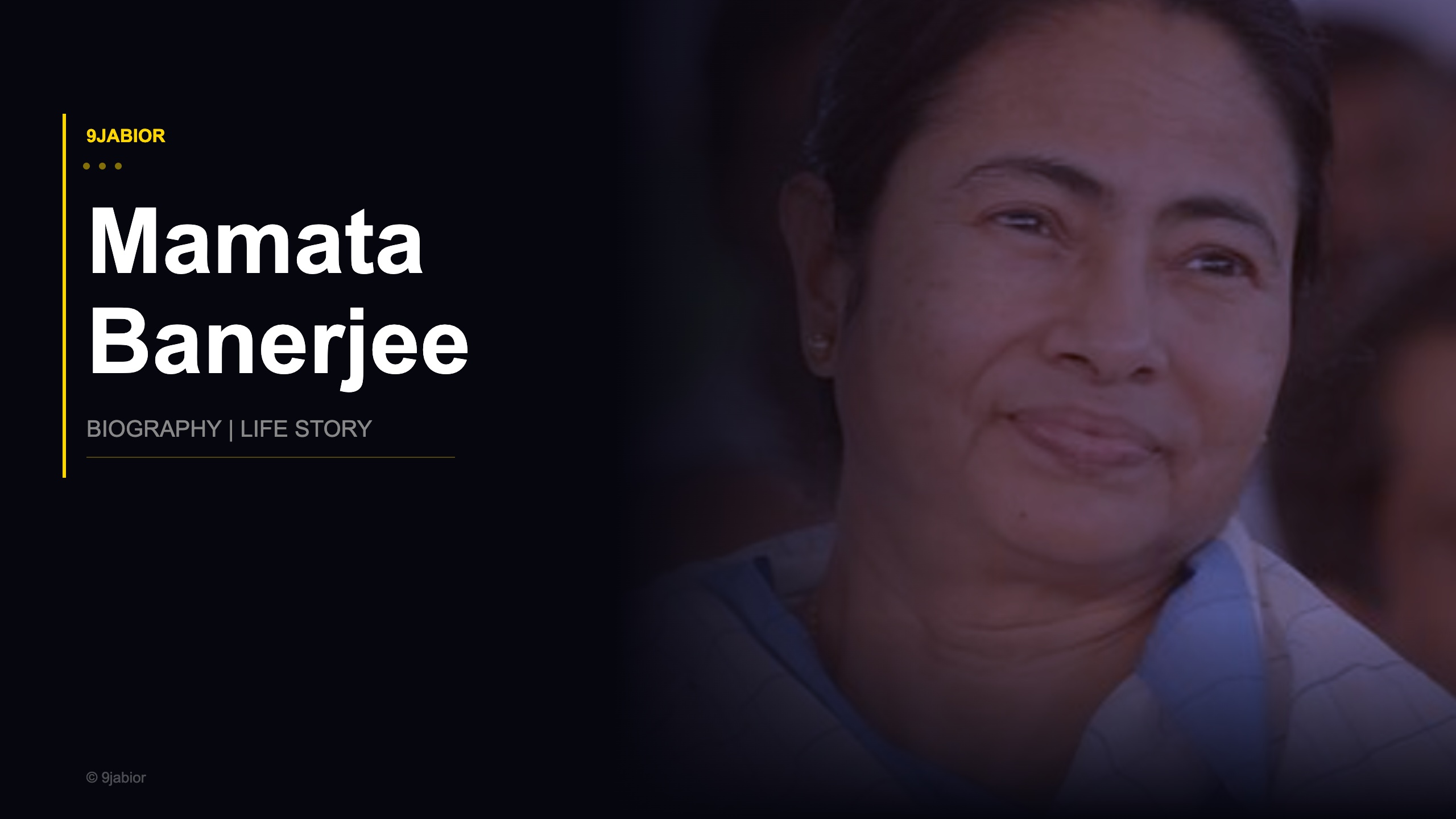
There are politicians, and then there’s Mamata Banerjee Biography. She’s the woman who walked into some of India’s most powerful offices wearing rubber slippers. She took on a communist regime that had held an entire state in its grip for 34 unbroken years — and she won. She’s written poetry, sold paintings in New York, and argued cases in the Supreme Court. And she’s done all of it while millions of people affectionately call her Didi — Bengali for “elder sister.”
If you’re looking for the full, honest, and deeply human story of Mamata Banerjee’s biography, you’re in the right place. This isn’t just a list of dates and positions. It’s the story of how a girl from a lower-middle-class neighbourhood in South Kolkata became one of the most powerful politicians in modern Indian history.
Who Exactly Is Mamata Banerjee? A Quick Overview
Mamata Banerjee was born on January 5, 1955, in Calcutta (now Kolkata), West Bengal. She is the founder and chairperson of the All India Trinamool Congress (AITC or TMC) and has served as the Chief Minister of West Bengal since May 20, 2011 — making her the first woman to hold that office. She’s currently serving her third consecutive term and is contesting for a fourth in 2026.
People call her “Didi” — and it’s not just a nickname. It reflects the relationship she’s built with ordinary Bengalis over five decades. She’s seen as approachable, fierce, and one of them.
Her political brand is summed up in three words: Maa, Maati, Manush — Mother, Land, People. Everything she’s done in politics traces back to that idea.
Early Life: Growing Up Poor in South Kolkata
Mamata grew up in a Bengali Brahmin household in the Kalighat area of South Kolkata. It wasn’t an easy life. Her family was lower-middle-class, and money was always tight. Her father, Promileswar Banerjee, was a man of principle — a freedom fighter who instilled in his daughter a deep sense of justice and a fierce love for ordinary people.
But life hit hard when Mamata was just 17 years old. Her father died — not from old age or illness in a hospital, but from the absence of proper medical treatment. The family simply couldn’t afford the care he needed. It’s the kind of loss that either breaks you or builds you. For Mamata, it built her.
That experience never left her. It’s arguably one reason why health care access became a cornerstone of her governance decades later. When you’ve watched someone you love die because they couldn’t get medical help, you don’t forget it. You do something about it.
Her mother, Gayatri Devi, stepped up as the family’s anchor. She was a schoolteacher, and she held things together with quiet strength. Mamata has often credited her mother as the person who taught her to keep standing.
Education Against the Odds: Degrees, Discipline, and Determination
Here’s something most bios gloss over: Mamata didn’t just go to school. She earned multiple degrees while simultaneously building one of India’s most active political careers. That’s not a small thing.
She completed her higher secondary education from Deshbandhu Sishu Sikshalay in 1970. From there, she went to Jogamaya Devi College, where she earned a Bachelor’s degree in History. She didn’t stop. She pursued a Master’s degree in Islamic History from the University of Calcutta. Then came a Bachelor of Education from Shri Shikshayatan College. And then a law degree from Jogesh Chandra Chaudhuri Law College in Kolkata.
Four degrees. While fighting the Left Front. While organising student unions. While losing her father and helping support her family.
To make ends meet during her student years, Mamata worked jobs that most future chief ministers don’t put on their résumé. She worked as a stenographer. She taught at a primary school. She gave private tuitions. She even worked as a salesgirl at one point. These aren’t embarrassing footnotes — they’re exactly why she understands what ordinary people’s lives feel like.
One chapter worth addressing directly: In 1984, Mamata briefly prefixed her name with “Dr,” claiming to have completed a doctorate from the University of East Georgia. When journalists and academics looked into it, the university turned out to be fictitious. She quietly dropped the “Dr” title. It’s a blemish on an otherwise impressive academic record, and it’s worth noting honestly.
Entry Into Politics: A Teenager Who Refused to Stay Silent
Mamata didn’t wait until adulthood to get involved in politics. She was 15 years old when she first engaged with student political organisations in Bengal. By the time she was studying at Jogamaya Devi College, she was already establishing Chhatra Parishad Unions — the student wing of the Congress (I) Party — and defeating rival student groups at the polls.
She rose fast. By the late 1970s, she held the position of General Secretary of the West Bengal Mahila Congress. She was working in trade unions. She was organising rallies. She was building a network at an age when most people are still figuring out what they want to be.
The year 1984 was her national debut. After the assassination of Prime Minister Indira Gandhi, Congress swept the Lok Sabha elections on a wave of sympathy votes. In Jadavpur constituency — a Left Front stronghold — Mamata Banerjee defeated the heavyweight CPI(M) candidate Somnath Chatterjee. She was 29 years old. People across Bengal raised their eyebrows. Who was this woman from Kalighat?
The then-Prime Minister Rajiv Gandhi noticed. Senior Congress leaders like Pranab Mukherjee had her name on their radar. She was young, dynamic, and completely unafraid.
The Left Front Years: Fighting a Machine That Ran Bengal for 34 Years
To understand Mamata Banerjee, you have to understand what she was up against. The Left Front — led by the Communist Party of India (Marxist) — governed West Bengal for an almost unimaginable 34 consecutive years. It was, at the time, the longest-serving democratically elected communist government in the world.
That kind of entrenched power doesn’t go down without a fight. And the Left Front didn’t fight clean.
Mamata came back fighting after losing her Jadavpur seat in the 1989 elections. She returned to Parliament in 1991 and continued to be a thorn in the Left’s side throughout the 1990s. In December 1992, she escorted a physically challenged rape survivor to Writers’ Building to present her case to Chief Minister Jyoti Basu — and was arrested and detained by police before she could even get inside. She reportedly swore that the next time she entered that building, it would be as Chief Minister. It took almost two decades, but she kept that promise.
The most defining moment of that era came on July 21, 1993. The State Youth Congress, led by Mamata, marched to Writers’ Building demanding fair voting rights. What happened that day is remembered in Bengal as a massacre. Police opened fire. Thirteen people were killed. Many more were wounded. When Chief Minister Jyoti Basu responded by saying the police had done “a good job,” the moral outrage was immense — and Mamata channelled all of it into her movement.
Every July 21st since then has been Martyrs’ Day for the Trinamool Congress. Hundreds of thousands gather in Kolkata’s Brigade Parade Ground to commemorate it. The day is still politically significant more than three decades later.
Then came 1990. During a protest, she was allegedly attacked by CPI(M) activists at Hazra Road. She was struck on the head with a stick and seriously injured. Instead of backing down, she wore the assault as a badge of what she stood for. Her supporters saw it as proof of what the Left Front was willing to do to suppress dissent.
Breaking Away: How the Trinamool Congress Was Born
By 1997, Mamata had grown deeply frustrated with the Congress party’s approach to challenging the Left in West Bengal. She felt the party wasn’t aggressive enough, wasn’t committed enough, and was too willing to compromise with the same forces she’d spent years fighting.
On December 22, 1997, she was formally expelled from the Indian National Congress. It could have ended her career. Instead, it launched the next chapter.
On January 1, 1998 — New Year’s Day — Mamata Banerjee founded the All India Trinamool Congress. The name itself was symbolic: Trinamool means “grassroots.” This wasn’t going to be a party of elites. It was going to be a party of the streets, the farmers, the workers, the ordinary Bengali.
The early years were rough. The party struggled to make inroads. They lost elections. They made and broke alliances — with the BJP, with Congress, with smaller regional parties. Critics wrote her off more than once. But Mamata doesn’t fold easily. She never has.
Maa, Maati, Manush: The Philosophy Behind the Politics
If there’s one phrase that explains everything about Mamata Banerjee’s political identity, it’s this: Maa, Maati, Manush — Mother, Land, People.
It’s not just a slogan. It’s a worldview. It means governance should serve the mother — the common woman. It means the land belongs to those who work it, not to corporations or the state. And it means that ultimately, politics is about people — not ideology, not party prestige, not national alliances.
This philosophy collided explosively with the Left Front government’s plans for Special Economic Zones in West Bengal in the mid-2000s. The government wanted to acquire agricultural land for industrialisation — including land in Singur for a proposed Tata Motors factory and land in Nandigram for a chemical SEZ.
Farmers didn’t want to give up their land. Mamata stood with them.
In 2006, she launched a hunger strike that lasted 25 days. She wasn’t sitting in a comfortable room. She was out there, on the streets, drawing national attention to what she saw as the forced displacement of Bengal’s farmers. The strike became a watershed moment. Tata Motors eventually moved its Nano plant to Gujarat. Mamata’s credibility with rural Bengal shot through the roof.
The Nandigram protests of 2007 turned even bloodier. Police and CPI(M) cadres opened fire on villagers protesting land acquisition. At least 14 people were killed. The incident shocked the nation and severely damaged the Left Front’s moral authority. Mamata’s opposition to the land acquisitions — and her willingness to put herself physically in the line of fire — cemented her as Bengal’s most credible alternative to communist rule.
Her Time at the Centre: Railway Minister, Coal Minister, and National Visibility
While Mamata was waging her war against the Left in Bengal, she was also making waves at the national level. She served as a Union Cabinet Minister multiple times under different governments — something that required constant political navigation.
She held the Railway portfolio twice — the first time in the late 1990s as part of the NDA government under Atal Bihari Vajpayee, and again after 2009 as part of the UPA under Manmohan Singh. As Railway Minister, she was notably ambitious. She introduced 19 new trains for the 2000–2001 fiscal year alone. She pushed for tourism development including additional locomotives for the historic Darjeeling Himalayan Railway. She advocated for India’s role in the Trans-Asian Railway network and proposed restoring rail links between Bangladesh and Nepal.
She also served as Minister of Coal and Mines in 2004. One of her decisions in that role was blocking the sale of the National Aluminium Company — a move that reflected her tendency to challenge corporate interests when she felt public assets were at stake.
Her relationship with coalitions was complicated. She walked out of the NDA cabinet in 2001 over corruption allegations exposed by the Tehelka sting operation. She returned in 2003. She eventually aligned with the UPA in 2009. Mamata has always been willing to use alliances tactically, but she’s never been anyone’s junior partner for long.
The Historic 2011 Victory: Ending Three Decades of Red Rule
By 2010, the winds had shifted. The Trinamool Congress was winning municipal elections in Kolkata and across West Bengal. The Left Front, after 34 years, was looking tired and out of ideas.
In the 2011 state assembly elections, Mamata ran on a single word: Poriborton — Change. It resonated. Deeply. The TMC and its allies won 227 out of 294 seats. The TMC alone won 184. The Left Front — once seemingly invincible — was routed.
On May 20, 2011, Mamata Banerjee was sworn in as Chief Minister of West Bengal. It was historic for multiple reasons. She was the first woman to hold the office. She had ended the world’s longest-running democratic communist government. And she had kept the promise she’d made to herself at Writers’ Building nearly two decades earlier.
Her first major act? Returning 400 acres of Singur farmland to the farmers it had been taken from. The symbolism was powerful.
Chief Minister, Three Times Over: Governance, Welfare, and Wins
Mamata’s tenure as Chief Minister isn’t just about political victories. It’s about a series of welfare programmes that have fundamentally changed the lives of millions of Bengalis — especially women and girls.
Kanyashree Prakalpa is probably her most celebrated scheme. Launched to reduce child marriage and keep girls in school, it provides conditional cash transfers to adolescent girls who remain unmarried and enrolled in education. The United Nations awarded it a Public Service Award in 2017. Data shows it contributed meaningfully to reducing child marriage rates in the state.
Lakshmir Bhandar provides monthly financial assistance directly to women in lower-income households. It’s been called a game-changer for women’s financial independence in rural Bengal.
Swasthya Sathi is a universal health coverage scheme that provides cashless treatment up to ₹5 lakh per family per year. It’s one of the most ambitious state-level healthcare schemes in India.
And then there’s the recognition that arrived in 2012 — a letter from the Bill & Melinda Gates Foundation praising the West Bengal government for achieving a full year without a single reported case of polio. The Foundation called it “not only a milestone for India but for the whole world.”
In 2016, the TMC came back even stronger — winning 211 out of 294 seats. In 2021, things got complicated. Several senior TMC leaders defected to the BJP. The BJP ran an aggressive campaign. Mamata herself lost her Nandigram seat to BJP’s Suvendu Adhikari by a razor-thin margin of 1,763 votes. But here’s the twist — the TMC won the state decisively, securing over 213 seats. Mamata returned as Chief Minister from the Bhabanipur by-election and continues to serve to this day.
Personal Life: The Woman Behind the White Sari
Mamata Banerjee has never married. It’s not something that happened to her — it appears to be a deliberate choice, rooted in her total commitment to public life.
Her signature appearance has become political in itself. She wears simple white cotton tant saris, rubber Hawai chappals, and no jewellery, no makeup, no designer accessories. In a political class defined by visible wealth and status, she stands out precisely because she looks like a schoolteacher or a neighbourhood auntie. She’s said publicly that she doesn’t see the point in living differently from the people she serves.
Her nephew, Abhishek Banerjee, is a Member of Parliament and one of the most influential figures in the Trinamool Congress. He’s widely seen as the party’s second-in-command. Their relationship has occasionally been a political talking point, with critics alleging nepotism, while supporters point to his genuine organisational capabilities.
In March 2024, Mamata suffered a head injury at home after slipping and hitting her head on furniture. She was hospitalised at SSKM Hospital in Kolkata. She recovered, returned to public duties, and — this being Mamata Banerjee — was back at rallies within weeks.
A 2024 report from the Association for Democratic Reforms listed her as one of the poorest Chief Ministers in India by declared assets — around ₹15 lakh in net worth. Her supporters see this as proof of her austere values. Critics argue the picture may not be complete.
The Creative Side of Didi: Poems, Paintings, and Pages
Here’s something that surprises many people who only know Mamata as a political firebrand: she’s genuinely creative. And she’s been doing it for decades, not as a PR exercise.
She’s published over 20 books in both Bengali and English. Her writing covers a range — poetry, non-fiction, political commentary. Titles like Struggle for Existence (1998) and The Slaughter of Democracy (2006) reflect the period when she was fighting hardest against the Left Front.
She’s also a self-taught painter. Not a hobbyist dabbling on weekends — she’s produced around 300 paintings. When those were auctioned, they raised approximately ₹9 crore. One painting, called Flower Power, was auctioned at a gala event in New York City in October 2010. It started with a base price of $2,500 and sold for $3,000 after five bids.
She’s composed songs in honour of the Hindu goddess Durga. She introduced Rabindra Sangeet — the music of Nobel laureate Rabindranath Tagore — to play at traffic signals across Kolkata. Whatever you think of her politics, the cultural personality is entirely real.
Controversies and Criticism: The Other Side of the Story
A full biography means being honest about the controversies. And there are real ones.
The Saradha Ponzi scam was one of the biggest financial frauds in West Bengal’s history. The Saradha Group collapsed in 2013, leaving hundreds of thousands of ordinary investors devastated. Several TMC leaders were implicated in helping facilitate the scheme or protect those running it. The fallout damaged the party’s credibility significantly.
The SSC teacher recruitment scam is another deep wound. Allegations of cash-for-jobs and manipulated merit lists in the 2016 School Service Commission process led to legal battles affecting tens of thousands of appointments. Courts intervened. People who deserved jobs lost out. It was one of the most damaging governance failures of her tenure.
In August 2024, a junior doctor was allegedly raped and murdered inside RG Kar Medical College in Kolkata. The case triggered massive protests across Bengal and nationally. Mamata’s government was criticised for its initial handling of the case — allegations of cover-ups and slow investigation tarnished her administration’s image at a sensitive time.
In January 2026, the Enforcement Directorate carried out raids related to a coal pilferage money-laundering probe, including at the offices of political consultancy I-PAC, which has ties to the TMC. Mamata visited the premises during the raids and was accused by the ED of interfering with the investigation. She denied it. The matter went to the Calcutta High Court and then the Supreme Court.
Her government has also drawn criticism over law and order, political violence, and allegations of suppressing the media. Her 2012 comment on rape — suggesting changing social norms were to blame — was widely condemned as dismissive and insensitive.
Supporters argue that much of the criticism is politically motivated, particularly during periods when the central government and opposition parties are most active against her. Critics maintain that accountability shouldn’t disappear just because the charges are inconvenient.
Both things can be true.
Awards, Recognition, and Global Visibility
Despite the controversies, Mamata Banerjee’s influence on a global scale is genuinely significant for a regional leader.
In 2012, Time magazine placed her on its list of the 100 Most Influential People in the World — a rare recognition for a state-level Indian politician. That same year, Bloomberg Markets magazine ranked her among its 50 Most Influential People in Finance, acknowledging the economic policy decisions her government was making. Forbes has featured her multiple times on its Most Powerful Women lists.
The UN recognition for Kanyashree Prakalpa in 2017 added international credibility to her governance record.
Mamata Banerjee in 2026: Still Fighting, Still Didi
As of April 2026, Mamata Banerjee is 71 years old and showing no signs of slowing down. She’s filed her nomination for the Bhabanipur constituency in the 2026 West Bengal Assembly elections, bidding for a fourth consecutive term as Chief Minister.
Her campaign has been characteristically combative. She’s accused the BJP of manipulating voter rolls, alleged that central forces tried to search her car at Kolkata airport, and declared herself the candidate “for all 294 seats.” She remains the dominant political force in West Bengal even as the BJP and Congress attempt to mount serious opposition.
Whatever happens in the 2026 elections, Mamata Banerjee has already secured her place in Indian political history. She’s not done yet — and the state of Bengal knows it.
FAQ: Everything You’ve Been Wondering About Mamata Banerjee
Who is Mamata Banerjee? Mamata Banerjee is an Indian politician and the Chief Minister of West Bengal. She’s the founder of the All India Trinamool Congress (TMC) and the first woman ever to serve as Chief Minister of West Bengal. She’s been in that role since May 2011 and is popularly called “Didi” — meaning elder sister in Bengali.
What is Mamata Banerjee’s educational qualification? She holds a Bachelor’s degree in History from Jogamaya Devi College, a Master’s degree in Islamic History from the University of Calcutta, a Bachelor of Education from Shri Shikshayatan College, and a Law degree (LLB) from Jogesh Chandra Chaudhuri Law College in Kolkata.
Is Mamata Banerjee married? No, Mamata Banerjee has never married. She has devoted her life to public service and remains single by choice.
What is Mamata Banerjee’s net worth? According to a 2024 report by the Association for Democratic Reforms, her declared assets are approximately ₹15 lakh — making her one of the poorest sitting Chief Ministers in India by declared wealth.
Who is Mamata Banerjee’s nephew? Her nephew is Abhishek Banerjee, a Member of Parliament from Diamond Harbour constituency and one of the most powerful figures in the Trinamool Congress. He’s widely considered the second-most influential leader in the party.
What party does Mamata Banerjee belong to? She founded and leads the All India Trinamool Congress (AITC or TMC), which she established on January 1, 1998, after breaking away from the Indian National Congress.
What does “Maa, Maati, Manush” mean? It translates from Bengali as “Mother, Land, People.” It’s the governing philosophy and political slogan of Mamata Banerjee, emphasising that politics must serve ordinary people, protect farmers’ land rights, and honour the dignity of common citizens.
How many times has Mamata Banerjee been Chief Minister? She has served three consecutive terms as Chief Minister — first elected in 2011, re-elected in 2016, and again in 2021. She is contesting for a fourth term in the 2026 West Bengal Assembly elections.

 Ghost Blogger
 Admin
Admin