 Ghost Blogger
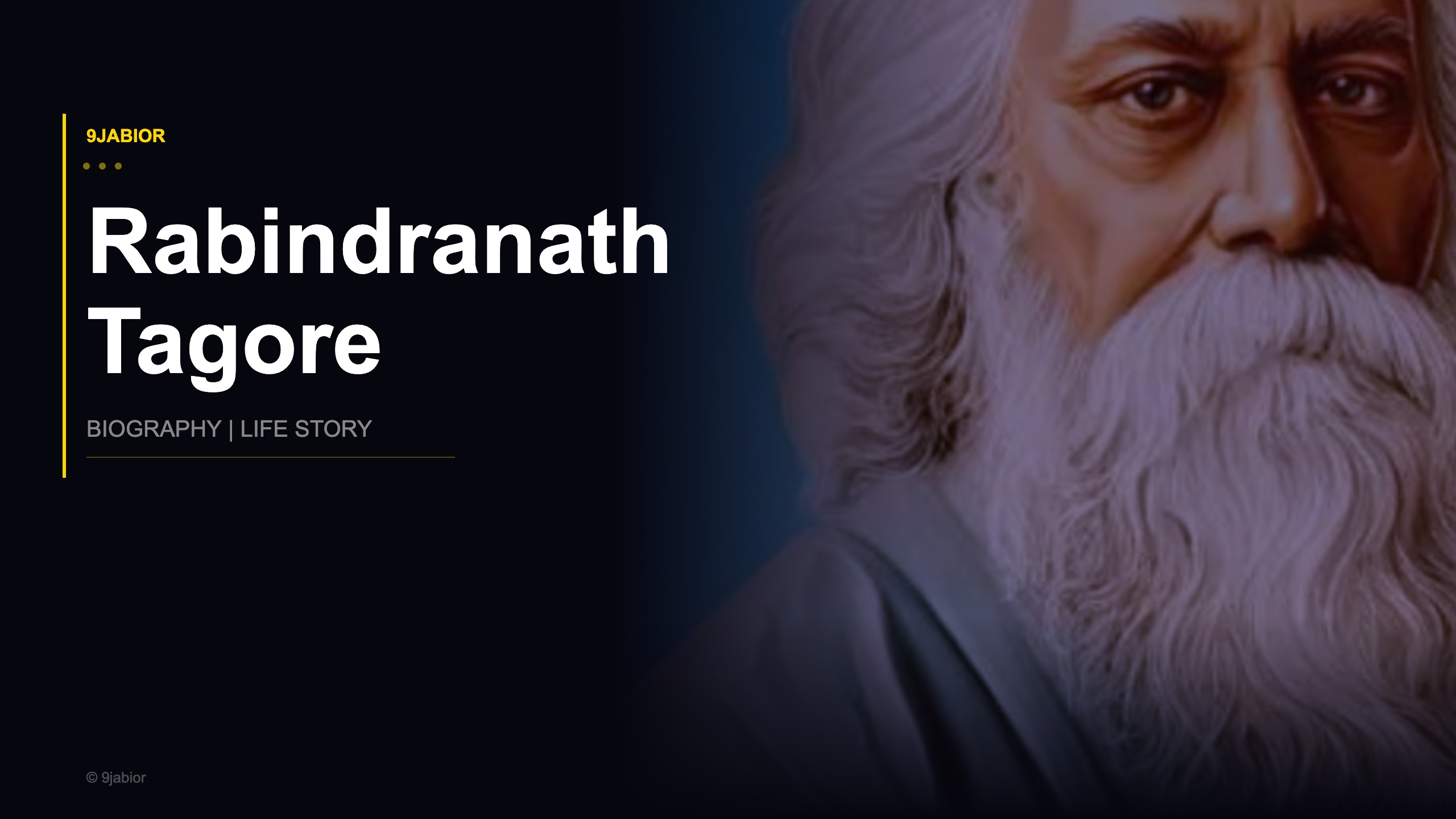
There’s something extraordinary about a person who writes the national anthem of one country — and then, decades later, a second country adopts another of his songs as its own. That’s not a coincidence. That’s the story of Rabindranath Tagore. He was a poet, philosopher, painter, musician, educator, and social reformer all rolled into one restless, brilliant human being. And yet, if you’d met him as a child, you might have written him off as just another awkward boy who couldn’t sit still in class.
This Rabindranath Tagore biography doesn’t just list dates and awards. It tells you the real story — the grief, the rebellion, the river, the Nobel Prize, and why more than 80 years after his death, people still sing his words every single morning in two different countries.
Who Was Rabindranath Tagore? (Quick-Reference Facts)
| Detail | Information |
|---|---|
| Full Name | Rabindranath Thakur (Tagore) |
| Born | May 7, 1861, Calcutta (now Kolkata), India |
| Died | August 7, 1941, Calcutta, India |
| Age at Death | 80 years |
| Pseudonym | Bhanusimha (Sun Lion) |
| Nobel Prize | Literature, 1913 |
| Notable Work | Gitanjali |
| National Anthems Written | India (Jana Gana Mana), Bangladesh (Amar Sonar Bangla) |
| Founded | Shantiniketan (1901), later Visva-Bharati University (1921) |
| Knighthood | Awarded 1915, returned 1919 |
A Childhood Shaped by Art, Grief, and Rebellion
Born Into the Tagore Dynasty of Kolkata
The house where Rabindranath was born wasn’t just any house. The Jorasanko mansion in Calcutta was essentially a cultural hub. His father, Debendranath Tagore, was a deeply respected philosopher and the leader of the Brahmo Samaj — a reformist Hindu movement that rejected idol worship and caste-based divisions and looked to the Upanishads for spiritual truth. His older brothers were artists and intellectuals. His nephews would later lead one of the most important art movements in Bengal.
Rabindranath was the youngest of fourteen children. Growing up in that household meant being surrounded by music, poetry, philosophy, and debate every single day. It also meant that genius was almost expected of you.
A Boy Who Hated School but Loved Words
Here’s the part most biographies skip over: Tagore despised formal schooling. He found it suffocating. He attended several schools in Calcutta, including the prestigious Oriental Seminary and later St. Xavier’s School, but he consistently found classrooms dull and constricting. He’d sit there, fidgeting, while his mind wandered somewhere else entirely.
What he loved, though, was writing. He was always scribbling. Letters, verses, little observations — his notebook was never far from his hand. He was shy about sharing what he wrote, but he couldn’t stop writing it either. That tension between inner richness and outer awkwardness would define much of his early life.
His First Poem at Age Eight
Tagore wrote his first poem when he was just eight years old. By the time he was sixteen, he had published a collection of poems under the pseudonym Bhanusimha, which means “Sun Lion” in Sanskrit. He chose a pen name because he wasn’t ready to claim his own voice yet. That early instinct toward anonymity is interesting for a man who would later become one of the most recognized faces in world literature.
Education That Didn’t Follow the Rules
Home Tutoring and Unconventional Learning
Most of Tagore’s real education happened at home. His father arranged tutors for him in a wide range of subjects — Bengali, Sanskrit, English, mathematics, history, science, and music. But Debendranath Tagore also took young Rabindranath on a months-long journey across India, visiting places like Amritsar and the Himalayan hill station of Dalhousie. During that trip, the boy read biographies, studied astronomy, and learned Sanskrit poetry by heart. It wasn’t school, but it was education of the deepest kind.
The England Chapter: Law School and an Early Return
At seventeen, Tagore was sent to England to study law at University College, London. It didn’t last. He attended lectures, wandered the city, soaked in English literature and theatre, and then quietly packed up and returned to India without a degree. His family was probably not thrilled. But Tagore had absorbed something important from England — not law, but an understanding of Western culture, literature, and intellectual life. He’d use that understanding for the rest of his career to build bridges between East and West.
What Tagore Really Learned From His Travels
The irony of Tagore’s education story is that the things he genuinely learned — empathy, observation, an understanding of different cultures — didn’t come from any classroom. They came from living. From being on a houseboat. From watching village life. From sitting with writers and philosophers from other countries. He was, in the truest sense, a self-taught genius.
The Years That Made Him a Writer — Estates, Rivers, and Real People
Managing the Family Estates in East Bengal
In 1891, when he was thirty, Tagore took on the responsibility of managing the family’s rural estates in East Bengal — the region that’s now Bangladesh. He spent the next decade moving between Shilaidah and Shahzadpur, dealing with tenant farmers, local disputes, and the day-to-day realities of rural life. This wasn’t glamorous. But it was transformative.
Life on the Padma River and the Birth of His Short Stories
Tagore spent a lot of that time on a houseboat on the Padma River, a branch of the Ganges. The slow pace of river life, the beauty of the Bengal countryside, the faces of ordinary people working and struggling — all of it seeped into his writing. Most of his finest short stories came from this period. They were about simple people living quiet lives, full of small joys and quiet heartbreaks. There was no grand drama — just the texture of real human experience, captured with a gentle, slightly ironic eye.
Personal Tragedies That Shaped His Most Powerful Work
Between 1902 and 1907, Tagore lost his wife Mrinalini Devi, his daughter Renuka, and his son Shamindranath — all within a few years of each other. His father died in 1905. These losses were devastating. And yet, out of that grief came some of the most spiritually rich and emotionally honest writing of his entire career. The poems that would eventually be translated and collected in Gitanjali came directly from these years of sadness. That’s worth sitting with for a moment — the work that won him the Nobel Prize was born from the worst period of his life.
Gitanjali and the Nobel Prize That Changed Everything
What Is Gitanjali and Why Did It Matter?
Gitanjali, which translates roughly to “Song Offerings,” was originally a collection of Bengali devotional poems. Tagore translated a selection of them into English prose poetry himself, and the English version was published in London in 1912. The poems are spiritual but not dogmatic. They speak to a God who feels like a companion rather than a judge. They’re full of longing, surrender, wonder, and gratitude. The language is simple. The emotion is enormous.
What made Gitanjali different from anything the Western literary world had seen before was precisely that simplicity. European poetry at the time was often ornate, complex, and self-conscious. Tagore’s translations were luminous and direct. They felt ancient and immediate at the same time.
W.B. Yeats, André Gide, and the Western World’s Reaction
It was the Irish poet W.B. Yeats who first introduced the English Gitanjali to the wider literary world. Yeats read the manuscript and was reportedly so moved that he carried it with him everywhere. He wrote the introduction to the published edition, calling the poems “written in my heart for years.” André Gide, the French Nobel laureate, was similarly captivated. These weren’t small voices — Yeats and Gide were among the most celebrated writers in Europe at the time. Their endorsement opened every door.
The First Asian Nobel Laureate in Literature — What It Really Meant
In 1913, the Swedish Academy awarded Tagore the Nobel Prize in Literature. He was the first Asian person ever to receive a Nobel Prize in any category. He was also the first non-European to win the Nobel Prize in Literature. That wasn’t just a personal achievement — it was a statement. It said that great literature didn’t only come from Europe. It said the rest of the world had stories worth hearing.
For India and Bengal in particular, the Nobel Prize felt like a vindication. At a time when British colonial rule constantly implied that Indian civilization was inferior, here was a European institution — the most prestigious literary prize in the world — saying the opposite.
Shantiniketan — A School Built on a Completely Different Idea
Why Tagore Rejected Traditional Education
Tagore knew from personal experience how deadening conventional schools could be. He’d sat through those rigid, rote-learning classes as a child. He’d watched how quickly they crushed curiosity. So when he founded his own school in 1901 at Shantiniketan — a place whose name means “Abode of Peace” in Bengali — he did things entirely differently.
How Shantiniketan Classes Actually Worked
Classes at Shantiniketan were held outdoors, under trees. There were no rigid rows of desks. Music, art, and movement were core parts of the curriculum, not extras. Tagore believed that children learned best when they were in direct contact with nature, when their creativity was encouraged rather than suppressed, and when they were treated as whole people rather than empty vessels to be filled with information.
He also mixed Indian and Western educational traditions — Sanskrit and Bengali literature sat alongside European science and philosophy. The school drew teachers and students from across the world, and it became a genuinely international space at a time when that was a radical idea.
From Ashram to Visva-Bharati University
In 1921, Shantiniketan was formally established as Visva-Bharati University. The name means “where the world meets in a nest” — and that was exactly the vision. Tagore spent the last decades of his life fund-raising for the university, lecturing around the world partly to bring money back to Shantiniketan. Today, Visva-Bharati is a central university under the Government of India, and it still carries Tagore’s educational philosophy at its heart.
Tagore’s Literary Universe — Beyond Just Poetry
Poetry Collections That Redefined Bengali Verse
Tagore published more than fifty volumes of poetry during his lifetime. His major collections include Manasi (1890), which marked his coming-of-age as a poet and introduced new verse forms to Bengali literature; Sonar Tari (1894), or The Golden Boat, which is considered one of his most emotionally complex works; Gitanjali (1910), the Bengali original that preceded the famous English translation; Balaka (1916), or The Flight of Cranes, which shows a more dynamic, urgent voice; and Gitimalya (1914), another devotional collection rich with spiritual imagery.
Each of these collections pushed Bengali poetry into new territory. Tagore wasn’t just writing in the tradition — he was constantly remaking it.
Novels That Explored Identity, Love, and Politics
Tagore’s novels are less celebrated than his poetry, but they’re remarkable. Gora (1910) is perhaps the most politically complex — it follows a man who discovers that his fierce Hindu nationalism was built on a mistaken identity, and it challenges ideas about religion, caste, and what it means to be Indian. Ghare-Baire (1916), or The Home and the World, deals with nationalism, love, and personal integrity in the context of the Swadeshi movement. It was later adapted into a film by Satyajit Ray. Chokher Bali (1903) was groundbreaking in its exploration of desire and female identity.
These aren’t light reads. They’re novels that ask hard questions and don’t always provide comfortable answers.
Plays That Were Ahead of Their Time
Tagore wrote dozens of plays across his lifetime. Some are symbolic and almost dreamlike, like Dakghar (The Post Office), which tells the story of a sick child waiting for a letter from a king he’ll never meet. It was performed in Warsaw during the Nazi occupation of Poland in 1942 — the year after Tagore’s death — because the children performing it, most of whom would not survive the war, found something true in its themes of waiting, hope, and acceptance.
That’s the kind of resonance Tagore’s work has.
Over 2,000 Songs — The World of Rabindrasangit
One of the most underappreciated aspects of Tagore’s genius is his music. He composed more than 2,000 songs — a body of work so large and so distinctive that it has its own name: Rabindrasangit, which simply means “Tagore’s songs.” These songs draw on classical Hindustani music, Bengali folk traditions, Baul music, and Western influences, blending them into something entirely new.
In Bengal — both in West Bengal, India and in Bangladesh — Rabindrasangit is not background music. It’s woven into everyday life, into celebrations and mourning, into the fabric of cultural identity. People who’ve never read a word of Tagore’s poetry know his songs by heart.
Tagore the Painter — An Artist Who Started at Sixty
In his sixties, Tagore picked up a paintbrush for the first time. He’d been creating visual art informally for years — doodling, turning crossed-out words in manuscripts into strange, expressive creatures. But serious painting came late. And it was extraordinary.
His visual style was unlike anything else in Indian art at the time. He was self-taught, he was color-blind (likely to red and green), and he had no formal technique. What he had was an instinct for form and expression that produced deeply arresting, often unsettling images — hybrid creatures, distorted faces, mysterious landscapes bathed in strange light. He held exhibitions across Europe, and critics took him seriously. Tagore’s art isn’t a footnote to his biography. It’s another dimension of the same restless, searching imagination.
Tagore’s Philosophy in Plain Language
The Religion of Man — What He Actually Believed
Tagore wasn’t conventionally religious. He was raised in the Brahmo Samaj, which rejected ritual and idol worship in favor of a more personal, rational relationship with the divine. But Tagore went further even than that. He developed what he called the “Religion of Man” — the idea that the divine is not separate from humanity but is realized through human connection, love, creativity, and empathy.
In simpler terms: for Tagore, the sacred wasn’t in temples. It was in relationships. In beauty. In the act of creation. God, for him, was something you encountered in another person’s kindness or in the sight of the Padma River at dawn.
His View on Nature, Spirituality, and Human Connection
Tagore believed deeply in the interconnectedness of all things. His spirituality was ecological before ecology was a word people used in that way. Nature wasn’t a backdrop for human drama — it was a participant in it. Rain, rivers, seasons, the turning of light — these appear throughout his poetry not as decoration but as living presences. His philosophy was one of relationship: between people, between people and nature, between cultures, between the individual and the infinite.
Tagore, Gandhi, and the Colonial Struggle
Friends With a Complicated Bond
Tagore and Gandhi had enormous mutual respect. Gandhi gave Tagore the title “Gurudev,” meaning “teacher of teachers,” and Tagore supported the independence movement. But they weren’t always in agreement. Tagore was uncomfortable with Gandhi’s emphasis on spinning khadi cloth as a symbol of nationalist identity — he thought it was too narrow, too focused on a single act rather than on broader human flourishing. He worried that nationalism, if it became too intense, could become as dangerous as colonialism. It was a genuine intellectual disagreement between two giants, and it shows the sophistication of both men that they could hold it without destroying their friendship.
Why Tagore Returned His Knighthood After Jallianwala Bagh
On April 13, 1919, British troops under General Dyer fired on a peaceful gathering of unarmed civilians in Amritsar’s Jallianwala Bagh — killing hundreds of people. The massacre shocked India and the world. Tagore had been awarded a knighthood by the British government in 1915. Now, in 1919, he wrote to the Viceroy of India and gave it back. His letter was direct and dignified. He said he didn’t want a title that connected him to a government capable of such an act. It was one of the most principled gestures of public protest in colonial India’s history.
Tagore’s Unique Brand of Nationalism — Why He Wasn’t Exactly a Nationalist
Here’s something that surprises many people: Tagore was deeply skeptical of nationalism as an ideology. He loved India. He loved Bengal. He fought for Indian dignity and independence. But he was afraid of the kind of nationalism that becomes exclusionary, that draws hard lines between “us” and “them.” He wrote essays arguing that blind patriotism could be just as destructive as colonial rule. He believed in a world where cultures met and enriched each other — not one where they retreated into separate fortresses. His vision was internationalist, humanist, and ahead of its time.
Two National Anthems and a Global Legacy
Jana Gana Mana — India’s Anthem
Tagore wrote the poem “Bharoto Bhagyo Bidhata” in Bengali in 1911. The first verse of this poem was adopted as India’s national anthem, Jana Gana Mana, after independence in 1950. It translates roughly as “Thou Art the Ruler of the Minds of All People.” It’s a meditation on the unity of India’s diverse geography and peoples — fitting for a man who spent his life thinking about connection.
Amar Sonar Bangla — Bangladesh’s Anthem
Tagore wrote “Amar Sonar Bangla” — “My Golden Bengal” — in 1905 during the period of the Partition of Bengal, a British administrative decision that divided the region and sparked enormous protest. When Bangladesh declared independence in 1971, thirty years after Tagore’s death, they chose this song as their national anthem. He wrote it in protest of division. It became the anthem of a new nation born from division. There’s something quietly moving about that.
Sri Lanka’s Connection to Tagore
Sri Lanka’s national anthem, “Sri Lanka Matha,” was reportedly inspired by Tagore’s own style and approach. Tagore visited Sri Lanka in 1933, and his influence on the island’s cultural and literary life ran deep.
Why Rabindranath Tagore Still Matters Today
It would be easy to treat Tagore as a historical monument — impressive, distant, and settled into his plaque. But that’s not what he is. His ideas about education are more relevant now than ever, at a time when students everywhere are asking why school feels so disconnected from real life. His warnings about nationalism sound urgent in a world where borders are hardening again. His philosophy of human connection speaks directly to a moment when loneliness is being called an epidemic.
And his art — the poetry, the music, the paintings, the novels — isn’t gathering dust. Rabindrasangit is still sung at weddings and funerals in Bengal. His novels still get adapted into films. His quotes still show up in speeches and essays around the world because they capture something true in a way that’s hard to improve upon.
Tagore once wrote that love is “the ultimate meaning of everything around us.” That’s not a historical sentiment. That’s a living one.
Frequently Asked Questions About Rabindranath Tagore
What is Rabindranath Tagore most famous for? Tagore is most famous for winning the Nobel Prize in Literature in 1913 for his poetry collection Gitanjali. He’s also celebrated for writing the national anthems of both India and Bangladesh, founding Shantiniketan (now Visva-Bharati University), and composing more than 2,000 songs known as Rabindrasangit.
Why did Tagore win the Nobel Prize? The Swedish Academy awarded Tagore the 1913 Nobel Prize in Literature for his English translation of Gitanjali — a collection of devotional poems that the Academy described as “profoundly sensitive, fresh and beautiful.” It was the first time the prize went to anyone from Asia.
Why did Tagore return his knighthood? Tagore returned his British knighthood in 1919 as a direct protest against the Jallianwala Bagh Massacre in Amritsar, in which British troops killed hundreds of unarmed civilians. He felt he could not hold a royal honor from a government responsible for such an act.
What is Gitanjali about? Gitanjali is a collection of devotional poems exploring themes of spiritual longing, surrender to the divine, gratitude, and the relationship between the human soul and God. Unlike religious texts, the poems feel personal and conversational — almost like love letters to a presence that is everywhere and just out of reach.
Did Tagore write India’s national anthem? Yes. The Hindi version of India’s national anthem, Jana Gana Mana, comes from a Bengali poem Tagore wrote in 1911. The first verse was officially adopted as the national anthem of India after independence in 1950.
What was Tagore’s educational philosophy? Tagore believed that children should learn in harmony with nature, with creativity and curiosity at the center of education rather than rote memorization and rigid discipline. His school at Shantiniketan held outdoor classes, integrated arts into all subjects, and drew on both Indian and Western traditions.
What is Rabindrasangit? Rabindrasangit (Tagore’s songs) refers to the more than 2,000 songs composed by Tagore during his lifetime. Drawing on classical Indian music, Bengali folk music, and Western influences, these songs have a unique style and remain deeply important to Bengali cultural identity in both India and Bangladesh.
How did Tagore’s personal tragedies influence his work? Between 1902 and 1907, Tagore lost his wife, a daughter, a son, and his father. This intense period of grief pushed his writing into deeper emotional and spiritual territory. The poems from this era became the foundation of the Gitanjali collection that won him the Nobel Prize — making personal loss one of the most generative forces in literary history.

 Ghost Blogger
 Admin
Admin