 Ghost Blogger
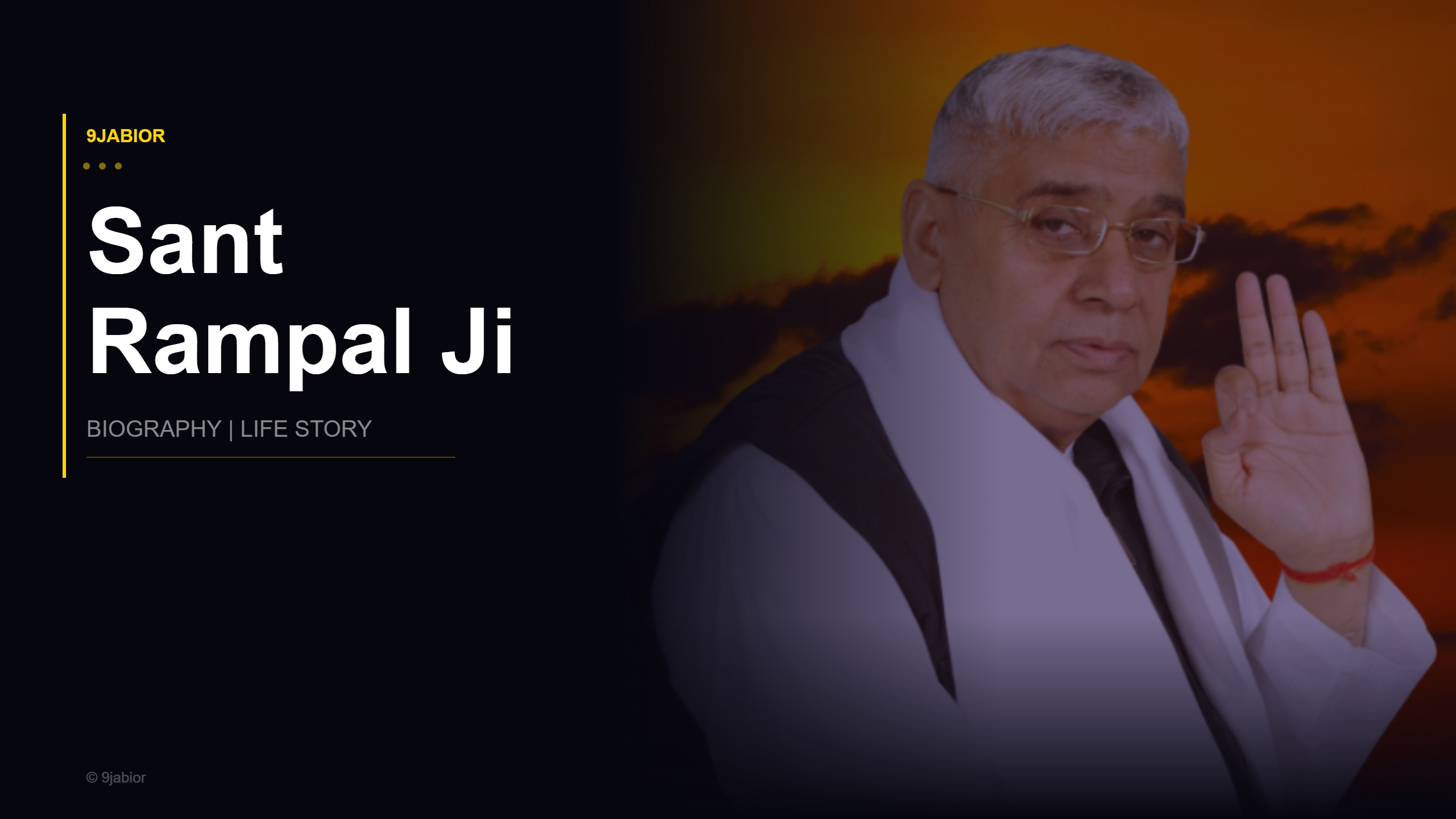
If you’ve searched for Sant Rampal Ji biography, you’ve probably come across two very different pictures of the same man. His followers describe him as the only true saint alive today — a divinely guided teacher who has transformed millions of lives. Others, including India’s legal system at various points, have viewed him as a controversial figure whose movement led to deadly clashes. So who exactly is Sant Rampal Ji Maharaj?
This biography gives you a complete, honest, and readable account — covering his humble birth in Haryana, his years as a government engineer, his dramatic spiritual transformation, the founding of Satlok Ashram, his core teachings, the legal battles that defined his public image, and where things stand today in April 2026.
Who Is Sant Rampal Ji Maharaj?
Full Name, Birth Date, and Hometown
Sant Rampal Ji’s full birth name is Rampal Singh Jatain. He was born on September 8, 1951, in Dhanana village, located in the Gohana tehsil of Sonipat district, Haryana, India. His followers commonly address him as “Sant Rampal Ji Maharaj,” “Jagatguru Rampal Ji,” or “Tatvdarshi Sant Rampal Ji.”
His father, Bhakt Nandlal, was a farmer. His mother, Indro Devi, was a housewife. It was a typical rural Haryana household — modest, rooted in agrarian life, and shaped by traditional Hindu customs.
Family Background and Early Childhood
Rampal grew up in the fields and lanes of Dhanana, absorbing the rhythms of farming life. He’s described by those who knew him as a disciplined, compassionate child with an unusually strong pull toward spirituality. Even as a young boy, he took religious practices seriously — visiting temples, observing fasts, and immersing himself in devotional rituals. He’s married to Anaro Devi, and together they have two sons and two daughters.
Early Life and Education
Growing Up in Rural Haryana
Life in a small Haryana village in the 1950s and 60s meant hard work, community life, and deep religious tradition. Rampal Singh grew up surrounded by that. He completed his matriculation, which gave him a solid academic base. His childhood wasn’t extraordinary on the surface — no miraculous signs or religious visions are recorded from those early years. He was simply a devout young man trying to find meaning through conventional worship.
Engineering Diploma and Government Job
After completing his schooling, Rampal Singh pursued a diploma in engineering. That qualification opened the door to one of the most secure career paths available in rural India at the time — a government post. He was appointed as a Junior Engineer in the Haryana Irrigation Department, where he would go on to serve for approximately 18 years. It was a stable, respected career. And yet, underneath it all, something kept pulling at him.
The Spiritual Turning Point
Early Religious Devotion and Inner Restlessness
Long before he ever became a public figure, Rampal Singh was a deeply sincere religious seeker. He was a committed devotee of several Hindu deities — Hanuman Ji, Lord Vishnu, Shri Krishna, and Khatu Shyam Ji. He recited the Hanuman Chalisa seven times daily. He made pilgrimages to the Salasar Balaji temple in Rajasthan. He did everything a faithful Hindu devotee would do.
But despite all that effort, he says he never found what he was looking for. The peace, the liberation, the direct connection with God — it just wasn’t there. That inner restlessness set the stage for the most defining encounter of his life.
Meeting Swami Ramdevanand Ji Maharaj
At some point during his working years, Rampal Singh came across Swami Ramdevanand Ji Maharaj — an elderly saint from the Garib Das Panth, a spiritual lineage rooted in the Kabir Panth tradition. The Garib Das Panth takes its name from Sant Garibdas Ji Maharaj, an 18th-century mystic poet from Haryana who is said to have received direct spiritual knowledge from Kabir Saheb.
Swami Ramdevanand Ji was well into his advanced years — described as a 107-year-old saint by some followers’ accounts. What he told Rampal Singh was simple but radical: the traditional religious practices most people follow aren’t the path to salvation. True liberation, he explained, comes only through the authentic worship of the Supreme God, Kabir Saheb, through a living true saint.
That conversation changed everything.
Naam Diksha on February 17, 1988 — What Is Bodh Diwas?
On February 17, 1988, on the night of Amaavasya (new moon), Rampal Singh formally received Naam Diksha from Swami Ramdevanand Ji. He was 37 years old. In the Santmat tradition, the initiation day is considered the devotee’s spiritual birthday — a moment of spiritual rebirth more significant than one’s physical birth. Among his followers, this date is commemorated every year as Bodh Diwas, the Day of Enlightenment.
This initiation marked the beginning of his formal spiritual path. From this point forward, Rampal Singh’s internal world had shifted completely.
From Engineer to Spiritual Leader
Starting Satsangs in 1993 on Guru’s Orders
For several years after his initiation in 1988, Rampal Singh continued living his dual life — government engineer by day, spiritual seeker in his personal hours. Then in 1993, Swami Ramdevanand Ji directed him to begin conducting satsangs, the spiritual discourses through which seekers learn about true worship. He started going from village to village and city to city across Haryana, sharing the knowledge he’d received from his guru.
The response was significant. People were listening. Families were attending. A following was quietly forming.
Becoming Successor and Beginning Naam Diksha in 1994
In 1994, Swami Ramdevanand Ji made a formal and consequential decision. He selected Rampal Singh as his spiritual successor and authorised him to begin giving Naam Diksha to seekers — essentially passing on the right to initiate others into the spiritual path. This was a significant responsibility within the Kabir Panth tradition, and it meant that Rampal Singh was now expected to guide others, not just study himself.
From 1994 to 1998, he traveled extensively, conducting satsangs across villages, towns, and cities in Haryana and beyond. His following grew steadily during those years.
Resigning from His Government Job in 1995
By 1995, the demands of his spiritual mission had become impossible to balance with a full-time government posting. After 18 years of service in the Haryana Irrigation Department, Rampal Singh formally submitted his resignation. The resignation was eventually accepted by the Haryana Government, officially recorded under letter no. 3492-3500, dated May 16, 2000.
It was a bold move — walking away from the security of a government job in India isn’t taken lightly. But for him, the spiritual path had become the only path worth walking.
The Founding of Satlok Ashram
Establishment in Karontha, Rohtak in 1999
In 1999, Sant Rampal Ji established his first Satlok Ashram in Karontha, Rohtak district, Haryana. The word “Satlok” in the Kabir Panth tradition refers to the “true realm” or eternal abode — the highest spiritual destination a soul can reach. The name itself signals the mission: to guide souls toward liberation.
The ashram was inaugurated with a seven-day continuous satsang running from June 1 to June 7, 1999, marking the manifestation day of Supreme God Kabir Ji. Monthly three-day satsangs on full moon days (Purnima) followed. Soon, devotees were traveling from distant places to attend. Hundreds of thousands of followers reportedly embraced the teachings within a short span of time.
Expansion Across India and Internationally
From that one ashram in Karontha, the movement grew. Additional Satlok Ashrams were established across multiple Indian states — with centers eventually operating across Haryana, Punjab, Uttar Pradesh, Rajasthan, Maharashtra, and West Bengal. International expansion followed, reaching countries including the USA, Canada, the UK, Belgium, the Netherlands, Australia, Fiji, and parts of the Middle East and Far East. His organization has also established over 500 Naam Diksha centers across India and abroad.
Core Teachings of Sant Rampal Ji Maharaj
Who Is the Supreme God According to His Teachings?
At the heart of Sant Rampal Ji’s spiritual system is a radical theological claim: the Supreme God of all creation is Kabir Saheb. This isn’t a metaphorical or poetic statement in his tradition — it’s a literal, scripture-backed assertion. He draws on the Vedas, the Bhagavad Gita, the Quran, the Bible, the Guru Granth Sahib, and Puranic texts to argue that Kabir Saheb, who appeared in Kashi in the 15th century, is the Almighty Creator himself.
He teaches that Brahm (also called Kaal or Jyoti Niranjan) governs 21 universes and is the father of the Hindu trinity — Brahma, Vishnu, and Shiva. But Brahm itself is the son of Kabir Saheb, who governs infinite universes. Seekers who worship only the trinity, he argues, remain trapped in the cycle of birth and death (84 lakh yonis). True liberation requires worshipping the Supreme — Kabir Saheb — through proper initiation.
What Is Naam Diksha and How Does It Work?
Naam Diksha, or Naam Updesh, is the formal initiation ceremony through which a seeker receives sacred mantras from the guru. In Sant Rampal Ji’s tradition, initiation happens in three stages — corresponding to Pratham Naam, Satnaam, and Saarnaam. Each stage represents a deeper level of spiritual access. The final mantras, he teaches, are the true keys to liberation that unlock the path to Satlok, the eternal abode.
He cites the Bhagavad Gita Chapter 17, Verse 23 — “Om Tat Sat” — as the scriptural basis for these three stages of initiation. Without this three-part mantra system, he teaches, salvation isn’t achievable regardless of how many rituals or prayers one performs.
Religious Reforms He Stands For
Sant Rampal Ji has consistently taken controversial positions within mainstream religious practice. His teachings explicitly prohibit several common Hindu practices: idol worship, pilgrimages, the worship of ancestors (pitras), fasting for religious reasons, shraadhs (death anniversary rituals), and the worship of multiple gods and goddesses. He views all of these as baseless deviations from what the scriptures actually say.
Social Reforms and the Fight Against Superstition
His reform agenda extends well beyond theology. His followers are strictly prohibited from consuming alcohol, smoking, using drugs, eating meat, or consuming eggs. He has campaigned strongly against the dowry system — in his community, giving or receiving dowry is categorically forbidden. He’s also spoken against female foeticide, child marriage, and caste discrimination. His ashrams operate free food programs (langar) open to everyone, regardless of caste, religion, or wealth.
The 2006 Arya Samaj Controversy
What Was the Objection to Satyarth Prakash?
In 2006, Sant Rampal Ji publicly raised objections to specific passages in Satyarth Prakash, the central religious text of the Arya Samaj movement, written by 19th-century reformer Maharishi Dayanand Saraswati. He called certain portions of the text “impractical and anti-social,” arguing they contradicted Vedic scripture. He encouraged readers to compare the cited passages with the actual Vedic texts themselves.
For Arya Samaj followers, this was deeply provocative. The text is foundational to their tradition, and its public criticism by an increasingly popular saint sparked serious backlash.
The July 2006 Clash and Its Aftermath
On July 12, 2006, a large confrontation broke out between Arya Samaj followers and Sant Rampal Ji’s supporters near the Karontha Ashram. One Arya Samaj follower was shot dead in the violence, and 59 more people were injured. The incident was chaotic and deadly, and the fallout was immediate.
Sant Rampal Ji was charged with murder and attempted murder. A forgery complaint was also filed in connection with land sale documents for the ashram — a complaint that was later dismissed in May 2018, when the court acquitted him and found three complainants guilty of fraud instead.
Arrest and 21 Months in Jail
Following the 2006 clashes, Sant Rampal Ji was arrested and spent 21 months in jail before being released on bail in 2008. His followers consistently maintained that he was falsely implicated and demanded a CBI investigation. After his release, he re-established his base in Barwala, Hisar, where the next major chapter of his story would unfold.
The 2014 Siege of Satlok Ashram
Why Did Authorities Try to Arrest Him Again?
After his 2008 release on bail, Sant Rampal Ji stopped appearing regularly in court for his ongoing murder trial. Between 2010 and 2014, he skipped court hearings at least 42 times. In 2014, the Punjab and Haryana High Court issued non-bailable warrants against him in a contempt of court case. When authorities attempted to enforce the arrest in November 2014, the situation spiraled into a full-scale standoff.
The Week-Long Standoff — A Timeline
When police arrived at the Barwala Satlok Ashram to detain him on November 9, 2014, they were met by tens of thousands of his followers who had formed human chains and barricaded the entrances. Women devotees blocked the main gates for several days. Followers wielded lathis and flags reading “SatSaheb.” The police announced that the electricity and essential supplies to the ashram had been cut off. More than 20,000 security personnel and police eventually forced their way in, using earth movers to break through rear walls. Six people were killed during the week-long crisis, including women. Dozens of police personnel were injured. Media crews were also caught in the clashes. Sant Rampal Ji was eventually found inside the ashram and arrested, then transferred to Chandigarh for trial.
Arrests, Charges, and Life Imprisonment (2018)
The charges against him were serious: wrong confinement, murder, sedition, and arms act violations. A total of 14 criminal cases were eventually registered. In 2018, he and 26 of his followers were convicted of murder by the Hisar Session Court and sentenced to life imprisonment for the six deaths during the 2014 siege. It was a defining moment for both his supporters and critics.
Legal Journey — From Conviction to Bail
Acquittal in the 2006 Case (December 2022)
Six years after the life sentence, on December 20, 2022, the District Court in Rohtak acquitted Sant Rampal Ji of all charges related to the 2006 Arya Samaj clashes. His followers celebrated the verdict as proof that he had been falsely implicated. By the time of this acquittal, out of the 14 total cases registered against him, he had been cleared in 11.
Sentence Suspension in 2025
In August 2025, a significant legal shift occurred — his life sentence was suspended by the Punjab and Haryana High Court. This didn’t mean he was fully free, but it was a major step in his ongoing legal battle. Sentences in two related FIRs (429 and 430) were suspended, which his supporters viewed as further vindication.
Bail Granted in April 2026 — Latest Update
On April 9, 2026, in a major development, the Punjab and Haryana High Court granted bail to Sant Rampal Ji in FIR No. 428 — a sedition case registered on November 18, 2014, at Barwala Police Station, Hisar. This case involved nearly 1,000 individuals, most of whom had already been granted bail. The case number heard was CRM-M-57908-2025. His followers view this as the latest marker in a long arc of legal vindication, calling it a “triumph of truth.”
Humanitarian Work and Social Impact
The Annapurna Initiative
One of the most notable social welfare efforts associated with Sant Rampal Ji’s organization is the Annapurna Initiative — a hunger-relief campaign that provides free, lifelong dry ration to poor and marginalized families. Items distributed include flour, rice, pulses, oil, and spices. The program operates continuously through the Satlok Ashram network.
Flood Relief, Blood Donation, and Free Food Camps
During the Haryana-Punjab floods, his organization distributed heavy-duty pumping equipment — including industrial pipes and motors — to drain floodwater from agricultural fields in over 400 villages. The intervention reportedly prevented significant crop loss and helped communities return to normalcy faster than local authorities could manage alone. His ashrams also regularly organize blood donation camps, eye check-up camps, and free medical clinics.
Awards Received in 2025–2026
Recognition for these efforts has come from local community organizations. In December 2025, he was honored with the Kisan Jeevan Rakshak Award by the Julana Barah and Sarpanch Association of Block Julana. On January 1, 2026, he received the Jan Sevak Ratna Award from the Sarpanch Association, Hansi Block. On January 4, 2026, the Kisan Gaurav Samman (Farmer Pride Award) was conferred in Rohtak. These awards specifically recognized his flood-relief and farmer-welfare work.
Global Following and International Presence
How Many Followers Does Sant Rampal Ji Have?
Follower numbers vary widely depending on the source. His official websites claim approximately 15 crore (150 million) disciples in India and a following exceeding 10 million globally. These figures are self-reported and can’t be independently verified, but his movement is undeniably large. Large annual gatherings at Satlok Ashrams routinely draw hundreds of thousands of people.
Naam Diksha Centers Around the World
His organization has established over 500 Naam Diksha centers across India, offering spiritual initiation to seekers who can’t physically travel to an ashram. Internationally, active communities of followers have formed in the USA, Canada, the UK, Belgium, the Netherlands, Australia, Fiji, and parts of the Middle East and Far East. Followers in these countries participate in satsangs, receive initiation, and engage in scriptural study — often through digital platforms.
Frequently Asked Questions About Sant Rampal Ji
What is Sant Rampal Ji’s real name?
His birth name is Rampal Singh Jatain. He was born on September 8, 1951, in Dhanana village, Sonipat district, Haryana. “Sant Rampal Ji Maharaj” is the title his followers use to address him.
Who is Sant Rampal Ji’s wife?
Sant Rampal Ji is married to Anaro Devi. Together they have two sons and two daughters. His family lived at the Barwala Satlok Ashram prior to the 2014 siege.
What happened during the 2014 siege?
In November 2014, police attempted to arrest Sant Rampal Ji on contempt of court charges. His followers blocked the Barwala Satlok Ashram for nearly a week. Six people were killed, dozens were injured, and Sant Rampal Ji was eventually arrested and transferred to Chandigarh. In 2018, he and 26 followers were sentenced to life imprisonment for the deaths.
Is Sant Rampal Ji still in jail?
As of April 2026, his legal situation has significantly evolved. His life sentence was suspended in 2025. He was acquitted in the 2006 case in December 2022. Most recently, on April 9, 2026, the Punjab and Haryana High Court granted him bail in a sedition case. The full extent of his legal freedom continues to develop.
What does Sant Rampal Ji actually teach?
His core teaching is that Kabir Saheb is the Supreme God of all creation, as evidenced across the Vedas, Gita, Quran, and Bible. He teaches that salvation is only possible through a three-stage Naam Diksha (initiation) from a living true saint. He opposes idol worship, pilgrimages, fasting, and most conventional religious rituals, calling them deviations from scriptural truth.
Who was Swami Ramdevanand Ji?
Swami Ramdevanand Ji Maharaj was an elderly saint from the Garib Das Panth — a sect within the broader Kabir Panth tradition. He is credited with initiating Sant Rampal Ji in 1988 and appointing him as his spiritual successor in 1994. Sant Rampal Ji traces his spiritual lineage directly through Swami Ramdevanand Ji back to Kabir Saheb.
What is the Satlok Ashram?
Satlok Ashram is the name of the network of spiritual centers established by Sant Rampal Ji’s organization. The first was founded in Karontha, Rohtak, in 1999. The word “Satlok” refers to the eternal divine realm in the Kabir Panth cosmology. The ashrams serve as venues for satsangs, initiation ceremonies, free meals, medical camps, and humanitarian activities.
How many Satlok Ashrams are there?
His organization operates multiple Satlok Ashrams across India — with major centers in Haryana, Punjab, Uttar Pradesh, Rajasthan, and other states — plus over 500 Naam Diksha centers domestically and abroad. The international centers span countries from the UK to Australia.


 Ghost Blogger

 Admin
Admin