 Ghost Blogger
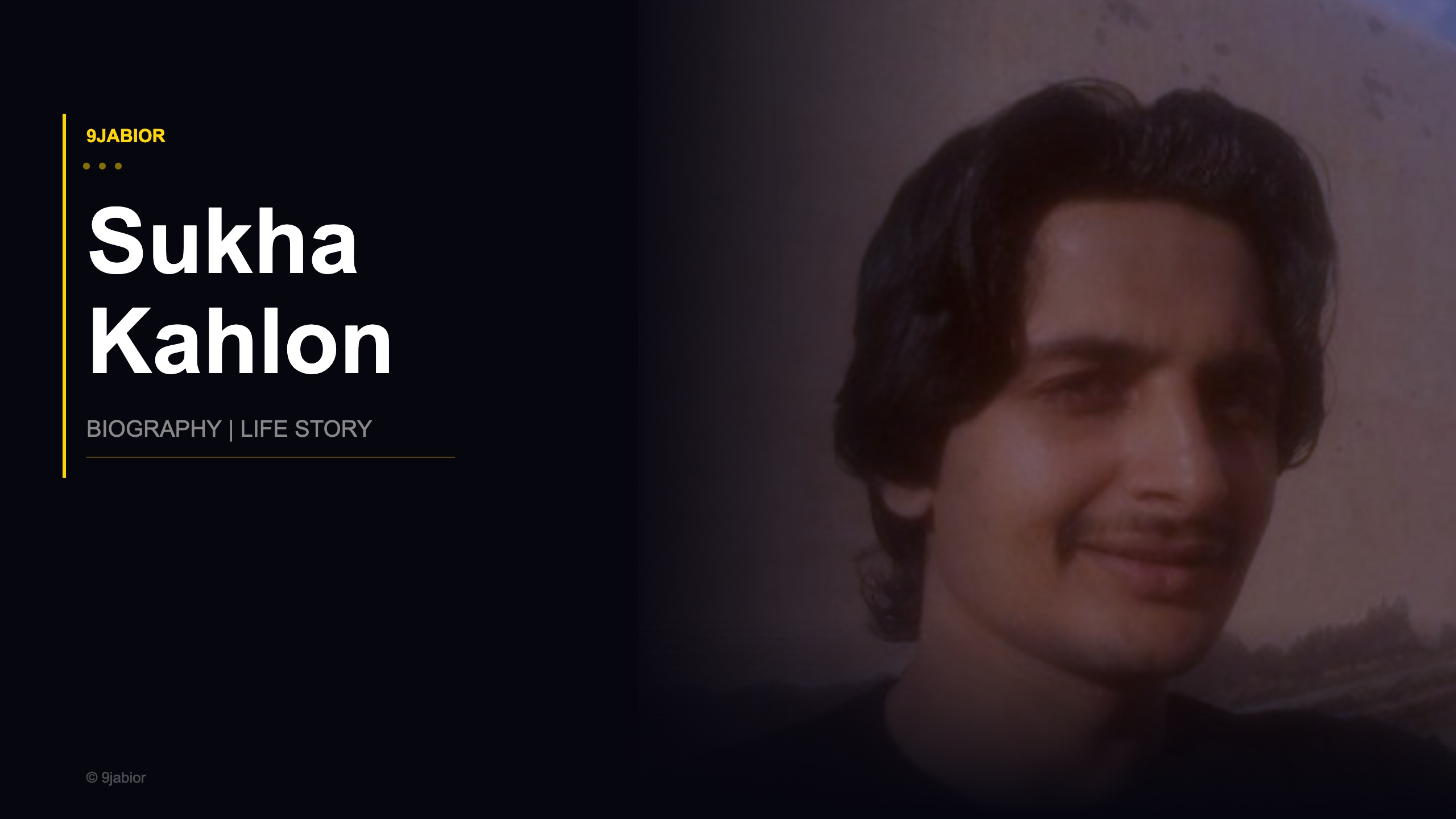
There’s a name in Punjab that still sparks debate, fascination, and genuine fear — even a decade after the man himself is gone. Sukha Kahlon biography searches spike every time someone mentions his name in conversation, every time the Shooter movie comes up, and every time a new young person from Punjab stumbles across old photos of a confident, heavy-armed young man staring down the camera like the world owed him something.
Who was he, really? A ruthless criminal? A product of a broken system? A cautionary tale? Or something far more complicated than any of those labels?
This is the full story.
Who Was Sukha Kahlon? A Quick Overview
Real Name, Date of Birth, and Where He Came From
His full name was Sukhbir Singh Kahlwan — or Sukhvir Singh Kahlwan, depending on the source. The world knew him simply as Sukha Kahlon. He was born on June 21, 1987, in the village of Kahlwan in Kapurthala district, Punjab, India. By the time he was in his twenties, his name was registered in criminal cases across Punjab, Haryana, Himachal Pradesh, Rajasthan, and West Bengal. He died at just 28 years old on January 20, 2015, shot more than a hundred times on a public highway while police officers stood nearby.
Why He’s Still Talked About a Decade After His Death
Most gangsters are forgotten quickly. Sukha Kahlon wasn’t. Part of the reason is the Punjabi film Shooter, based on his life. Part of it is the sheer drama of how he died. But a bigger reason is the uncomfortable truth that thousands of young people in Punjab looked at him and didn’t see a monster — they saw someone fearless, someone bold, someone who refused to be invisible. That’s a mirror nobody wants to look into. And that’s exactly why his story still matters.
The Village That Shaped Him — Growing Up in Kahlwan
Family Background and Early Childhood
Kahlwan is a small village about 22 kilometres from Jalandhar. It’s quiet, agricultural, connected to centuries of Punjabi history. Sukha’s father, Sudarshan Singh, was a businessman who spent most of his time working abroad. His mother, Harjinder Kaur, was a homemaker who managed the household in her husband’s absence. By most accounts, they were a respectable, financially stable Jatt Sikh family. They weren’t struggling. They weren’t desperate. That’s what makes Sukha’s story more confusing — and more tragic — than people expect.
He also had a brother, Sonu Kahlwan. Old photographs show the family looking ordinary, like thousands of other Punjabi families with one parent abroad and a mother holding everything together at home.
His Father’s Absence and a Home Without Guidance
Here’s something that doesn’t get said enough: Sukha’s criminal path almost certainly had roots in the absence of consistent parental structure. His father was abroad. His mother was present but overwhelmed. That combination — money without supervision, a village environment with peer pressure, and nobody watching closely enough — is a recipe that’s created countless troubled young men across rural Punjab.
It doesn’t excuse anything. But it explains a lot.
School Days, Bad Grades, and the First Wrong Turn
Sukha enrolled in a local government senior secondary school in Kahlwan. He wasn’t interested in studying — that much everyone agrees on. He’d get into fights with classmates. He’d skip classes. He didn’t graduate. By his early teens, he was spending more time with a rough crowd than with textbooks. Drugs and alcohol entered the picture around the same time. It was a slide, not a jump — one bad choice at a time, until the choices became a lifestyle.
How Sukha Kahlon Became a Gangster — The Road to Crime
The Teenage Years That Changed Everything
Around the year 2000, Sukha’s name started appearing in police records. He was barely a teenager. The crimes started small — local fights, petty offences — but they escalated fast. By the time he was 19, he’d formally joined a local criminal gang and committed his first serious crimes. The transition from troubled schoolboy to feared gangster didn’t happen overnight, but looking back, every step seems almost inevitable.
Punjab’s Drug Culture and How It Pulled Young Men In
Punjab in the early 2000s was in the grip of a drug crisis that’s now well-documented but was barely discussed back then. Heroin, synthetic drugs, and alcohol were flooding through villages and towns. Young men with few opportunities, absent fathers, and too much time found themselves pulled in. Drug use blurred into crime, crime blurred into gang culture, and gang culture had its own brutal logic — once you were in, leaving wasn’t straightforward.
Sukha’s early drug use wasn’t unusual for his environment. What was unusual was the direction it pushed him — not into quiet addiction, but into violence.
The First Gang and the First Criminal Case
By 2000, Sukha was associating with figures who would define Punjab’s criminal underworld for the next fifteen years. His name was appearing in police station records not just in Kapurthala but across multiple districts. Each case added to his file. Each escape from consequences — or each arrest and release — built his reputation. In the criminal world, a thick police file doesn’t make you a liability. It makes you someone to be reckoned with.
Sukha Kahlon’s Criminal Career — Crimes, Gangs, and Infamy
The Sharpshooter Nickname and What It Really Meant
Sukha earned the nickname “Sharp Shooter” because of exactly what it sounds like — his accuracy with firearms was genuinely exceptional. In a world where most criminal violence is messy and panicked, a calm, precise shooter stands out. That skill became his identity, his calling card, and the reason rival gangs both wanted him as an ally and feared him as an enemy.
He wasn’t just a hired gun. He was someone who took pride in precision. That’s disturbing, yes. But it’s also part of what made him legendary in the circles he moved in.
Over 60 Criminal Cases Across Four States
The numbers are staggering. By the time of his death, Sukha Kahlon had criminal cases registered against him in Punjab, Haryana, Himachal Pradesh, Rajasthan, and West Bengal. Some accounts say 40 cases. Others say over 60. The crimes included murder, attempted murder, armed robbery, extortion, carjacking, and gang warfare. He wasn’t a small-time local thug with a few scrapes — he was one of the most active criminal operators in northern India during a fifteen-year stretch.
His Gang Network — Allies, Associates, and Dangerous Friendships
Sukha didn’t operate alone. He was connected to some of the most dangerous figures in Punjab’s underworld. His known associates included Diljeet Bhana — his closest friend — along with Jaggu Bhagwanpuria, Preet Phagwara, Sonu Kangla, and figures from the Bishnoi gang network including Lawrence Bishnoi and Anmol Bishnoi. These weren’t just criminal acquaintances. They were a web of alliances, loyalties, and mutual protection that gave each person in the network a kind of collective power.
What’s rarely discussed is how these alliances worked. You didn’t just join because you wanted to. You joined because the alternative — being unaligned in that world — was more dangerous than being connected.
The Vicky Gounder Rivalry — How a Feud Turned Fatal
Sukha’s most dangerous enemy was Harjinder Singh Bhullar, known as Vicky Gounder. The origins of their rivalry aren’t fully documented in public records, but it escalated into a full-scale gang war that claimed lives on both sides. In Punjab’s criminal underworld at the time, rival gang conflicts weren’t abstract — they were personal, they were public, and they were deadly.
It was Vicky Gounder who ultimately gave the order that ended Sukha’s life. That much is certain. What’s less certain is exactly what sparked a feud so intense that Gounder’s men celebrated their kill by dancing in the street in front of police officers.
The Australia Chapter — A Gangster’s Failed Fresh Start
Marriage, Migration, and a Life as a Cab Driver
In 2008, something unexpected happened. Sukha Kahlon got married — a private ceremony, his wife’s identity never publicly confirmed — and the couple left India for Australia. Some accounts say he went on a student visa. Others suggest a work or residency arrangement. Either way, the story that follows is quietly remarkable: one of Punjab’s most active gangsters was working as a cab driver in Australia, trying to build something ordinary.
It’s hard to know what he was thinking during that period. Was it genuine reform? Was it a strategic retreat? Was his wife’s influence the reason he tried? Nobody who was there has spoken on record.
Why the Escape to Australia Didn’t Last
The marriage deteriorated. By December 2014, Sukha had divorced his wife. Some sources say he was deported from Australia after criminal activity there. Others suggest the divorce came first and the return to India followed naturally. What’s clear is that by the time he came back to Punjab, the fresh-start experiment was over. He slipped back into the same circles, the same lifestyle, and the same enemies who’d been waiting.
Deported and Pulled Back Into Darkness
The Australia chapter is the part of Sukha Kahlon’s story that gets the least attention — and it might be the most human part of all. It suggests that somewhere in him, there was a desire for something different. He just couldn’t hold onto it. Whether that’s a failure of character or a failure of circumstances — or both — is something each person has to decide for themselves.
Sukha Kahlon and Social Media — Punjab’s First Digital Gangster
How He Built a Following While Behind Bars
This is one of the most extraordinary parts of Sukha Kahlon’s story: he was active on Facebook with thousands of followers even while in prison. In 2013, his page reportedly had over 16,000 followers. He’d post photos of himself — sometimes with weapons, sometimes with friends — and comment on his criminal rivals and the police with total fearlessness.
It’s bizarre by any measure. A man in custody, posting on social media, threatening people publicly. And yet thousands followed, liked, and commented.
Threatening Rivals and Taunting Police Online
The Facebook posts weren’t just lifestyle flexes. They were operational. He’d use the platform to send messages to rivals — subtle and not-so-subtle threats. He’d respond to news about himself with corrections or bravado. He turned social media into a tool for maintaining power and reputation even when he was physically locked away.
In 2019, the Bambiha gang used a similar Facebook approach to threaten the cast of the Shooter film — and that energy arguably traced back to the culture Sukha had helped create.
What His Facebook Fame Says About Youth Culture in Punjab
Here’s the uncomfortable truth: people don’t follow something they don’t find compelling. Sukha’s social media popularity reflects something real about the aspirations and frustrations of a section of Punjab’s youth. When legitimate paths to success feel blocked — when education leads nowhere, when jobs are scarce, when migration is expensive — a man who lives boldly and dies on his own terms starts to look like something other than a criminal. That’s not a justification. It’s an explanation that Punjab’s policymakers still haven’t fully reckoned with.
Arrest, Custody, and the Final Days
The Howrah Arrest in 2012
In November 2012, Punjab Police arrested Sukha Kahlon in Howrah, West Bengal. It was a significant catch — he’d been evading authorities across multiple states. He was placed in a high-security wing of a Punjab prison, the kind of facility designed for exactly this type of high-profile, high-risk criminal.
Life Inside a High-Security Punjab Prison
Being locked up didn’t slow Sukha down the way authorities may have hoped. His social media presence continued. His gang connections stayed intact. His enemies were patient, watching, and waiting. Prison, in his world, wasn’t the end of the story. It was just a different stage.
The Enemies Waiting for Their Moment
The Vicky Gounder faction had a specific reason to want Sukha dead while he was in custody. In the open, Sukha was dangerous and unpredictable. In police custody, being transported between prison and court, he was vulnerable in a very specific, controllable way. His enemies knew the court dates. They knew the routes. They planned carefully.
The Death of Sukha Kahlon — What Really Happened on January 20, 2015
The Ambush on the Highway Near Phagwara
On January 20, 2015, Sukha Kahlon was being transported by police from Nabha Jail to appear in court. The route passed through National Highway 1 near Phagwara, close to a village called Chachoki. That’s where Vicky Gounder’s gang was waiting.
The attack was swift and organized. Fourteen to fifteen armed men stopped the police vehicle and opened fire on Sukha. He was killed on the spot.
More Than 100 Bullets and a Dance in the Street
Over 100 bullets were fired — some accounts say considerably more. The level of firepower wasn’t just about making sure he was dead. It was a message. And as if to underline that message, the attackers celebrated openly — dancing, taking photos, wearing colorful clothing — in full view of the police officers present.
The image of that celebration spread quickly. It was simultaneously shocking and, in the criminal world it was directed at, deeply intentional. Vicky Gounder wanted everyone to know who did this, and that they did it without any fear of consequences.
Questions of Police Complicity That Were Never Answered
Some sources and many observers at the time raised questions about how a coordinated attack with 14–15 armed men could happen in the presence of police officers, on a major highway, in broad daylight, with the attackers then celebrating publicly. No formal inquiry produced conclusive public answers. The questions remain open — and for many Punjabis, they represent something much bigger than one gangster’s death.
The Shooter Movie — Banned, Controversial, and Wildly Popular
How Sukha’s Life Became a Punjabi Blockbuster
The Punjabi film Shooter was made based on Sukha Kahlon’s life story. It was originally announced for release in 2019-2020, with BJ Randhawa and Vada Grewal in key roles. The trailer alone generated enormous controversy — and threats. The Bambiha gang publicly threatened the cast on social media, warning them against making a film that might portray Sukha in ways they objected to.
Why Multiple States Banned the Film
Punjab’s Chief Minister at the time, Captain Amarinder Singh, ordered a ban on the film before its scheduled release, citing its violent content and concerns that it would glorify criminal culture. Several other states followed with similar bans. The authorities’ concern wasn’t just about the content — it was about the message sending to a generation of young people who’d already been drawn to Sukha’s persona.
The Film’s Eventual Release and Public Reception
After years of delays and legal challenges, Shooter was finally released on January 14, 2022. It became a significant talking point, drawing audiences who were curious about the real story behind the headlines. The film’s release brought Sukha Kahlon’s name back into mainstream conversation and sparked a new wave of searches, discussions, and — inevitably — debates about where the line between storytelling and glorification actually sits.
Sukha Kahlon’s Legacy — Criminal, Cautionary Tale, or Cultural Icon?
Why Punjab’s Youth Still Glorify His Name
It would be easy to dismiss Sukha’s continuing popularity as simple-minded glorification of violence. But that dismissal misses something important. Young people in Punjab who are drawn to his image aren’t necessarily celebrating murder. Many of them are responding to the boldness, the fearlessness, and the refusal to be invisible that Sukha projected — qualities that feel rare when you’re from a village, when opportunities are limited, when the system seems designed to ignore you.
That’s not a defense of what he did. It’s an attempt to understand why his story resonates.
What His Story Reveals About Society’s Deep Problems
Sukha Kahlon’s life is a window into some of Punjab’s most pressing unresolved problems: the drug crisis, the broken pipeline between education and employment, the glamorization of crime in popular culture, and the deeply complicated relationship between rural communities and law enforcement. None of those problems died with him. They’re still very much alive, still producing the conditions that created him in the first place.
The Thin Line Between Infamy and Fame
There’s a reason people have always been fascinated by outlaws. From Jesse James to Pablo Escobar to Sukha Kahlon — the pattern is consistent. When someone lives by their own rules and refuses to be controlled by a system that many people distrust, they become symbols of something larger than themselves. Whether that’s a good thing or a deeply dangerous thing depends entirely on what society does with that fascination.
Sukha Kahlon’s story should be a warning. The problem is that warnings only work when people want to hear them.
Sukha Kahlon Biography at a Glance — Personal Details
| Detail | Information |
|---|---|
| Real Name | Sukhbir Singh Kahlwan / Sukhvir Singh Kahlwan |
| Nickname | Sukha Kahlon, Sharp Shooter |
| Date of Birth | June 21, 1987 |
| Birthplace | Kahlwan village, Kapurthala, Punjab, India |
| Date of Death | January 20, 2015 |
| Age at Death | 28 years |
| Father | Sudarshan Singh |
| Mother | Harjinder Kaur |
| Brother | Sonu Kahlwan |
| Marital Status | Divorced (married 2008, divorced 2014) |
| Height | 5 feet 6 inches (1.67 m) |
| Weight | ~60 kg (132 lbs) |
| Zodiac Sign | Gemini |
| Criminal Cases | 60+ across Punjab, Haryana, HP, Rajasthan, WB |
| Known Allies | Diljeet Bhana, Jaggu Bhagwanpuria, Lawrence Bishnoi |
| Primary Rival | Vicky Gounder |
| Cause of Death | Assassinated (shot 100+ times) |
| Based Film | Shooter (released January 14, 2022) |
| Estimated Net Worth | INR 2–3 crore (at time of death) |
FAQ — Everything You’ve Wondered About Sukha Kahlon
Who killed Sukha Kahlon?
Sukha Kahlon was killed by members of a rival gang led by Harjinder Singh Bhullar, popularly known as Vicky Gounder. The attack happened on January 20, 2015, while Sukha was being transported by police near Phagwara. More than a dozen armed men ambushed the police vehicle and shot him over 100 times. After the killing, the attackers were seen dancing openly in front of police — a display that sent shockwaves across Punjab.
What was Sukha Kahlon’s real name?
His real name was Sukhbir Singh Kahlwan, also spelled in some records as Sukhvir Singh Kahlwan. The village he came from — Kahlwan — contributed to the name the world came to know him by: Sukha Kahlon.
How many criminal cases was Sukha Kahlon involved in?
By the time of his death, Sukha had criminal cases registered against him in at least five Indian states — Punjab, Haryana, Himachal Pradesh, Rajasthan, and West Bengal. Depending on the source, the number of cases ranges from 40 to over 60. The crimes included murder, attempted murder, extortion, armed robbery, and carjacking.
Was Sukha Kahlon married?
Yes. Sukha married his girlfriend on October 11, 2008. The couple relocated to Australia after their wedding, where Sukha reportedly worked as a cab driver. The marriage didn’t last — the couple divorced in December 2014. His wife’s identity has never been publicly confirmed. After the divorce, Sukha returned to India and fell back into criminal activity.
Why was the Shooter movie banned?
The Punjabi film Shooter — based on Sukha Kahlon’s life — was banned by Punjab’s government and several other Indian states before its originally scheduled release. Authorities cited concerns that the film glorified criminal violence and could influence vulnerable young people who already had a complicated relationship with gangster culture. The film faced additional controversy when rival gang members publicly threatened the cast on social media. It was eventually released on January 14, 2022.
What happened to Vicky Gounder after killing Sukha Kahlon?
Vicky Gounder himself didn’t avoid the fate he delivered to Sukha. He was later killed in a police encounter in 2018 in Fatehgarh Sahib, Punjab, along with another gangster named Prema Lahoria. Punjab Police surrounded them after a tip-off, and both were shot dead. It was another chapter in the same long cycle of gang violence that had defined the era.
Who was Sukha Kahlon’s closest associate?
By most accounts, Sukha’s closest friend and criminal associate was Diljeet Bhana. The two were reportedly inseparable, and Diljeet was described as someone Sukha genuinely trusted in a world where trust was rare and dangerous. Sukha’s wider network included figures like Jaggu Bhagwanpuria and connections to the Bishnoi gang, but Diljeet Bhana held a special place — the kind of loyalty that only really exists in extreme circumstances, whether good or terrible.

 Ghost Blogger

 Admin
Admin