 Ghost Blogger
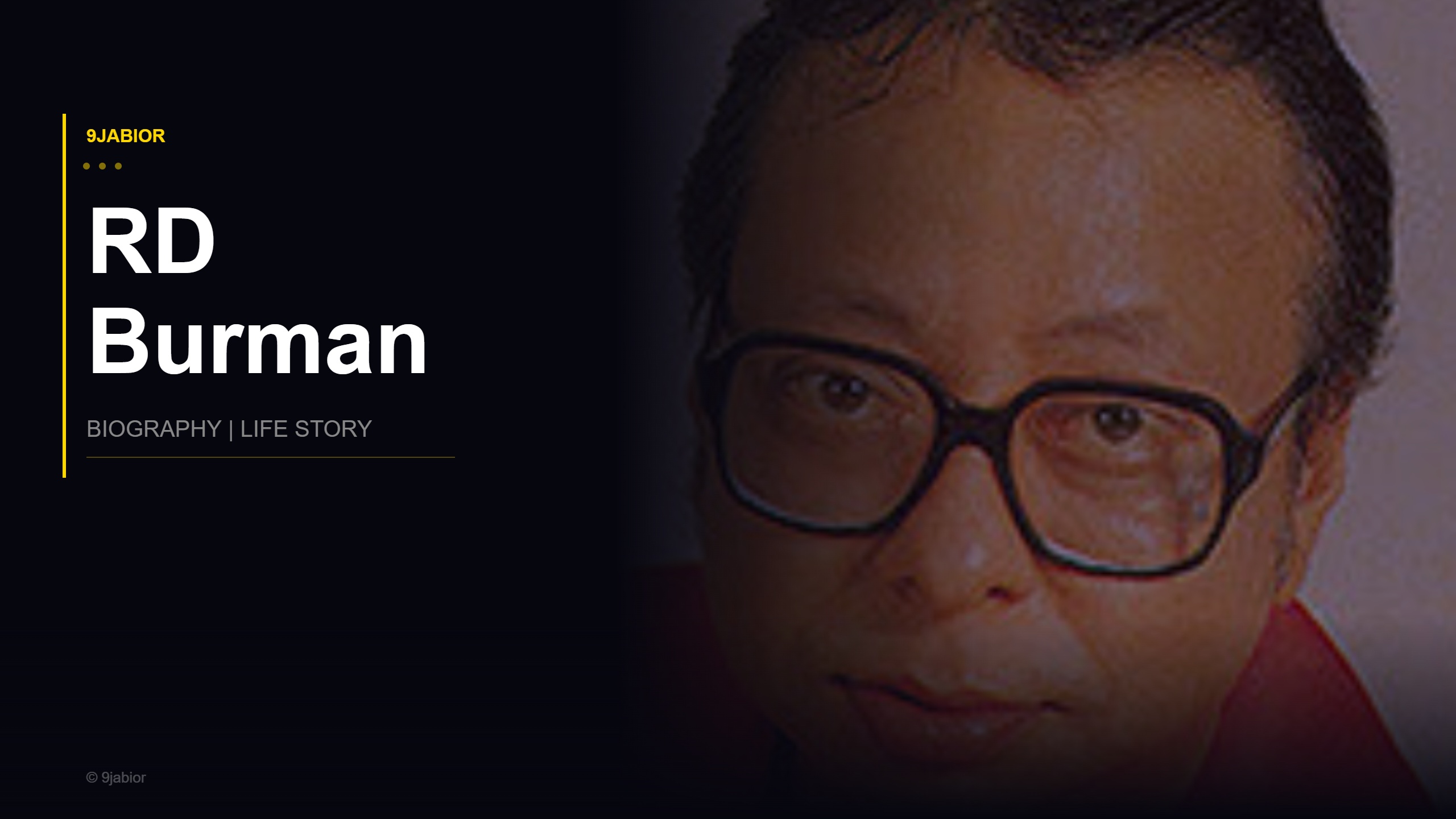
If you’ve ever hummed “Dum Maro Dum,” swayed to “Raina Beeti Jaaye,” or felt chills during the opening guitar lick of “Mehbooba Mehbooba,” you’ve already felt the genius of RD Burman. Long before streaming algorithms and auto-tune, this man was rewiring what Bollywood music could sound like — blowing into beer bottles, borrowing rhythms from Brazilian bossa nova, and somehow making it all feel purely, unmistakably Indian.
This is the complete RD Burman biography — his early life, musical training, career highs and lows, his love story with Asha Bhosle, and the legacy that refuses to die more than three decades after he left us.
Who Was RD Burman? A Quick Introduction
Rahul Dev Burman, better known as RD Burman or Pancham Da, was one of the greatest music directors in the history of Hindi cinema. Born on June 27, 1939, and gone far too soon on January 4, 1994, he spent his relatively short life redefining Bollywood music. Over the course of his career, he composed scores for 331 films, worked with the biggest singers of his era, and introduced sounds that Indian audiences had never heard before. He wasn’t just a composer. He was a revolution.
Early Life and Family Background
Born Into Musical Royalty — The Tripura Connection
RD Burman was born in Calcutta on June 27, 1939, to two remarkable people. His father was Sachin Dev Burman, one of the most celebrated music directors in the Hindi film industry. His mother, Meera Dev Burman (née Dasgupta), was a lyricist. Music wasn’t just his hobby growing up — it was the air in his house.
What many don’t know is that the Burman family traces its roots to the royal Manikya dynasty of Tripura. Yes, Pancham Da had royal blood. His father SD Burman was a descendant of that princely lineage, which means RD grew up carrying a legacy that stretched far beyond Bollywood.
How He Got the Nickname “Pancham”
Here’s something that comes up in every RD Burman conversation, and for good reason — the story of his nickname is genuinely fascinating. There are three versions of how baby Rahul Dev became “Pancham.”
The first says that as an infant, his cries consistently sounded in the fifth note of the Indian classical scale — that note is called Pancham in Hindustani music. The second version says he could cry in five different notes, and that’s where the name came from. The third, and perhaps most charming version, is that veteran actor Ashok Kumar visited the newborn and noticed the baby kept uttering the syllable “Pa” repeatedly — and on the spot, decided to call him Pancham.
Whatever the real origin, the nickname stuck for life. Friends, collaborators, and fans never really called him RD. It was always Pancham, or Pancham Da.
Growing Up in His Father’s Shadow
Growing up with SD Burman as your father sounds glamorous, and in many ways it was. Pancham was constantly surrounded by music. Legendary musicians visited the house. Compositions were always floating in the air. But it also meant that when he eventually entered the film industry on his own, comparisons were unavoidable.
After spending his early years in Calcutta, the family moved to Bombay (now Mumbai). That move changed everything for young Rahul. Bombay was where the Hindi film industry lived, and being embedded in that world from childhood gave him an education no classroom could.
Musical Training That Set Him Apart
Learning From the Masters — Ali Akbar Khan and Samta Prasad
Pancham’s formal musical training was exceptional. Once in Bombay, his father ensured he learned from the best. He studied the sarod under Ustad Ali Akbar Khan, one of the greatest sarod players India has ever produced. He also learned the tabla from Samta Prasad, another towering figure in Indian classical music. He additionally considered Salil Chowdhury his guru — a composer who deeply influenced his own approach to melody and arrangement.
This wasn’t casual training. He was being prepared to understand music from the inside out, not just to play instruments but to understand what made sounds work together.
The Instruments He Could Play
RD Burman wasn’t just a composer sitting behind a desk giving instructions. He could play multiple instruments himself — the tabla, the sarod, and most famously, the harmonica (also called the mouth organ). That harmonica was a constant companion, and his skill with it showed up in recordings throughout his father’s films before Pancham even had a career of his own.
The Prodigy Years — Composing Before His Teens
The Song He Wrote at Age Nine
Here’s a fact that still stops people in their tracks. RD Burman composed his first song when he was just nine years old. The song was “Aye Meri Topi Palat Ke Aa” — and his father liked it so much that he used it in the 1956 film Funtoosh. A nine-year-old composed a song that made it into a mainstream Bollywood film. Let that sink in.
It didn’t stop there. The melody for “Sar Jo Tera Chakraaye” — the iconic song from Guru Dutt’s Pyaasa (1957) — was also composed by him as a child. His father included it in that film’s soundtrack. That song is now considered one of Bollywood’s most enduring classics. He composed it before he was even a teenager.
Playing Harmonica for His Father’s Hit Songs
Before Pancham had any official credits to his name, he was already contributing to his father’s work in a very real way. He played the harmonica for SD Burman’s beautiful composition “Hai Apna Dil To Aawara” from the film Solva Saal, sung by Hemanta Mukhopadhyay. Audiences heard his music without knowing it.
How RD Burman’s Career Actually Began
The Tabla Moment That Changed Everything
The story of how Pancham got his first professional break is one of those wonderful accidents of fate. Filmmaker and comedian Mehmood Ali wanted to produce a film called Chhote Nawab and approached SD Burman to compose the music. SD Burman wasn’t available and turned down the offer. But during that meeting, Mehmood noticed young Rahul sitting there playing the tabla. He was impressed enough to sign him right there as the music director for Chhote Nawab. Just like that, a career was born.
Raaz (1959) — The Film That Never Released
Before Chhote Nawab, there was actually an earlier attempt. In 1959, RD Burman was signed as music director for a film called Raaz, directed by an assistant of Guru Dutt. He recorded two songs for it — one sung by Geeta Dutt and Asha Bhosle together, and another by Shamshad Begum. But the film was shelved and never released. His very first brush with independent composing went unseen.
Chhote Nawab (1961) — His Official Debut as Music Director
When Chhote Nawab released in 1961, Pancham Da was officially a music director. He was twenty-two years old. The film wasn’t a massive blockbuster, but it was a beginning. More importantly, it cemented his relationship with Mehmood, who would later cast him in a film role as well. The two remained close collaborators and friends for years.
The 1960s — Finding His Voice
Working Both as Assistant and Independent Composer
The 1960s were a decade of dual tracks for RD Burman. On one hand, he continued assisting his father on major films — Bandini (1963), Guide (1965), Teen Devian (1965), Jewel Thief (1967), and others. On the other hand, he was quietly building his own portfolio as an independent composer. It was a period of learning, experimenting, and slowly asserting his identity.
Teesri Manzil (1966) — The Breakthrough That Announced Pancham Da
If there’s one film that truly launched RD Burman as a major force, it’s Teesri Manzil. Released in 1966, produced by Nasir Hussain, and starring Shammi Kapoor and Asha Parekh, the film gave him his first real hit. The music was electrifying — upbeat, youthful, and unlike anything Bollywood had heard at the time. All six songs featured Mohammed Rafi’s voice, and every single one became popular. Teesri Manzil put Pancham Da on the map. After that, major films started coming his way.
His Brief but Real Acting Career
Not many people remember that RD Burman also tried his hand at acting. He appeared in Mehmood’s Bhoot Bungla (1965) and Pyaar Ka Mausam (1969). These were small roles, but they show the playful, adventurous side of the man behind the music. Acting wasn’t where his heart was, though. Music always called him back.
The Golden 1970s — When Pancham Da Ruled Bollywood
The Rajesh Khanna–Kishore Kumar–RD Burman Trio
The early 1970s produced one of the most magical creative combinations in Bollywood history. Rajesh Khanna was the undisputed superstar. Kishore Kumar was the voice that could make any song immortal. And RD Burman was the composer who gave both of them their greatest platform. Together, these three worked on 32 films. Thirty-two. The chemistry between them was something filmmakers today can only dream about replicating.
The story of how Pancham first met Kishore Kumar is almost too cinematic to be real. He was at a recording studio one day when he noticed Kishore Kumar sitting on a wall outside, wearing a cap and a muffler, holding a black stick, and doing spot-on imitations of every passerby like a mischievous monkey. When Pancham went in to record, Kishore followed him right in. That’s how one of the most legendary musical friendships in Bollywood began.
The Hit Films That Defined a Decade
The 1970s were when RD Burman became the composer every filmmaker wanted. The list of landmark films from this decade reads like a Bollywood hall of fame: Amar Prem (1971), Hare Rama Hare Krishna (1971), Seeta Aur Geeta (1972), Yaadon Ki Baaraat (1973), Sholay (1975), Deewar (1975), Aandhi (1975), Hum Kisi Se Kum Nahin (1977), Golmaal (1979). Each of these films produced songs that are still played at weddings, parties, and on late-night drives.
Kati Patang (1970) was the film that officially announced him as the leading composer of his generation. Songs like “Yeh Shaam Mastani” and “Yeh Jo Mohabbat Hai” didn’t just become hits — they helped make Kishore Kumar a mainstream star. These songs shifted cultural tides.
Introducing Western Music to Hindi Cinema
RD Burman was the first Indian composer to bring rock ‘n’ roll into Hindi film music in a way that truly connected with mass audiences. Before him, western influences existed on the fringes. He brought them center stage. Jazz, bossa nova, swing, electronic rock, Mexican mariachi, circus music — he absorbed all of it and then filtered it through his own sensibility to create something that felt fresh and Indian at the same time. The youth of 1970s India hadn’t heard anything like it. They were completely swept away.
The Sound Lab — How RD Burman Created Music No One Else Could
Blowing Into Beer Bottles, Soda Bottles, and Cups
This is where RD Burman gets genuinely legendary. He wasn’t content with conventional instruments and conventional methods. He was always listening, always experimenting, always asking, “what would happen if I tried this?”
For the song “Mehbooba Mehbooba” in Sholay, he blew into empty beer bottles to create the opening rhythmic effect. For “O Manjhi Re” from Khushboo, he filled soda bottles with different levels of water and blew across their mouths to produce a haunting “phook” sound. For “Chura Liya Hai Tumne Jo Dil Ko,” the gentle tinkling you hear in the background comes from cups and saucers. He used actual kitchenware as a musical instrument and turned it into one of Bollywood’s most beloved songs.
In another famous instance during the recording of “Hum Dono Do Premee” from Ajnabee, the musicians went on strike mid-recording. Instead of stopping, he improvised the entire song around the silence, turning the absence of instruments into a creative choice.
Bossa Nova, Jazz, Mariachi — Where He Pulled Inspiration From
RD Burman was genuinely cosmopolitan in his musical taste. He’s credited as the first Indian composer to introduce Brazilian bossa nova rhythm into Hindi film music — the song was “Maar Dalega Dard-E-Jigar” from Pati Patni. He listened to everything — American jazz trumpeter Louis Armstrong was a personal favourite and directly influenced his singing style. He jammed freely with Shiv Kumar Sharma, Hari Prasad Chaurasia, and other leading classical musicians, treating these sessions as a genuine exchange of ideas rather than a hierarchy.
Composing Tunes in His Sleep
Here’s something that gets at the almost supernatural quality of his musical mind. SD Burman himself used to say that his son composed while he was asleep. The song “Kanchi Re Kanchi Re” from Hare Rama Hare Krishna (1971) is reported to have come to him in a dream. Music wasn’t something Pancham Da switched off. It was always running.
There are accounts from journalist Chaitanya Padukone of interviewing RD Burman and watching him stop mid-sentence, walk over to his assistant Babloo-da, quietly specify which instrument should go where in a particular song, and then return to the interview as if nothing had happened. His mind was always in two places — and one of them was always music.
The Gulzar Partnership — A Creative Love Story
If there’s one creative relationship in RD Burman’s career that stands above the others, it’s his partnership with lyricist Gulzar. Together they created some of the most poetic, emotionally layered music in Hindi cinema — films like Parichay (1972), Aandhi (1975), Ghar (1978), and others. Songs like “Tere Bina Jiya Jaaye Na,” “Aaj Kal Paon Zameen Par,” and “Musafir Hoon Yaaron” carry a weight that feels timeless.
Their friendship was warm and famously playful. RD Burman had a nickname for Gulzar — “Safed Kauwa” (white crow), because Gulzar was always dressed in white. Gulzar returned the favor by calling him “Lal Kauwa” (red crow), because Pancham’s favourite colour was red. Two crows who made the most beautiful music together.
RD Burman as a Playback Singer
Mehbooba Mehbooba and His One Filmfare Nomination as Singer
Most people know RD Burman as a composer. Fewer know that he was also a playback singer in his own right. He sang in approximately 18 films, and most of those times, he was singing for compositions he had created himself. His most famous singing performance is “Mehbooba Mehbooba” from Sholay (1975) — a song so distinctive, so raw and hypnotic, that it earned him a Filmfare nomination for Best Male Playback Singer. That remains his only nomination as a singer, but it’s a memorable one.
Films Where He Sang His Own Compositions
Besides Sholay, Pancham Da lent his voice to memorable songs across several films. His vocal style — nasal, textured, and highly individual — was influenced by the great Louis Armstrong. It wasn’t a typical Bollywood singing voice, and that’s precisely what made it interesting. He also famously sang the title track “Golmaal Hai Bhai Sab Golmaal Hai” from Golmaal (1979) along with assistant Sapan Chakraborty, which became hugely popular.
The Pantera Album — India’s Composer Goes International
Not many Indian film composers of that era were charting in the United States and Latin America. RD Burman was. In the 1980s, he collaborated with Latin American composer Jose Flores to create a rock album called Pantera — and it was a genuine international success. The album reached number two on the WBMX chart-buster list in New York, Chicago, and Pennsylvania. In Brazil alone, over 50,000 records were sold. He had performed in Las Vegas in 1979, and the experience opened a door to global music that he walked through with characteristic confidence.
Personal Life — Love, Loss, and Relationships
Rita Patel — His First Marriage and Divorce
RD Burman’s first marriage was with Rita Patel, whom he had met in Darjeeling. The story of how they met has a wonderfully filmy quality to it — Rita had apparently bet her friends that she’d manage to get a film-date with the famous composer. She won the bet, they connected, and they married in 1966. But the marriage didn’t last, and they separated in 1971. In the aftermath of the separation, while staying alone at a hotel, Pancham composed “Musafir Hoon Yaaron” from Parichay (1972). That song about a wanderer with no fixed destination took on a very personal meaning.
How RD Burman and Asha Bhosle Fell in Love
Asha Bhosle and RD Burman’s professional relationship predated their romantic one by years. She had sung for him on numerous films, and they had developed a deep creative understanding. Their love story developed gradually against this backdrop of shared music, late recording sessions, and mutual admiration. They married in 1980. It was a partnership of equals — two people who loved the same thing deeply and happened to love each other too. Their work together produced some of Hindi cinema’s most beloved compositions, including the Kronos Quartet’s 2005 album You’ve Stolen My Heart, which featured Asha’s voice over RD Burman’s compositions — a tribute released over a decade after his death.
Did RD Burman Have Children?
RD Burman did not have biological children. Through his marriage to Asha Bhosle, he became a stepfather to her children from her first marriage — sons Hemant Bhosle and Anand Bhosle, and daughter Varsha Bhosle.
The 1980s Career Dip and the Fight to Come Back
Why the Industry Moved On — Even From Pancham
The 1980s were genuinely difficult for RD Burman, and it’s a part of his story that deserves more than a footnote. The music landscape shifted dramatically. Disco and a synthetically-heavy sound took over Bollywood, and composers like Bappi Lahiri rose to dominance with a style that felt completely different from Pancham’s layered, organic compositions. Nasir Hussain, who had been one of his most reliable producers, had a string of flops — Manzil Manzil (1984), Zabardast (1985) — and critics pointed to the music as weak. Films started going to other composers. The man who had been Bollywood’s most in-demand composer in the 1970s found himself struggling for big assignments.
It’s one of the more painful chapters in Bollywood history. An artist of his caliber being sidelined not because his talent had faded, but because audience tastes had temporarily moved elsewhere.
Heart Attack, Surgery, and Resilience
In 1988, when he was 49 years old, RD Burman suffered a heart attack. A year later, he underwent heart bypass surgery in London. For most people, that combination of professional uncertainty and serious health issues would be crushing. But Pancham Da kept working. He kept composing. The resilience he showed in the late 1980s makes his final chapter all the more moving.
1942: A Love Story — His Greatest Comeback and Final Bow
By the early 1990s, something remarkable was happening. RD Burman was working on the music for Vidhu Vinod Chopra’s 1942: A Love Story — and people who heard the recordings before release knew it was something extraordinary. The songs were sweeping, romantic, deeply melodic — everything that had made Pancham Da iconic was back, elevated by years of experience and perhaps a sense that he was composing with everything he had.
The cruelest irony of his life is that he never heard the public reception to this masterpiece. He died on January 4, 1994 — just weeks before the film’s release. The album went on to win him the Filmfare Award for Best Music Director, awarded posthumously at the 1995 ceremony. It was recognition that came too late, but it came.
Death of RD Burman — What Happened on January 4, 1994
RD Burman died of a heart attack in Bombay on January 4, 1994. He was 54 years old. He had already survived one heart attack and major bypass surgery, and his health had remained fragile in the years that followed. The news of his passing shocked the Indian film industry and millions of fans across the country. Many who loved his music simply couldn’t believe that the man behind so much joy and energy was gone.
The last film he had signed contracts for was a Malayalam film, Thenmavin Kombath (1994). He never got to compose for it.
Legacy That Refuses to Fade
The Filmfare RD Burman Award for New Music Talent
In 1995, just a year after his death, the Filmfare Awards introduced the Filmfare RD Burman Award for New Music Talent. It’s awarded every year to emerging composers and singers in Hindi cinema. The fact that his name is attached to an award specifically designed to celebrate new voices says everything about how the industry understood his role — he wasn’t just a great composer, he was someone who created space for others to exist.
His Postage Stamp, Google Doodle, and Public Square in Mumbai
The tributes to RD Burman have come in many forms. In May 2013, India Post released a special commemorative postage stamp bearing his image. In 2009, the Brihanmumbai Municipal Corporation named a public square (chowk) in Santa Cruz, Mumbai, after him. On June 27, 2016 — what would have been his 77th birthday — Google India replaced its homepage with a Doodle of Pancham Da. These aren’t just gestures. They’re markers of a cultural footprint that outlasted him.
Tribute Films, Remix Albums, and the Kronos Quartet
The tributes keep coming, decade after decade. Jhankaar Beats (2003), starring Rahul Bose and Sanjay Suri, built an entire story around two musicians who idolize RD Burman. The film Lootera (2013) paid musical tribute to his style. Through the 1990s and 2000s, remix versions of his songs dominated Indian clubs, pubs, and radio — and South Asian DJs in the UK and North America featured them in mainstream albums like Bally Sagoo’s Bollywood Flashback. Most strikingly, the Kronos Quartet — one of America’s leading classical string ensembles — admired his work enough to record an album called You’ve Stolen My Heart (2005) featuring his compositions sung by Asha Bhosle.
Why Every Generation Still Loves His Music
Thirty-plus years after his death, why does a teenager in 2025 still know the words to “Dum Maro Dum”? Because RD Burman’s music doesn’t belong to a decade — it belongs to human emotion. He composed in a way that captured joy without being shallow, longing without being melodramatic, heartbreak without being maudlin. His curiosity about the world — the Brazilian rhythms, the jazz influences, the beer bottle experiments — gave his music a texture that never quite gets old.
He composed 331 film scores. He worked in Hindi, Bengali, Telugu, Tamil, Oriya, and Marathi. He charted in Latin America. He influenced composers who influenced composers who are making music today. The chain of his impact is unbroken.
Pancham Da didn’t just change Bollywood music. He told it what it could become.
Frequently Asked Questions About RD Burman
What is RD Burman’s full name? His full name was Rahul Dev Burman. He was widely known by his initials RD Burman and even more affectionately as Pancham or Pancham Da.
Why was RD Burman called Pancham Da? The nickname Pancham comes from the fifth note of the Indian classical scale — called Pancham in Hindustani music. As a baby, his cries were said to sound in that fifth note. Actor Ashok Kumar is often credited with popularizing the nickname.
Who were RD Burman’s wives? RD Burman was married twice. His first wife was Rita Patel, whom he married in 1966 and divorced in 1971. He later married legendary singer Asha Bhosle in 1980, and they remained together until his death.
Did RD Burman have any children? RD Burman did not have biological children of his own. Through his marriage to Asha Bhosle, he became a stepfather to her children — Hemant Bhosle, Anand Bhosle, and Varsha Bhosle.
What was RD Burman’s first film as an independent music director? His first released film as a music director was Chhote Nawab in 1961. Before that, he had been assigned Raaz (1959), but that film was never completed.
How did RD Burman die? RD Burman died on January 4, 1994, from a heart attack. He had suffered an earlier heart attack in 1988 and undergone bypass surgery in London in 1989. He was 54 years old at the time of his death.
What are RD Burman’s most famous songs? Some of his most celebrated compositions include Dum Maro Dum, Mehbooba Mehbooba, Raina Beeti Jaaye, Yeh Shaam Mastani, Chura Liya Hai Tumne Jo Dil Ko, Musafir Hoon Yaaron, Aaj Na Chhodenge, Tere Bina Jiya Jaaye Na, and Ek Ladki Ko Dekha.
Why did RD Burman’s career decline in the 1980s? The shift toward a heavy disco and synthesizer-driven sound in Hindi cinema during the 1980s moved audience taste temporarily away from RD Burman’s style of layered, melodic composition. He experienced fewer major assignments during this period, though he continued working. His composing for 1942: A Love Story before his death in 1994 is widely seen as a triumphant comeback.

 Ghost Blogger
 Admin
Admin