 Ghost Blogger
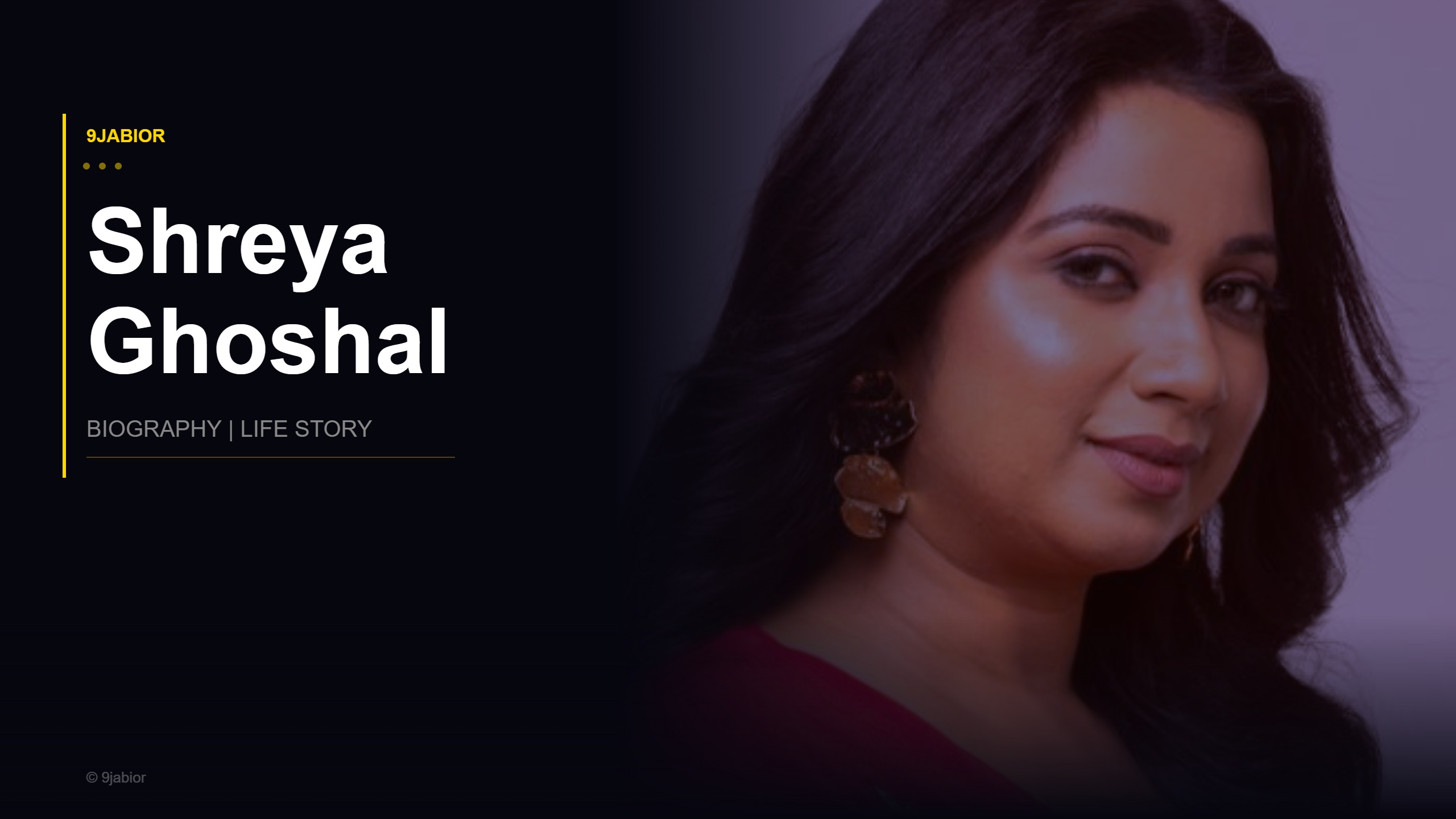
There are voices. And then there’s Shreya Ghoshal.
For over two decades, her voice has been the emotional backbone of Bollywood. It’s the voice that made you feel things during Devdas. It’s the voice that played on loop after your first heartbreak. It’s the voice that still stops a room when it comes through the speakers. Shreya Ghoshal’s biography isn’t just the story of a singer — it’s the story of a girl from a small Rajasthani township who became the most celebrated female playback singer in Indian music history.
If you’re searching for a comprehensive Shreya Ghoshal biography, you’re in the right place. This is the full picture — from her childhood in Rawatbhata to sold-out concerts at the Sydney Opera House, from a cassette tape mailed to a TV show to 50 million monthly Spotify listeners.
Let’s get into it.
Shreya Ghoshal is an Indian playback singer born on 12 March 1984 in Berhampore, West Bengal. She’s widely regarded as one of the most versatile and prolific female vocalists in Indian cinema. She’s won five National Film Awards, seven Filmfare Awards, and ten Filmfare Awards South — singing across more than 20 languages including Hindi, Bengali, Tamil, Telugu, Malayalam, Kannada, Marathi, and Punjabi.
She’s also a global phenomenon. With over 50 million monthly listeners on Spotify, more than 500 million streams on YouTube, and official proclamations from multiple U.S. cities declaring a day in her name, Shreya Ghoshal isn’t just a Bollywood singer. She’s a cultural institution.
Early Life and Childhood
Born in West Bengal, Raised in Rajasthan
Shreya was born on 12 March 1984 in Berhampore, in the Murshidabad district of West Bengal. But she didn’t grow up there. When she was still very young, her family relocated to Rawatbhata — a small, quiet township near Kota in Rajasthan — because of her father’s job posting. It’s not the kind of place you’d expect to produce India’s biggest singing star. There were no film studios, no music academies, no Bollywood connections. Just open roads, a close-knit community, and a little girl who could sing before she could fully spell her own name.
She lived in Rawatbhata for about thirteen years and completed her schooling up to eighth standard at the Atomic Energy Central School No. 4 there. It was a humble, grounded beginning — and those roots, many would argue, are exactly why there’s such genuine emotion in everything she sings.
A Musical Family That Shaped Everything
Shreya’s father, Bishwajit Ghoshal, is an electrical engineer who worked for the Nuclear Power Corporation of India. Her mother, Sarmistha Ghoshal, is a literature post-graduate — and a natural singer herself. That detail matters more than it might seem.
From the age of four, little Shreya would sit beside her mother as she rehearsed songs while playing the harmonium at local club events. Sarmistha didn’t push her daughter toward music. She simply let it happen. And Shreya would naturally hit every note her mother played, pitch-perfect, without being told how. Her father noticed something remarkable was happening and decided it was time to get serious about it.
She also has a younger brother, Soumyadeep Ghoshal, who grew up to become a musician himself. Music, it seems, runs deep in the family.
Her First Notes and Early Training
By the time she was six, Shreya had begun formal training in Hindustani classical music. Her early teachers in Kota — Rakesh Sharma and Maheshchandra Sharma — gave her the technical foundation that would define her career. Classical music isn’t glamorous at that age. It’s scales, ragas, breath control, and hours of repetition. But Shreya took to it naturally.
Her first stage performance was at a local club’s annual day function, where her mother regularly participated. She was tiny, probably nervous, but she sang. And people listened.
Education and Formal Classical Training
Schools That Shaped Her Discipline
Shreya attended the Atomic Energy Central School in Rawatbhata through eighth grade. When her father was transferred to the Bhabha Atomic Research Centre (BARC) in 1997, the family moved to Mumbai — and she continued at the Atomic Energy Central School in Anushakti Nagar.
Later, she enrolled at the Atomic Energy Junior College to study science, but withdrew to pursue arts. She eventually graduated from SIES College of Arts, Science and Commerce in Sion, Mumbai, where she majored in English. Studying and recording sessions sometimes overlapped, and she’d carry school books to the studio to study during breaks between takes. That kind of juggling act tells you something about her character.
The Kalyanji Connection That Changed Her Life
The turning point came when Shreya entered the All India Light Vocal Music Competition organized by the Sangam Kala Group in New Delhi in 1995. She was just eleven years old. She won. Among the judges was the legendary music director Kalyanji — of the iconic Kalyanji-Anandji duo — who was so impressed that he made a bold suggestion: if her parents wanted to see their daughter succeed in Bollywood, they needed to move to Mumbai.
It’s not a small thing, asking a family to uproot their lives for their child’s dream. But Bishwajit and Sarmistha did exactly that. Shreya trained under Kalyanji for 18 months, and later continued her classical training under the late Mukta Bhide in Mumbai. These weren’t shortcuts. This was deep, methodical preparation — and it paid off in ways nobody could’ve predicted.
The Sa Re Ga Ma Pa Moment That Launched a Star
How a Cassette Tape Started It All
Here’s the thing about Shreya’s big break — it started with a cassette tape and a bold decision. Sa Re Ga Ma Pa, the popular singing reality show on Zee TV, was searching for talent. Shreya recorded songs on a cassette and mailed it in. Days later, she got a call to audition.
She had already won the children’s special episode of Sa Re Ga Ma Pa as a younger contestant. But her second participation — competing against adults this time — is the one that changed everything. She entered the 75th children’s special in 1996 and won. Then she appeared again in the 200th episode in January 1999 and won that too.
What Winning the Show Actually Meant for Her Career
Sa Re Ga Ma Pa wasn’t just a trophy. It was national television exposure at a time when that genuinely mattered. Millions of people saw and heard her. Among those viewers was the mother of filmmaker Sanjay Leela Bhansali, who called her son during one of Shreya’s performances and told him he needed to watch this girl.
That phone call would set in motion one of the most important debuts in Bollywood singing history.
Bollywood Debut with Devdas (2002) — A Dream Come True
How Sanjay Leela Bhansali Discovered Her
Sanjay Leela Bhansali was in the middle of casting his ambitious period drama Devdas when he made the call to Shreya’s family. He’d heard her sing and he had a specific vision: the voice of Paro, the film’s lead female character portrayed by Aishwarya Rai, needed to carry both innocence and longing. He believed Shreya had exactly that.
She was sixteen years old when she got the opportunity. She was also studying for her higher secondary exams.
“Bairi Piya” — The Song Recorded in One Take
The story of how “Bairi Piya” was recorded has become one of the most repeated anecdotes in Bollywood music history — and for good reason. Shreya walked into the recording studio, was asked to rehearse the song once, closed her eyes, and sang it straight through without stopping. She didn’t know she’d been recorded. When she opened her eyes, there was chaos on the other side of the glass — excited murmurs and movement. Bhansali came out and told her they’d captured the song in one take because it was already perfect.
That kind of story doesn’t happen often. And it wasn’t luck — it was the result of years of training combined with a voice that naturally translates emotion.
Five Songs, One Film, and a National Award
Shreya sang five songs in Devdas: Silsila Ye Chaahat Ka, Bairi Piya (with Udit Narayan), Chalak Chalak (with Udit Narayan and Vinod Rathod), Morey Piya (with Jaspinder Narula), and Dola Re Dola (with Kavita Krishnamurthy). Every single one was a hit.
For “Bairi Piya,” she received the National Film Award for Best Female Playback Singer — the country’s highest recognition for a singer — plus the Filmfare Award for Best Female Playback Singer and the Filmfare RD Burman Award for New Music Talent. She won all three for her very first Bollywood film. It was an unprecedented debut that set the tone for everything that followed.
The Voice Behind the Music — What Makes Shreya Ghoshal Special
Her Vocal Range and Classical Foundation
Most singers can carry a tune. Very few can do what Shreya does. Her vocal range spans multiple octaves, and her classical training gives her precise control over every note — the kind of control that lets her hold a note at exactly the right emotional intensity without going flat or sharp. She doesn’t just sing; she sculpts sound.
Her classical background in Hindustani music is what sets her apart from pop-trained singers. The ragas she studied as a child gave her a tonal vocabulary that most contemporary singers simply don’t have. When she sings a soft, low note in a song like “Ghoomar,” it isn’t just pretty — it’s technically precise. The Times of India once described her voice as magnetic and honey-dripping, and that’s about as accurate as it gets.
The Ability to Shift Across Genres Effortlessly
What makes Shreya genuinely extraordinary is range — not just vocal, but stylistic. She can move from a delicate classical-based melody like “Dola Re Dola” to an upbeat dance number like “Chikni Chameli” to a devotional like “Mohe Rang Do Laal” without missing a beat. Not many singers can do all three convincingly. Shreya does it on a Tuesday.
That versatility is why every major Bollywood music director — from AR Rahman to Pritam to Sanjay Leela Bhansali — has wanted her on their projects. She doesn’t just fit a song. She elevates it.
Career Milestones and Most Iconic Songs
The Songs That Defined Bollywood’s Romantic Era
Shreya’s discography reads like a greatest hits compilation of the last two decades. Some of her most iconic songs include:
- Bairi Piya — Devdas (2002)
- Jaadu Hai Nasha Hai — Jism (2003)
- Piyu Bole — Parineeta (2005)
- Barso Re — Guru (2007)
- Mere Dholna — Bhool Bhulaiyaa (2007)
- Teri Ore — Singh Is Kinng (2008)
- Bahara — I Hate Luv Storys (2010)
- Teri Meri — Bodyguard (2011)
- Saibo — Shor in the City (2011)
- Nagada Sang Dhol — Ram-Leela (2013)
- Deewani Mastani — Bajirao Mastani (2015)
- Mohe Rang Do Laal — Bajirao Mastani (2015)
- Ghoomar — Padmaavat (2018)
- Param Sundari — Mimi (2021)
- Yimmy Yimmy — Stree 2 (2024)
That’s more than two decades of chartbusters. And it’s not even close to a complete list.
South Indian Film Career in Tamil, Telugu, and Malayalam
Shreya’s reach extends far beyond Bollywood. Her South Indian film career is just as decorated, and in some ways even more impressive because she’s singing in languages that aren’t her mother tongue — and critics from those industries consistently praise her pronunciation and authenticity.
Her Tamil debut came with “Yen Chellam” in a Vasantha Balan film. The real breakthrough was “Munbe Vaa” from Sillunu Oru Kaadhal (2006), composed by AR Rahman — a song that became an instant classic in Tamil music. In Malayalam, she debuted through composer Alphons Joseph and later became closely associated with music director M Jayachandran. Her songs from the film Anwar became massive hits in Kerala. She’s won the Kerala State Film Award for Best Female Playback Singer multiple times, and her Malayalam pronunciation has drawn specific praise from critics who noted it as exceptional for a singer who didn’t grow up speaking the language.
In Telugu, she’s worked with composers like MM Keeravani and Devi Sri Prasad, delivering hits across multiple high-profile films. Her recent song “Soodaana” from Pushpa 2 (2024) and “NaaNaa Hyraanaa” from Game Changer (2025) show she’s still very much in demand in the South Indian film industry.
Independent Singles and the Digital Music Era
Shreya has also embraced the digital age on her own terms. She’s released independent singles that aren’t tied to any film — tracks like Angana Morey, Uff, and Dhadkane Azad Hain — and these have performed extremely well on streaming platforms. She opened her own independent music label, which gives her creative control over her non-film output.
She’s also collaborated internationally, including a song with French-Cameroonian artist Tayc called “Yimmy Yimmy,” which became a viral hit and introduced her to a whole new global audience. That collaboration wasn’t a stunt — it was a natural evolution for a singer who’d been performing worldwide for years.
Personal Life — Family, Marriage, and Motherhood
Childhood Friend Turned Life Partner: Shiladitya Mukhopadhyaya
On 5 February 2015, Shreya Ghoshal married Shiladitya Mukhopadhyaya in a traditional Bengali ceremony in Mumbai. What makes their story particularly sweet is that Shiladitya isn’t a Bollywood personality — he’s an entrepreneur who serves as the Global Head of Truecaller. They were childhood friends long before they became a couple, and their relationship stayed largely private until the wedding.
Shreya has always been notably protective of her personal life. She doesn’t perform private dramas in public. The wedding itself was a quiet, intimate affair — no filmi fanfare, just family and close friends. It said a lot about who she is when the cameras are off.
Son Devyaan and Life Away from the Spotlight
In May 2021, Shreya and Shiladitya welcomed their son, Devyaan Mukhopadhyaya. Shreya announced his arrival through social media and, in a typically private fashion, shared just a small glimpse. By November 2021, she shared a photo of her young son, which sent fans into a frenzy. Devyaan has largely remained out of the public eye since, which is exactly how Shreya seems to want it.
For someone who has spent her life in the public eye, the deliberate privacy she maintains around her family is both understandable and admirable.
Awards and Recognition — A Decorated Career
National Film Awards
Shreya Ghoshal has won five National Film Awards for Best Female Playback Singer — which is the highest honour given by the Government of India in the field of cinema. Her winning films span across languages and decades:
- Devdas (2002) — for “Bairi Piya”
- Paheli (2005) — for “Dheem Tana”
- Chittagong (2012) — Bengali
- Iravin Nizhal (2022) — Tamil, for “Mayava Chayava” — presented by President Droupadi Murmu
That last win in 2022 was particularly significant. It proved that even twenty years into her career, she’s still producing work that the country’s highest film committee recognises as the best.
Filmfare and Regional Awards
Beyond the National Awards, her Filmfare and regional recognition is staggering:
- Seven Filmfare Awards, including six for Best Female Playback Singer (Hindi)
- Ten Filmfare Awards South across Tamil, Telugu, Malayalam, Kannada, and Bengali
- Multiple Kerala State Film Awards and Tamil Nadu State Film Awards
- IIFA Awards, BFJA Awards, Screen Awards, and more
She’s consistently described as the most awarded female playback singer in the history of Indian cinema.
Global Recognition and International Milestones
“Shreya Ghoshal Day” in the United States
Shreya’s international recognition goes well beyond just concert tours. On 26 June 2010, the Governor of the U.S. state of Ohio, Ted Strickland, officially declared the date “Shreya Ghoshal Day” — a proclamation reserved for individuals who have made significant cultural contributions. In 2015, the Mayor of Cincinnati declared 24 July as “Shreya Ghoshal Day of Entertainment and Inspiration.” And during her 2024 All Hearts Tour, the Mayor of Austin, Texas, Kirk Watson, proclaimed 15 June 2024 as “Shreya Ghoshal Day” — making her the only Indian singer to have had a day declared in her honour in multiple U.S. cities.
In April 2013, she was honoured by selected members of the House of Commons in the United Kingdom — one of the world’s most prestigious legislative bodies.
Madame Tussauds, House of Commons, and the World Stage
In 2017, Shreya became the first Indian singer to have her wax figurine installed at Madame Tussauds — a milestone that places her in genuinely rare company. She’s performed at the Sydney Opera House, London’s Royal Albert Hall, and became the first Indian artist to perform at the Dolby Theatre in Los Angeles, the historic home of the Academy Awards.
She has performed in over 25 countries across the U.S., UK, Australia, UAE, South Africa, Canada, and more. These aren’t just diaspora concerts — they’re events that sell out months in advance.
Streaming Records and Digital Dominance
Most-Streamed Indian Female Artist Four Years Running
Numbers tell part of the story. Shreya Ghoshal has been named the most-streamed Indian female artist on Spotify consecutively from 2021 to 2024. That’s four years running. Her YouTube presence crosses 500 million streams, and she consistently ranks among the top ten most searched Indian singers on Google.
With over 50 million monthly Spotify listeners at her peak, she’s not just popular in India — she’s globally relevant in a way that very few South Asian artists have ever achieved through purely non-Western music.
Spotify EQUAL Global Ambassador
In a significant milestone for representation, Shreya became the first Indian artist to be named a Spotify EQUAL Global Ambassador — a programme dedicated to championing female equity in the music industry. Her image appeared on billboards from Mumbai to New York’s Times Square as part of the initiative. It wasn’t just a marketing partnership; it was formal recognition of her influence on female artists worldwide.
Net Worth and Income Sources
Shreya Ghoshal’s net worth is estimated between $25 million and $35 million USD as of 2025–2026. Her income flows from multiple streams:
- Playback singing fees: She reportedly charges around ₹25 lakhs per song
- Live concerts and tours: Each show commands ₹20–25 lakhs and upward
- Brand endorsements: She’s worked with brands like Joyalukkas and has an estimated annual endorsement income in the crores
- Music royalties: Streaming revenue from thousands of songs across platforms
- Television appearances: Reality show judging stints on Indian Idol, Sa Re Ga Ma Pa, and Voice of India
- Real estate investments: Properties in Mumbai (Worli) and Kolkata
Her annual income is estimated at roughly ₹3.7–4 crore, though concert and brand income can push that significantly higher in active touring years.
Shreya Ghoshal Beyond Music — TV, Philanthropy, and More
Shreya has served as a judge on several of India’s biggest music reality shows, including Voice of India — Chhote Ustaad, Indian Idol Junior, Indian Idol (Season 14), Music Ka Maha Muqqabla, and Sa Re Ga Ma Pa. Her presence on these shows isn’t just commercial — she’s known for giving genuinely constructive feedback to contestants, and many young singers have cited her as a formative influence.
Beyond entertainment, she’s participated in fundraising concerts supporting causes like children’s education through CRY (Child Rights and You) and Save the Children, as well as relief efforts for flood victims. She’s deliberately low-key about her philanthropic work, which makes it feel more authentic.
She’s also a trained Kathak dancer — a fact that surprises many fans who know her only as a singer. And if she hadn’t become a singer? She’s said she would have been an astronaut or a genetic engineer. That detail alone tells you something about the kind of mind behind the voice.
Shreya Ghoshal Biography — Quick Facts Table
| Detail | Information |
|---|---|
| Full Name | Shreya Ghoshal |
| Date of Birth | 12 March 1984 |
| Age (2026) | 42 years |
| Birthplace | Berhampore, Murshidabad, West Bengal |
| Raised In | Rawatbhata, Rajasthan |
| Nationality | Indian |
| Zodiac Sign | Pisces |
| Height | 5 feet 3–4 inches |
| Father | Bishwajit Ghoshal (Engineer, NPCIL) |
| Mother | Sarmistha Ghoshal (Literature Post-Graduate) |
| Sibling | Soumyadeep Ghoshal (brother, musician) |
| Husband | Shiladitya Mukhopadhyaya (married 2015) |
| Son | Devyaan Mukhopadhyaya (born May 2021) |
| School | AECS Rawatbhata and Anushakti Nagar |
| College | SIES College, Mumbai (Arts/English) |
| Career Start | 1998 (album), 2002 (Bollywood) |
| Languages | 20+ Indian and international languages |
| National Awards | 5 |
| Filmfare Awards | 7 (Hindi) + 10 (South) |
| Net Worth (2026) | $25–35 million USD approx. |
| Nickname | Voice of India |
Frequently Asked Questions About Shreya Ghoshal
How old is Shreya Ghoshal? Shreya Ghoshal was born on 12 March 1984, making her 42 years old as of 2026. She’s a Pisces.
Who is Shreya Ghoshal’s husband? Shreya married Shiladitya Mukhopadhyaya on 5 February 2015. He’s an entrepreneur and works as the Global Head of Truecaller. The two were childhood friends before getting married.
What is Shreya Ghoshal’s first song? Her first ever recorded song was “Ganraj Rangi Nachato,” a cover of a Marathi song originally sung by Lata Mangeshkar. Her first Bollywood song was “Bairi Piya” from Devdas (2002), which she sang alongside Udit Narayan.
How many National Film Awards has Shreya Ghoshal won? Shreya has won five National Film Awards for Best Female Playback Singer — for Devdas, Paheli, Chittagong, and Iravin Nizhal (2022), among others.
What is Shreya Ghoshal’s net worth? As of 2025–2026, her net worth is estimated at approximately $25–35 million USD (around ₹200–290 crore), accumulated through playback singing, live concerts, brand endorsements, television appearances, and investments.
What languages does Shreya Ghoshal sing in? She sings in over 20 languages, including Hindi, Bengali, Tamil, Telugu, Malayalam, Kannada, Marathi, Punjabi, Gujarati, Odia, Assamese, Bhojpuri, Nepali, and several international languages.
Is Shreya Ghoshal a classical singer? She’s primarily known as a playback singer, but her training is firmly rooted in Hindustani classical music. She began classical training at age six and it’s the foundation of her exceptional vocal control and range. She describes classical music as her soul.
What is Shreya Ghoshal’s most popular song? It’s difficult to pick just one. “Bairi Piya” was the song that launched her career, “Dola Re Dola” is considered a timeless classic, and “Ghoomar” from Padmaavat became a global viral sensation. More recently, “Yimmy Yimmy” introduced her to an entirely new international audience.

 Ghost Blogger
 Admin
Admin