 Admin
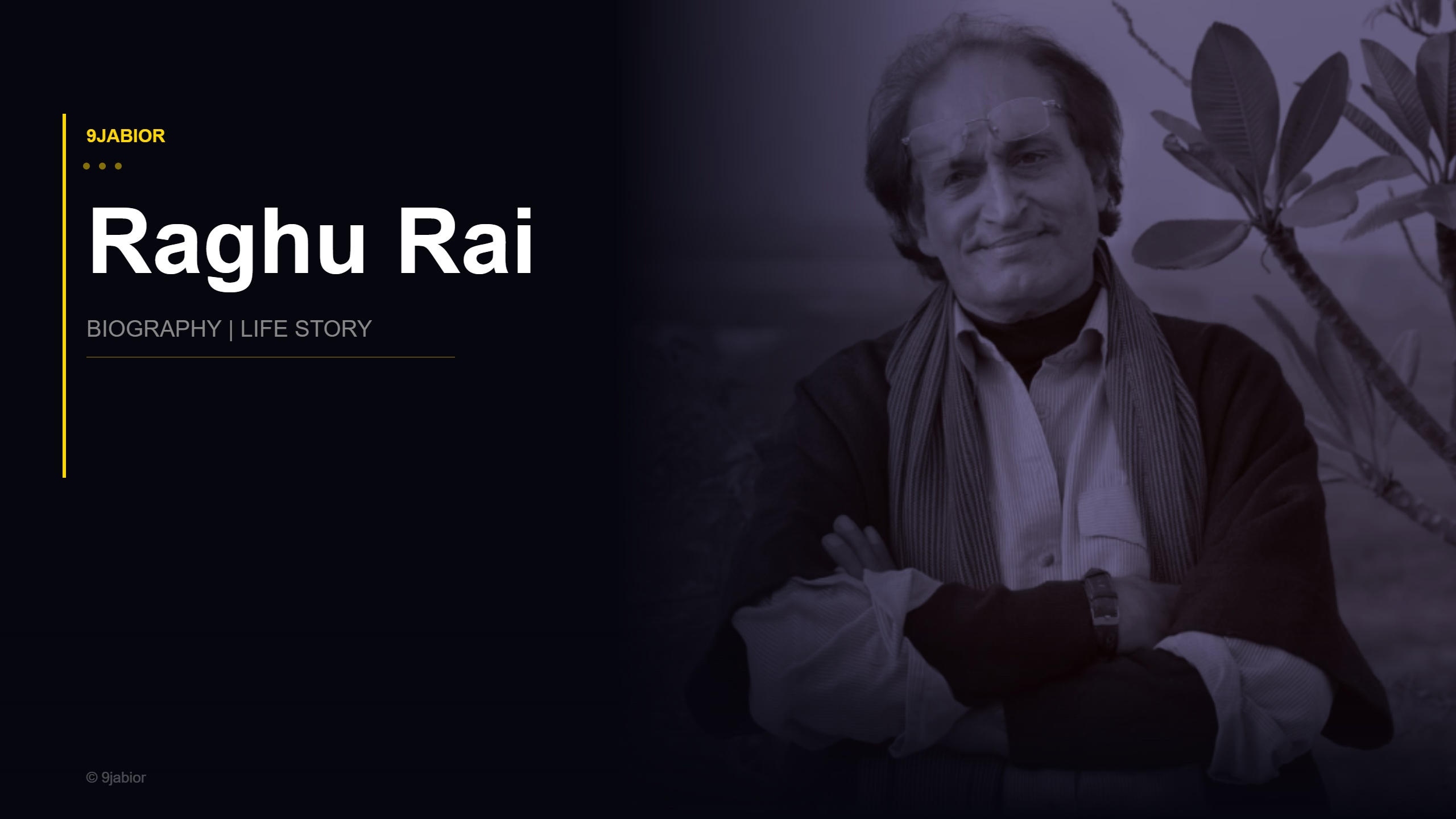
AdminRaghu Rai – You’ve probably seen his photos without knowing his name. The grainy, gut-punching black-and-white image of a child being buried after the Bhopal gas leak. The candid frames of Indira Gandhi mid-stride. Mother Teresa’s lined hands holding a baby. All of those came from one man, and this Raghu Rai biography walks you through the story behind that lens.
He didn’t set out to become India’s most important photojournalist. He trained as a civil engineer. He was supposed to build bridges and roads. Instead, he ended up building something harder to measure: a visual memory of an entire country across six decades.
Who Was Raghu Rai?
Raghu Rai was an Indian photographer and photojournalist widely seen as the man who put Indian photojournalism on the world map. He was the first Indian to be invited into Magnum Photos, the legendary global cooperative, and he stayed there for nearly five decades. He died on April 26, 2026, in New Delhi at the age of 83 after a battle with prostate cancer.
That’s the short version. The longer one is a lot more interesting.
Quick Facts About Raghu Rai
- Full name: Raghu Rai
- Born: December 18, 1942
- Birthplace: Jhang, Punjab (now in Pakistan)
- Died: April 26, 2026, New Delhi
- Age at death: 83
- Cause of death: Prostate cancer (later spread to stomach and brain) plus age-related complications
- Nationality: Indian
- Profession: Photographer, photojournalist, picture editor
- Spouse: Gurmeet Sangha Rai
- Children: Nitin (son), Lagan, Avani, Purvai (daughters)
- Famous for: Bhopal gas tragedy photos, Mother Teresa portraits, Indira Gandhi coverage, Magnum Photos membership
- Books published: 18+ (reportedly working on his 57th at death)
- Major award: Padma Shri (1972)
- Instagram: Raghu Rai (@raghurai.official)
If you also follow Indian literary giants, you might enjoy this biography of Khushwant Singh, another writer whose work captured the same India Rai photographed.
Early Life in Pre-Partition Punjab
Born in Jhang, Now in Pakistan
Raghu was born on December 18, 1942, in a small village called Jhang in undivided Punjab. Five years later, Partition would redraw the map and Jhang would end up inside Pakistan. His family migrated, and he grew up in India.
Growing up in a post-Partition household shaped a lot of artists of his generation. There’s a quiet sense of displacement in his work, a habit of looking carefully at things because nothing feels permanent.
The Civil Engineer Who Picked Up a Camera
Here’s the twist most people skip past. Raghu Rai didn’t go to art school. He qualified as a civil engineer. He was on track for a steady, sensible career laying out drawings and signing off on construction plans.
Then he picked up a camera at 23. And nothing was ever the same.
How Raghu Rai Stumbled Into Photography
His Brother S. Paul’s Quiet Push
The man who got Raghu into photography was his elder brother, S. Paul, himself a respected photojournalist. In the early 1960s, Paul let Raghu tag along, watch, hold equipment, and eventually take his own frames. There was no grand plan. It was the kind of slow apprenticeship you only get inside a family.
People who knew S. Paul say he was generous with his knowledge but tough on standards. That’s a useful combination if you’re trying to teach someone to see.
That First Photo of a Baby Donkey
Rai often told the story of his first photograph: a baby donkey in a village. Not a politician. Not a dramatic event. A donkey. He said the photo taught him something about stillness and instinct that no later success ever changed. He kept chasing that feeling for the next sixty years.
A Career That Shaped Indian Photojournalism
The Statesman Years (1966–1976)
In 1966, Rai joined The Statesman in New Delhi as their chief photographer. He was 23 or 24, freshly converted from engineering, and suddenly responsible for covering the most important newspaper events in the capital. He stayed for ten years and built the foundation of his career there.
This is where he photographed the death of Lal Bahadur Shastri, early years of Indira Gandhi as Prime Minister, and the everyday life of Delhi.
Sunday Magazine in Calcutta (1977–1980)
After leaving The Statesman, Rai moved to Calcutta and worked as Picture Editor at Sunday, a weekly news magazine. This was a different beast from a daily newspaper. Magazines let him plan, slow down, build picture essays instead of one-off shots.
India Today’s Picture Editor (1982–1991)
Then came the role that probably defined him most in Indian publishing. From 1982 to 1991, Rai was the Picture Editor, Visualizer, and Photographer at India Today, the country’s biggest newsmagazine, during its rise. He shaped how the magazine looked. His picture essays on social, political, and cultural themes became conversation starters every two weeks.
If you’re interested in another figure who rose to prominence during that same era of Indian media, the biography of Sudha Murthy covers a parallel story of a woman building her legacy in those same decades.
Going Freelance and Going Global
After 1991, Rai went fully independent. By then he was already a global name through Magnum Photos, and his pictures regularly appeared in Time, Life, The New York Times, GEO, Newsweek, Le Monde, The Independent, and The New Yorker. His career stopped being just an Indian story.
The Cartier-Bresson Moment That Changed Everything
In 1971, Rai had an exhibition at Gallery Delpire in Paris. Henri Cartier-Bresson, arguably the most important photographer of the 20th century, walked through it. He was impressed enough to nominate Rai to Magnum Photos, the most prestigious photographer’s cooperative in the world.
Rai officially joined Magnum in 1977. He became the first Indian inducted into the cooperative. Cartier-Bresson didn’t hand out endorsements casually, so this wasn’t a polite gesture. It was a real co-sign that opened the world’s biggest publications to Rai’s work.
The Bhopal Gas Tragedy: A Body of Work That Outlived the Headlines
Why He Kept Going Back
On the night of December 2–3, 1984, methyl isocyanate leaked from a Union Carbide plant in Bhopal. An estimated 25,000 people died over time. Rai was one of the first photographers on the ground, and the images he made there became defining records of India’s worst industrial disaster.
But here’s the thing most people don’t know: he didn’t just shoot the immediate aftermath and leave. He kept going back to Bhopal for years. Decades, actually.
The Exposure Book and Greenpeace Project
Rai partnered with Greenpeace on a long documentary project about Bhopal’s surviving victims and the still-contaminated land. The work became a book, Exposure: Portrait of a Corporate Crime, and three exhibitions that traveled across Europe, America, India, and Southeast Asia after 2004, the 20th anniversary of the leak.
He wanted the exhibitions to do something rare for photo journalism: actually help. Most of those affected by Bhopal were never properly compensated, and Rai believed his pictures could keep their case alive in the public mind.
Iconic Photographs You’ve Probably Already Seen
If you scroll through Indian visual history, Rai’s frames are everywhere:
- Bhopal Gas Tragedy (1984) – the buried child image, often called one of the most powerful documentary photographs of the 20th century
- Indira Gandhi on the campaign trail (1970s) – candid, unposed, intimate
- Mother Teresa with children in Kolkata – portraits that moved millions
- The Dalai Lama in Tibet in Exile – quiet, contemplative frames
- Bangladesh refugees and the 1971 Liberation War – the body of work that won him the Padma Shri
- The Taj Mahal in different seasons and moods – proving he could do landscape too
- Everyday Delhi street life – the work he often said he loved most
Raghu Rai’s Photographic Style and Philosophy
Instinct Over Thinking
Rai talked about photography the way mystics talk about meditation. He often said good pictures don’t come from your head, they come from your gut. In one interview, he put it bluntly: an instinctive response is free from the mind, free from ideas. If you photograph the world by instinct, no influence stands in your way.
That’s why his work doesn’t feel posed even when he’s photographing prime ministers. He waited. He watched. He pressed the shutter when something honest happened.
From Black-and-White Film to Digital in 2003
For most of his career, Rai shot black-and-white film. In 2003, on a Geo Magazine assignment in Mumbai, he switched to a digital camera. He said later that from that moment, he never went back to film. Not because film was inferior, but because digital let him see and react faster, which fit his instinct-driven approach.
A lot of older photographers resisted digital for years. Rai didn’t. That’s a small thing, but it tells you something about his mindset: he wasn’t precious about tools, only about results.
The Books: More Than 18 Volumes on India
Rai published more than 18 photo books over his career, and according to the Raghu Rai Foundation, he was working on his 57th project (counting books, monographs, and major series) at the time of his death.
Some of the most important ones:
- Raghu Rai’s Delhi
- The Sikhs
- Calcutta
- Khajuraho
- Taj Mahal
- Tibet in Exile
- India
- Mother Teresa
- A Day in the Life of Indira Gandhi
- Raghu Rai’s India: Reflections in Colour
- Raghu Rai’s India: Reflections in Black and White
- Exposure: A Corporate Crime (Bhopal)
- Picturing Time: The Greatest Photographs of Raghu Rai
- Raghu Rai: Waiting for the Divine (memoir co-written with Rachna Singh)
If you enjoy reading about the personalities Rai photographed, the biography of Rabindranath Tagore traces another giant of Indian cultural memory whose Bengal Rai often documented in his Calcutta work.
Awards and Recognition
Rai collected awards across five decades. The major ones:
- Padma Shri (1972) – India’s high civilian honour, awarded for his work on the Bangladesh refugee crisis and the 1971 Liberation War
- Photographer of the Year (1992, USA) – for the National Geographic story “Human Management of Wildlife in India”
- Officier des Arts et des Lettres (2009) – conferred by the French government
- Lifetime Achievement Award (2017) – from India’s Ministry of Information and Broadcasting
- Académie des Beaux-Arts Photography Award – William Klein (2019) – the inaugural laureate of this award
He also served three times on the jury of the World Press Photo Contest and twice on UNESCO’s International Photo Contest jury, plus stints on the Amsterdam International Photo Contest panel.
Family Life: Wife, Children, and the Next Generation
Gurmeet Sangha Rai
Raghu Rai’s wife, Gurmeet Sangha Rai, mostly stayed out of the media spotlight. She was a steady presence in his life and supported him through the long years of travel, deadlines, and the emotional weight of subjects like Bhopal.
Nitin, Lagan, Avani, and Purvai
Rai is survived by four children:
- Nitin Rai – his son, who is also a photographer and continues the family’s visual storytelling tradition. Nitin was the one who confirmed his father’s cancer journey to the press.
- Lagan Rai – daughter
- Avani Rai – daughter and a filmmaker who made the documentary An Unframed Portrait about her father
- Purvai Rai – daughter
For more on accomplished women carving out their own creative paths, you might also enjoy our biography of Preity Zinta.
The Documentary An Unframed Portrait
In 2017, his daughter Avani Rai followed her father on a trip to Kashmir to understand the man behind the camera. The result was Raghu Rai: An Unframed Portrait, a documentary executive produced by filmmaker Anurag Kashyap.
The film is rare because Rai rarely sat still long enough for anyone to study him. Avani caught him in moments most journalists never did, including doubts, frustrations, and quiet jokes.
The Raghu Rai Foundation and His 50,000-Image Archive
Rai set up the Raghu Rai Foundation in 2010. The foundation has archived more than 50,000 of his images and supports younger photographers, exhibitions, and the preservation of his negatives and digital files. It’s also where the work on his 57th book was happening before he died.
This part of his legacy is going to keep growing for years. There are still images in his archive that have never been printed or published.
Death of Raghu Rai: What Happened
Raghu Rai died in the early hours of Sunday, April 26, 2026, at a private hospital in New Delhi. He was 83.
According to his son Nitin, Rai had been diagnosed with prostate cancer two years earlier. He went through treatment and was reportedly cured. The cancer then returned and spread to his stomach. That too was treated. In the final months, the cancer reached his brain, and combined with age-related complications, his body couldn’t fight back any longer.
His last rites were performed at Lodhi Crematorium in Delhi. Tributes poured in from across the political and creative spectrum, including from politician Shashi Tharoor and opposition leader Rahul Gandhi.
What Aspiring Photographers Can Learn From Raghu Rai
If you’re picking up a camera for the first time or trying to take your work seriously, Rai’s career offers a few unusual lessons:
- Start late if you have to. He didn’t take his first photo until 23. That’s “too late” by most influencer standards. Didn’t matter.
- Trust instinct over rules. He kept saying instinct was the engine of his best frames. Composition rules are tools, not laws.
- Stay with a subject. He didn’t shoot Bhopal once. He went back for decades. Most career-defining work happens when you refuse to leave.
- Switch tools without ego. When digital made sense, he switched. Don’t get attached to your gear at the expense of your work.
- Build something that outlives you. A foundation, an archive, books, mentees. Photographs survive longer when they’re embedded in institutions.
For another story of someone who stayed deeply committed to a craft over decades, see the biography of Sachin Tendulkar, where the same lesson about long-term obsession plays out in a completely different field.
Raghu Rai Timeline at a Glance
- 1942 – Born in Jhang, Punjab (now Pakistan)
- 1965 – Picks up photography at age 23
- 1966 – Joins The Statesman as chief photographer
- 1971 – Exhibits at Gallery Delpire, Paris; Cartier-Bresson notices his work
- 1972 – Awarded the Padma Shri for Bangladesh war coverage
- 1977 – Officially joins Magnum Photos
- 1977–1980 – Picture Editor at Sunday magazine, Calcutta
- 1982–1991 – Picture Editor at India Today
- 1984 – Covers the Bhopal gas tragedy
- 1992 – Wins Photographer of the Year (USA) for National Geographic story
- 2003 – Switches from film to digital
- 2004 – Bhopal book Exposure and exhibitions launch with Greenpeace
- 2009 – Receives Officier des Arts et des Lettres from France
- 2010 – Establishes the Raghu Rai Foundation
- 2017 – An Unframed Portrait documentary by daughter Avani Rai
- 2019 – Wins inaugural Académie des Beaux-Arts Photography Award – William Klein
- April 26, 2026 – Dies in New Delhi at age 83
For a look at another major Indian creative voice from a parallel generation, our biography of R. D. Burman covers a composer whose music defined the same India Rai photographed.
Frequently Asked Questions
Who is Raghu Rai and why is he famous? Raghu Rai was an Indian photographer and photojournalist who is widely considered the pioneer of modern photojournalism in India. He’s famous for documenting the 1984 Bhopal gas tragedy, the 1971 Bangladesh refugee crisis, and intimate portraits of figures like Indira Gandhi and Mother Teresa. He was also the first Indian invited into Magnum Photos.
What was Raghu Rai’s cause of death? Raghu Rai died of complications related to prostate cancer that had spread to his stomach and later his brain, combined with age-related health issues. He passed away on April 26, 2026, in New Delhi at the age of 83.
Who was Raghu Rai’s wife? Raghu Rai’s wife was Gurmeet Sangha Rai. She mostly stayed out of public life and supported him throughout his long career. He was survived by her, his son Nitin, and his daughters Lagan, Avani, and Purvai.
Was Raghu Rai the first Indian in Magnum Photos? Yes. Raghu Rai was the first Indian photographer ever invited to join Magnum Photos. He was nominated by Henri Cartier-Bresson in 1971 after Cartier-Bresson saw his exhibition in Paris, and he formally joined Magnum in 1977.
How many books did Raghu Rai write? Raghu Rai published more than 18 major photo books over his career, including Raghu Rai’s Delhi, The Sikhs, Calcutta, Taj Mahal, Mother Teresa, and Exposure. According to the Raghu Rai Foundation, he was working on what would have been his 57th book project at the time of his death.
What is Raghu Rai’s most famous photograph? His most discussed photograph is the image he made in the aftermath of the 1984 Bhopal gas tragedy showing a child being buried. It’s one of the most-cited documentary photographs of the 20th century. His Indira Gandhi and Mother Teresa portraits are also globally recognized.
Who is Avani Rai? Avani Rai is Raghu Rai’s daughter and a filmmaker. In 2017, she released a documentary about her father called Raghu Rai: An Unframed Portrait, executive produced by Anurag Kashyap. She followed him on a trip to Kashmir to understand him as a person, not just as a photographer.
Where can you see Raghu Rai’s photographs today? You can see his work on the Magnum Photos website, the Raghu Rai Foundation archive (which holds more than 50,000 of his images), in his published books, and at major museum and gallery exhibitions that continue to tour internationally.

 Ghost Blogger
 Admin
Admin