 Ghost Blogger
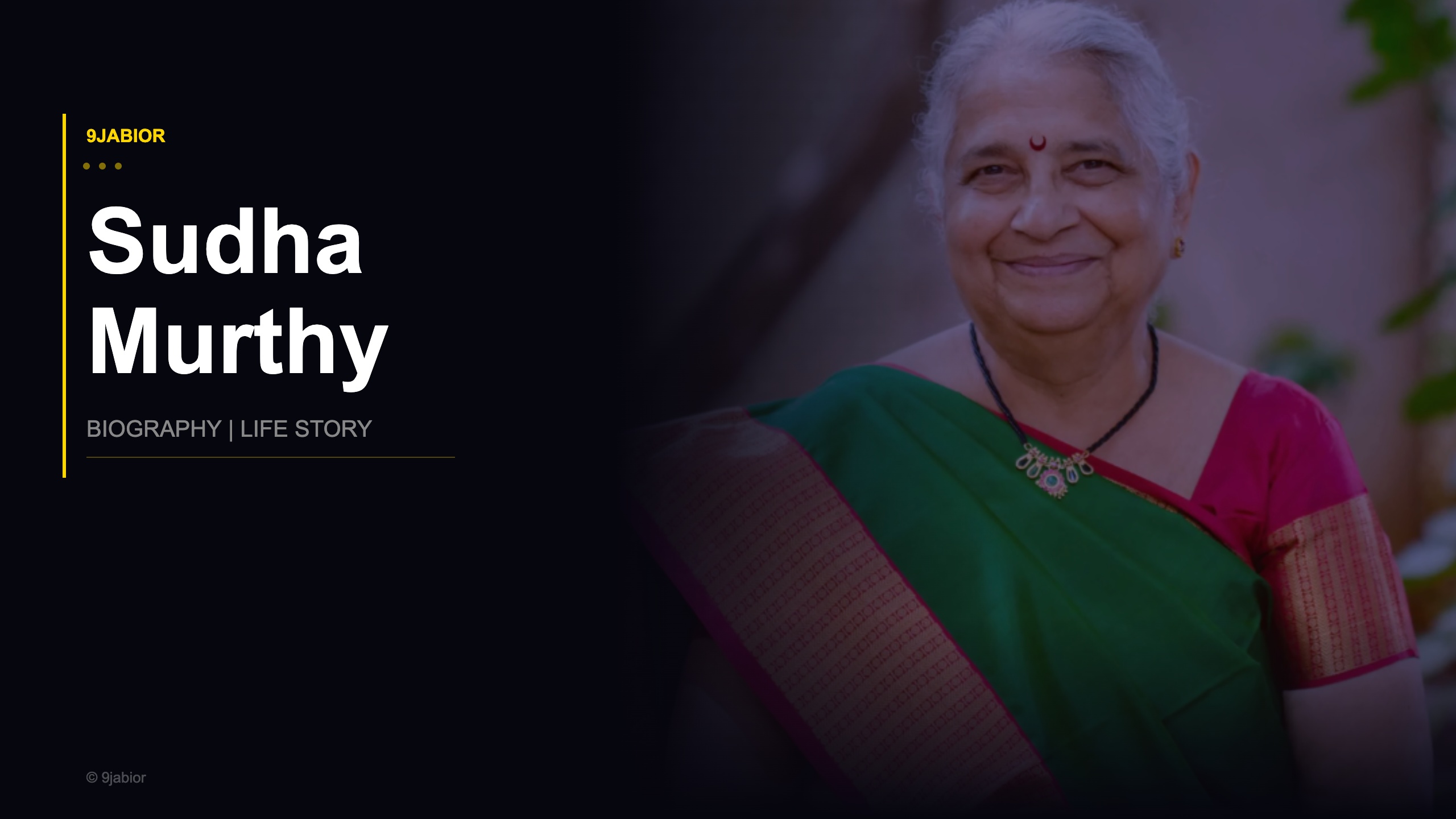
There’s a story about Biography of Sudha Murthy that says everything about who she is. In the early 1970s, a young woman from a small town in Karnataka spotted a job advertisement for engineers. It said, in clear black print, that female candidates need not apply. Most people would’ve folded the newspaper and moved on. Sudha Kulkarni, the woman who would later become Sudha Murthy, sat down and wrote a strongly worded postcard directly to the Chairman of the company. That act of quiet defiance would make her India’s first female engineer at TATA’s TELCO. It would also signal the kind of life she’d live — bold, purposeful, and always on her own terms.
The biography of Sudha Murthy isn’t just a list of accomplishments. It’s the story of a woman who kept choosing the harder, more meaningful path at every crossroads she encountered.
Who Is Sudha Murthy? A Quick Overview
Sudha Murthy is an Indian author, educator, engineer, and philanthropist born on August 19, 1950, in Shiggaon, Karnataka. She’s the Founder-Chairperson of the Infosys Foundation, the wife of Infosys co-founder N.R. Narayana Murthy, and one of the most widely read Indian authors of her generation, with over 40 books and six million copies sold worldwide. In March 2024, she was nominated as a Member of Parliament to the Rajya Sabha by the President of India — a fitting recognition of a life spent in service.
She’s the mother-in-law of Rishi Sunak, the former Prime Minister of the United Kingdom. But ask her about that, and she’ll quickly redirect the conversation to the children in rural Karnataka who now have computer labs because of her foundation.
That’s Sudha Murthy for you.
Early Life and Childhood in Karnataka
A Family That Valued Learning Above Everything
Sudha Murthy was born on August 19, 1950, in Shiggaon, a town in the Haveri district of what was then Mysore State and is now Karnataka. Her father, Dr. R.H. Kulkarni, was a surgeon, and her mother, Vimala Kulkarni, was a schoolteacher. Education wasn’t just encouraged in this household — it was the air everyone breathed.
She grew up alongside three siblings in a home that placed immense weight on reading, thinking, and doing right by others. Her brother Srinivas Kulkarni went on to become a celebrated astrophysicist at Caltech, winning the Dan David Prize in 2017. Her sister Jaishree Deshpande co-founded the Deshpande Center for Technological Innovation at MIT. Clearly, this was not an average family.
Raised by Grandparents — and How That Shaped Her Writing
What makes Sudha Murthy’s early years especially interesting is the time she spent being raised by her maternal grandparents. Those evenings listening to stories from the Mahabharata and Ramayana, learning the textures of human nature through mythology and village wisdom, planted something deep in her. Years later, when she became one of India’s most beloved storytellers, she’d say that it all began in those quiet hours with her grandparents.
There’s a famous anecdote: when Sudha was twelve, her grandfather asked her what she’d do first if given a pair of wings. She answered without hesitation — she’d fly to the library in the neighbouring village and read every book there. That pretty much tells you who she was going to become.
Education That Broke Every Barrier
The Only Girl in a Class of 600
Sudha pursued her Bachelor’s degree in Electrical and Electronics Engineering from B.V.B. College of Engineering and Technology in Hubli (now KLE Technological University). At the time, she was the only female student in a class of 600. The college principal agreed to admit her on three conditions: she had to always wear a saree, she couldn’t visit the canteen, and she wasn’t allowed to talk to the male students.
She accepted. And then she topped the university. She earned a gold medal from the Chief Minister of Karnataka at the time, Dr. Devaraj Urs, for securing the highest marks in the state. That’s the kind of student she was — she walked into a room that wasn’t built for her and quietly outperformed everyone in it.
Gold Medals, Computer Science, and a Future No One Saw Coming
After completing her bachelor’s degree, Sudha went on to pursue a Master’s degree in Computer Science from the prestigious Indian Institute of Science (IISc) in Bangalore in 1974. Again, she stood first in her class. Again, she won a gold medal — this time from the Institution of Engineers, India, for topping students from across all engineering universities in Karnataka.
This wasn’t just academic performance. It was a statement. A woman from Shiggaon had gone head-to-head with the sharpest engineering minds in the country and walked away with every honour on the table.
The Postcard That Changed Indian History
The Bold Letter to JRD Tata
After finishing her Masters at IISc, Sudha spotted a recruitment notice from Tata Engineering and Locomotive Company, better known as TELCO. The flyer included a line that enraged her: female candidates need not apply. Instead of accepting it, she picked up a postcard and wrote directly to J.R.D. Tata, the legendary Chairman of the Tata Group, calling out the gender bias in plain, direct language.
That postcard worked. She was granted a special interview. She was hired on the spot.
It was a moment that resonates even today. Not just because she got the job, but because of what it required — a young woman from Karnataka choosing to write to one of India’s most powerful industrialists to challenge a discriminatory policy, with no guarantee that anyone would even read her message.
Becoming India’s First Female Engineer at TELCO
Sudha Murthy became the first female engineer ever hired at TATA’s TELCO, then India’s largest automobile manufacturer. She joined as a Development Engineer in Pune and later worked in Mumbai and Jamshedpur. It was during her time at TELCO that her life would take its most significant personal turn.
After TELCO, she joined the Walchand Group of Industries in Pune as a Senior Systems Analyst — continuing to build one of the most impressive engineering careers in the country.
Love, Marriage, and a Rs. 10,000 Bet on Narayana Murthy
How They Met — Through Borrowed Books
Sudha met N.R. Narayana Murthy through a mutual friend named Prasanna. The funny thing is she already knew something about him before they even met — many of the books Prasanna lent her had Narayana Murthy’s name written inside. So she had a preconceived picture of the man. The reality, she later said in interviews, was a bit different. He was shy, bespectacled, and introverted. Not quite what she’d imagined.
Still, after a few meetings, both of them warmed up to each other. When Narayana proposed, he told her plainly: he was 5’4″, came from a lower-middle-class family, and was probably never going to be rich. Sudha liked the honesty. Her father, however, was less convinced — Narayana was a research assistant earning very little, and he’d told Sudha’s father he wanted to become a politician and run an orphanage someday. It took some convincing.
The Rs. 800 Wedding and the Leap of Faith That Built Infosys
They married in 1978 in a small ceremony at Narayana’s home, attended only by immediate family. The total cost of the wedding was Rs. 800, split between the two of them. It was not a grand event. But what followed certainly was.
In 1981, Narayana came home with a dream and no money. He wanted to start a company called Infosys. Sudha, without hesitation, handed him Rs. 10,000 she’d been saving quietly — her personal rainy-day fund. With that, she gave him three years. She told him: chase this, give it everything, and if it works, wonderful. If not, three years is the limit.
The rest, as they say, is the story of Indian technology. Narayana has spoken about this in many public forums, calling Sudha’s Rs. 10,000 the seed money that started everything.
Why Sudha Murthy Stayed Out of Infosys — and What She Did Instead
Here’s something that doesn’t get talked about enough. When Infosys was growing, friends suggested Sudha should join the company. She had the qualifications, the technical background, and the inside track. Narayana said no. His reasoning was simple — he didn’t want a husband-and-wife team running things at Infosys. He felt it would require complete, undivided focus and that mixing their professional and personal lives would complicate both.
Sudha was hurt initially. She’d helped start this company. She’d financed it with her own savings. But she accepted his reasoning after a few days of reflection. She understood that for Infosys to succeed, someone had to be all in — and she wasn’t going to be that person at this company.
Instead of sitting idle, she channelled everything into her own parallel life of purpose.
Building the Infosys Foundation — From an Idea to a National Movement
Schools, Hospitals, Orphanages, and Beyond
In 1996, Sudha Murthy founded the Infosys Foundation, a public charitable trust focused on education, healthcare, rural development, and the arts. As its Chairperson, she took the Foundation far beyond corporate social responsibility. She was on the ground, visiting villages, sitting with families, understanding problems, and finding solutions that lasted.
Under her leadership, the Foundation built hundreds of libraries, established orphanages, constructed hospitals in underserved areas, funded schools across Karnataka, and provided computer equipment to government schools that had never seen such technology before. She also played a critical role in flood relief operations during several major disasters in India.
She retired from the Foundation in 2020–2021, but the infrastructure she built continues to serve millions.
Devadasi Community Work and Women’s Empowerment
One of the most significant and less-discussed aspects of Sudha Murthy’s philanthropic work is her sustained effort with the Devadasi community — women who’ve historically been subjected to exploitation under the guise of religious practice. She worked to rehabilitate these women, provide them with education and livelihood, and reintegrate them into mainstream society.
It’s the kind of work that doesn’t generate headlines but changes lives in ways that last generations.
Sudha Murthy the Author — 40+ Books and 6 Million Readers
Her Most Famous Books and What They’re Really About
Sudha Murthy’s writing career began in 1978 with a Kannada travelogue called Atlanticadacheyinda. Her first English book, Wise and Otherwise, came out in 2002 — a collection of real-life anecdotes drawn from her years as a social worker. That book made her a household name. From there, the pages kept coming.
Some of her most celebrated works include:
- Wise and Otherwise — 51 real-life stories about ordinary people and extraordinary human behaviour
- Dollar Bahu — a novel exploring cultural conflict and family dynamics, adapted into a Zee TV series in 2001
- Three Thousand Stitches — stories of real people whose lives were transformed through compassion
- Grandma’s Bag of Stories — a beloved children’s book that has introduced mythology and moral stories to a whole new generation
- The Magic of the Lost Temple — a coming-of-age story set in a Karnataka village
- Mahashweta — a novel about a woman dealing with a rare skin condition and the social stigma that follows
Her books have been translated into all major Indian languages. One of her stories, Runa, was adapted into a Marathi film called Pitruroon — and Sudha actually appeared in the film herself.
Why Her Stories Connect With Everyone From Age 8 to 80
There’s a reason Sudha Murthy’s books have sold over six million copies. She doesn’t write for critics. She writes for people. Her language is clear, her moral compass is firm but never preachy, and her stories come from real life — people she met at hospitals, at village wells, in the corridors of government offices. She brings those people to the page with warmth and without judgment.
Children love her stories because they’re fun and relatable. Adults love them because they’re rooted in truth. And grandparents love them because they recognize the world she describes.
From Karnataka to the Halls of Parliament — Her Rajya Sabha Journey
On March 8, 2024 — International Women’s Day — President Droupadi Murmu nominated Sudha Murthy as a Member of Parliament to the Rajya Sabha. Prime Minister Narendra Modi publicly congratulated her, calling her nomination a powerful testament to women’s strength in shaping India’s destiny.
She took her oath on March 14, 2024, at the Parliament House, with Narayana Murthy by her side.
When asked if this was a political step, Sudha was clear: she doesn’t consider herself a politician. Her words were direct: this was an opportunity to work for the poor on a bigger platform. And that’s exactly how she’s approached her parliamentary role — from the angle of public service rather than political positioning.
The Global Indian — Harvard, Gates Foundation, and the Murty Classical Library
Sudha Murthy’s impact doesn’t end at India’s borders. She’s a member of the public healthcare initiative of the Bill & Melinda Gates Foundation, contributing to global conversations about health equity and access.
She also co-founded the Murty Classical Library of India at Harvard University — a landmark publishing project dedicated to translating Indian classical literature into English and making centuries of knowledge accessible to readers around the world. The project, driven by her son Rohan Murty, aligns perfectly with her lifelong belief that knowledge must be shared, not hoarded.
Sudha Murthy’s Awards and Honours
Over decades of work in engineering, literature, and philanthropy, Sudha Murthy has received recognition that spans every field she’s touched:
- 2004 — Raja-Lakshmi Award by Sri Raja-Lakshmi Foundation, Chennai
- 2006 — Padma Shri (India’s fourth-highest civilian honour) for social work
- 2006 — R.K. Narayan Award for Literature
- 2010 — Daana Chintamani Attimabbe Award by Karnataka Government
- 2011 — Honorary Doctor of Laws (LL.D.) for promoting legal education in India
- 2018 — Crossword Book Award in Popular Non-Fiction
- 2019 — Honorary Doctor of Science from IIT Kanpur
- 2020 — Lal Bahadur Shastri National Award
- 2023 — Padma Bhushan (India’s third-highest civilian honour)
- 2023 — Sahitya Akademi Bal Sahitya Puraskar for children’s literature
- 2023 — Global Indian Award from the Canada India Foundation (worth $50,000) — first woman to win it
- 2024 — Nominated as Member of Parliament, Rajya Sabha
She also holds gold medals from IISc, the Karnataka Chief Minister, and the Institution of Engineers, India — going all the way back to her student years.
Net Worth, Lifestyle, and the Simplicity That Defines Her
Sudha Murthy’s net worth is estimated at approximately Rs 775 crore, with Infosys stocks valued at a significantly higher figure. Combined with her husband Narayana Murthy’s wealth, the family’s total net worth reaches into the tens of thousands of crores.
And yet she travels economy class. She hasn’t bought a new saree in decades — the ones she wears were gifted to her by loved ones and by NGOs she has worked with, including two hand-embroidered sarees from a group of abused women. She and Narayana together own a personal library of around 20,000 books. She spends money on philanthropy. Everything else comes second.
When her husband suggests she fly business class, her answer is always the same — she’ll reach the same destination at the same time for much less money. That extra money can do more elsewhere.
It’s a value system she’s held onto since that Rs. 800 wedding and those Rs. 10,000 savings that seeded a company now worth billions.
Family — Daughter Akshata, Son Rohan, and a Son-in-Law Who Became UK PM
Sudha and Narayana have two children. Their daughter, Akshata Murty, is a fashion designer and businesswoman who married Rishi Sunak, who went on to become the 57th Prime Minister of the United Kingdom — making Sudha Murthy the mother-in-law of a British Prime Minister. It’s a fact she tends to downplay, always redirecting to the work at hand.
Their son, Rohan Murty, is a computer scientist, a Junior Fellow at the Harvard Society of Fellows, and the founder of enterprise software company Soroco. He’s also the driving force behind the Murty Classical Library of India project at Harvard.
Rohan’s son — Sudha’s grandson, Ekagrah Rohan Murty — made headlines in 2025 when it was reported that the toddler would receive Rs. 3.3 crore in Infosys dividends, having been gifted 15 lakh shares by grandfather Narayana when he was just four months old.
Life Lessons and Philosophy From Sudha Murthy
What makes Sudha Murthy’s story genuinely inspiring isn’t the size of her net worth or the prestige of her son-in-law. It’s the consistent thread running through every stage of her life: a refusal to accept things as they are when they can be better.
She wrote a postcard when the world told her not to apply. She funded a company when most people would’ve played it safe. She walked away from Infosys when she could’ve pushed her way in. She spent years in villages building schools when she could’ve been in boardrooms. She wrote books in simple language when literary prestige might’ve tempted her elsewhere.
Sudha once said, “Life is an exam where the syllabus is unknown and question papers are not set. Nor are there model answer papers.” That philosophy — of embracing uncertainty, doing good with what you have, and staying grounded no matter how high you rise — is perhaps the most important thing she’s ever written.
Frequently Asked Questions About Sudha Murthy
Who is Sudha Murthy and why is she famous? Sudha Murthy is an Indian author, engineer, educator, and philanthropist. She’s famous for becoming India’s first female engineer at TELCO (now Tata Motors), founding the Infosys Foundation, writing over 40 books with more than six million copies sold, and being nominated to India’s Rajya Sabha in 2024.
What is Sudha Murthy’s educational qualification? She holds a Bachelor’s degree in Electrical and Electronics Engineering from KLE Technological University (formerly B.V.B. College) and a Master’s degree in Computer Science from the Indian Institute of Science (IISc), Bangalore. She topped both programs and received gold medals.
How did Sudha Murthy become the first female engineer at TELCO? She spotted a job advertisement that explicitly excluded female candidates and wrote a postcard directly to J.R.D. Tata, the Chairman of the Tata Group, challenging the gender discrimination policy. He was impressed enough to grant her a special interview, and she was hired immediately.
What is the net worth of Sudha Murthy? Sudha Murthy’s individual net worth is estimated at approximately Rs 775 crore. She holds Infosys shares and earns from royalties and speaking engagements. Despite this wealth, she lives a notably simple lifestyle and directs most of her resources toward philanthropic work.
What books has Sudha Murthy written? Sudha Murthy has written over 40 books across multiple genres — novels, short story collections, children’s books, travelogues, and memoirs. Her most famous titles include Wise and Otherwise, Dollar Bahu, Three Thousand Stitches, Grandma’s Bag of Stories, and The Magic of the Lost Temple.
What is the Infosys Foundation? The Infosys Foundation is a non-profit public charitable trust founded by Sudha Murthy in 1996. It works in the areas of education, healthcare, rural development, arts and culture, and disaster relief. It has built hundreds of schools, libraries, hospitals, and orphanages across India.
Who are Sudha Murthy’s children? Sudha Murthy has two children — a daughter named Akshata Murty, who is a fashion designer and businesswoman married to former UK Prime Minister Rishi Sunak, and a son named Rohan Murty, who is a computer scientist and co-founder of enterprise software company Soroco.
Is Sudha Murthy a Member of Parliament? Yes. On March 8, 2024, Sudha Murthy was nominated as a Member of Parliament to India’s Rajya Sabha by President Droupadi Murmu. She took her oath on March 14, 2024. She has stated clearly that she views her role as public service, not politics, and aims to use the platform to advocate for education and the welfare of India’s underprivileged communities.

 Ghost Blogger