 Ghost Blogger
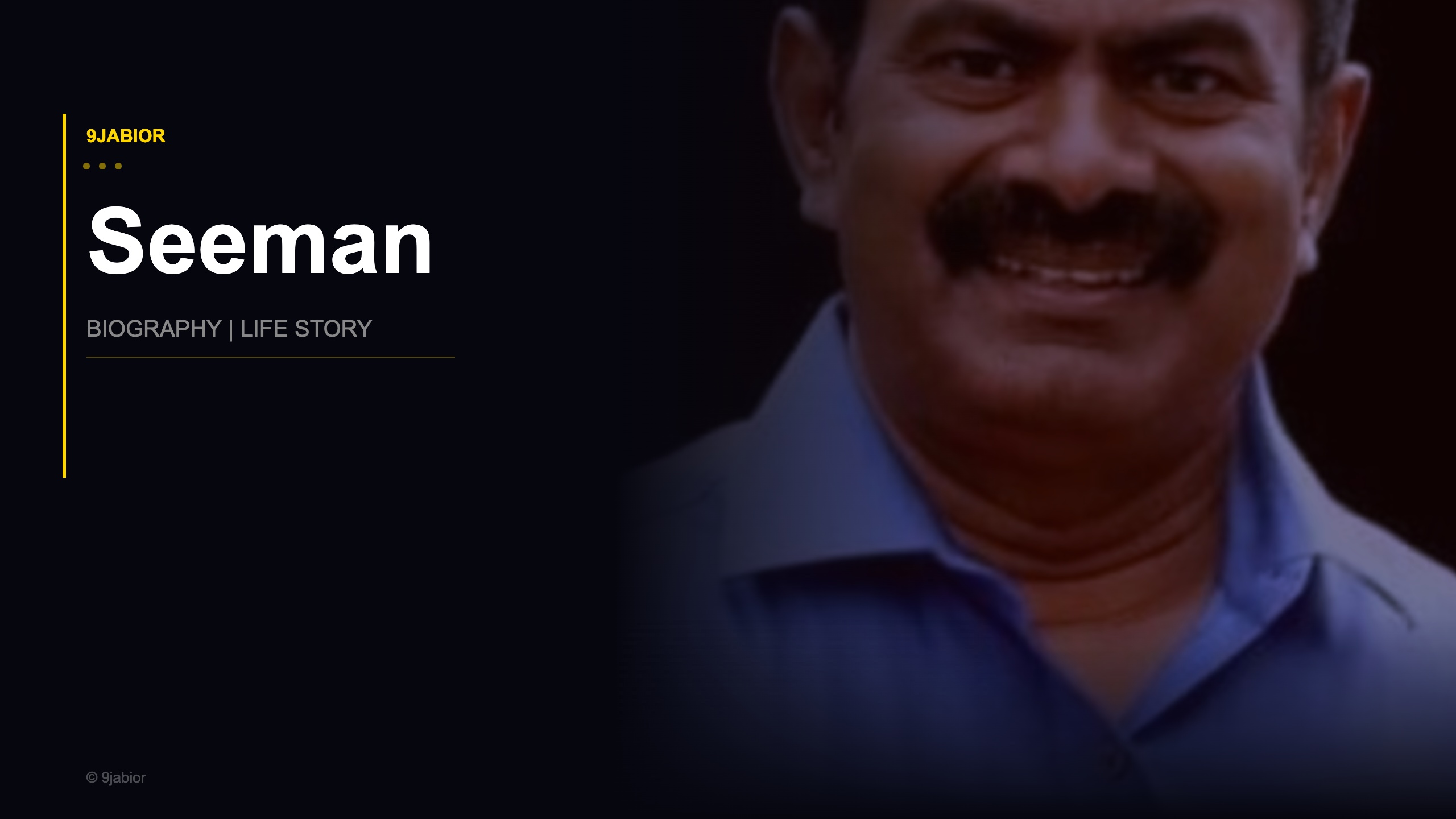
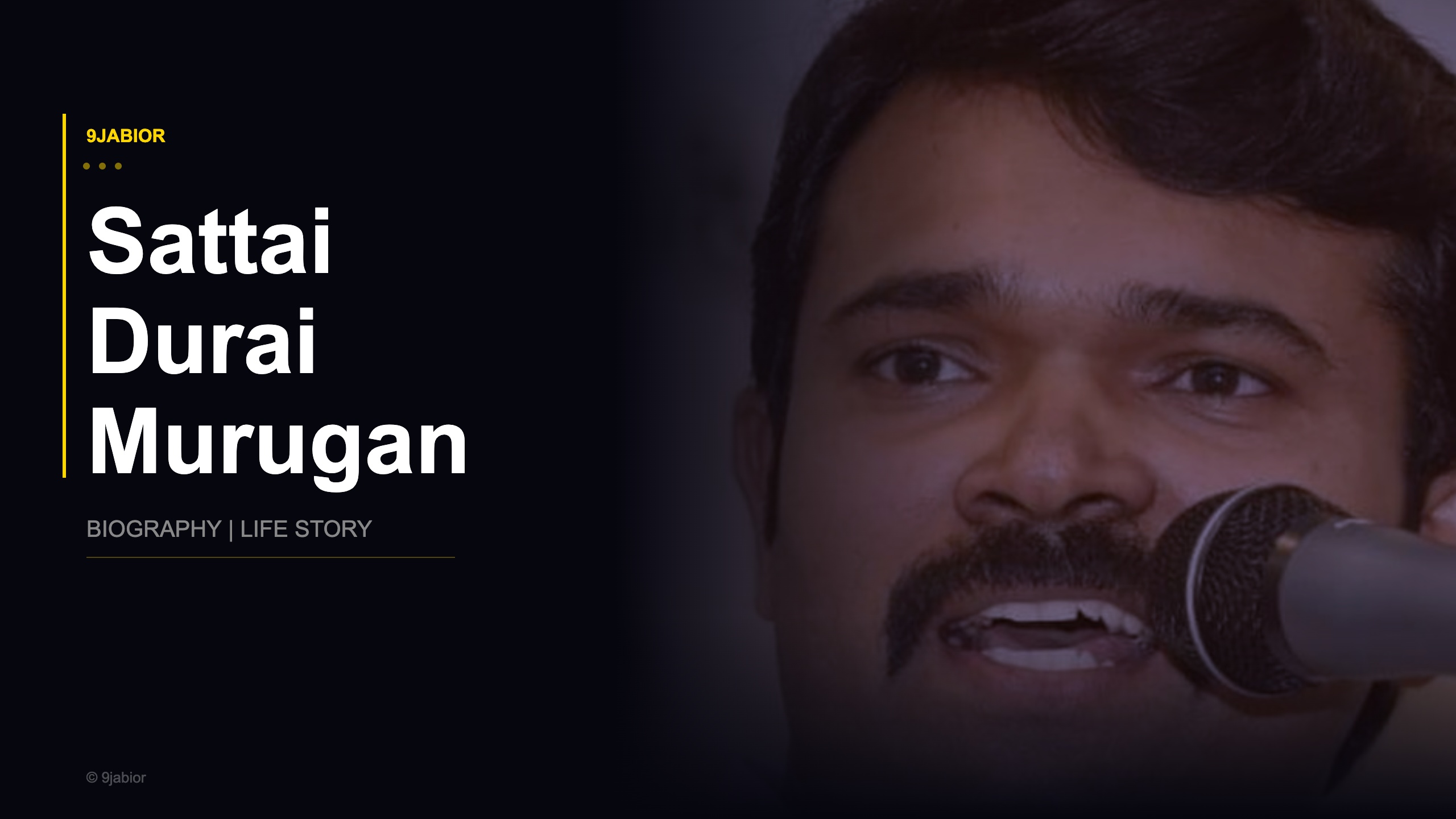
You’d be hard-pressed to find another politician in Tamil Nadu quite like Seeman. He’s been a filmmaker, an actor, a Tamil rights campaigner, a man arrested multiple times under national security laws, and yet — he keeps growing. His party’s vote share goes up election after election. His rallies fill up. People listen. Whether you love him or can’t stand him, Seeman’s story is genuinely fascinating.
This complete Seeman biography covers everything — his early life in a tiny Tamil Nadu village, his journey into Tamil cinema, the moment he chose politics over filmmaking, and exactly what he believes in. If you’ve been searching for a clear, honest account of who Seeman really is, you’re in the right place.
Who Is Seeman? A Quick Overview
Seeman’s full name is Senthamizhan Seeman, though he was born Sebastian Simon. He’s an Indian politician, former film director, and actor from Tamil Nadu. Today, he’s best known as the chief coordinator of the Naam Tamilar Katchi (NTK), a Tamil nationalist political party. He’s vocal, he’s controversial, and he genuinely doesn’t care who he offends when he believes Tamil rights are at stake.
Real Name, Date of Birth, and Hometown
Seeman was born on November 8, 1966, in Aranaiyur — a small village in the Sivaganga district of Tamil Nadu. His birth name is Sebastian Simon, but the world knows him as Seeman, a name that translates loosely to “the sea” or is used as a common Tamil honorific. He’s 59 years old as of 2026.
Why Seeman Is a Unique Figure in Indian Politics
Most politicians in Tamil Nadu come from established party backgrounds — either DMK, AIADMK, or their offshoots. Seeman is different. He built his political identity through cinema first, using storytelling as a way to express Tamil pride before ever entering electoral politics. He’s never won a legislative seat, yet his influence on Tamil political discourse is hard to ignore. That’s a rare combination.
Seeman’s Early Life and Family Background
Growing Up in Aranaiyur — A Village With Big Influence
Aranaiyur isn’t a name most people know. It’s a quiet village in Sivaganga district, not far from Paramakudi. But it was here that Seeman spent his earliest years, before the family eventually moved for his education. Small-town Tamil Nadu in the late 1960s and 1970s was a politically charged environment — the Dravidian movement was reshaping society, and even schoolchildren couldn’t help but absorb its energy.
His Father’s Congress Roots and Seeman’s Ideological Drift
Here’s an interesting irony. Seeman’s father, also named Senthamizhan, was a member of the Indian National Congress — a party that Seeman would grow up to campaign fiercely against. His mother’s name is Annammal. He also has a brother named James Peter. The family was Christian by religion, which adds another layer to Seeman’s complex political identity as someone who later made very contentious statements about religious minorities.
During his high school and college years, Seeman became increasingly drawn to Dravidian movement ideals. But somewhere along the way, his thinking moved beyond Dravidian politics toward something more distinctly Tamil nationalist.
Education Journey — From Village School to Economics Degree
Seeman’s schooling started at the Government Primary School in Aranayur, where he studied until the 5th standard. He then attended K.K. Ibrahim Ali High School for classes 6 through 10, and completed his 11th and 12th grades at a school in Ilayankudi. He went on to earn a Bachelor’s degree in Economics from Dr. Zakir Hussain College in Ilayankudi in 1985. Economics might seem like an unlikely subject for someone who’d later become a filmmaker and political firebrand — but it gave him a framework for understanding inequality, which would later fuel much of his rhetoric.
What Drew Seeman to the Film Industry
The Bharathiraja and Manivannan Connection
After completing his degree, Seeman made a decision that probably surprised his family: he moved to Chennai to pursue filmmaking. He was specifically inspired by the works of two legendary Tamil directors — Bharathiraja and Manivannan. Both were known for rural Tamil stories told with raw emotion and social consciousness. That resonated deeply with Seeman.
He didn’t just admire them from afar. He worked as an assistant director under both Bharathiraja and Manivannan — learning the craft from the inside. This mentorship shaped not just his filmmaking style, but his political outlook. Bharathiraja, in particular, was also a Tamil cultural activist, and that passion rubbed off on Seeman in a significant way.
His Hidden Talent — Martial Arts and Physical Discipline
Not many people know this, but Seeman has a solid background in martial arts. He’s trained in Karate and Silambam (a traditional Tamil stick-fighting martial art), along with other combat disciplines. This physical discipline appears to run parallel to the kind of ideological discipline he brings to his political work — he doesn’t waver easily, and he’s built a reputation for consistency in his stands, even when they’re unpopular.
Seeman’s Film Career — A Director Who Fought Twice
First Films and Early Setbacks (1996–2000)
Seeman made his directorial debut with Panchalankurichi in 1996, a village-based action film starring Prabhu and Madhubala. It was a solid start for a new director — the film showed his love for rural Tamil settings and heroic narratives. He followed it up with Iniyavale in 1998, a romantic film featuring Prabhu again, alongside Suvalakshmi, Gouthami, and Keerthi Reddy. His third film was Veeranadai in 2000, starring Sathyaraj and Khushbu, which received mixed reviews and underperformed commercially.
Those early setbacks hit hard. Producers became reluctant. Multiple projects were announced — Vaigai Karai Oram with Vijayakanth, Anandham with Karthik, Karma Veerar with Sarathkumar, Sethupathi Cheemaiyile with Rajkiran — and none of them made it to production. For someone who’d given up everything to come to Chennai and make films, it was a brutal stretch.
The Comeback — Thambi (2006) and What Made It Special
Then came Thambi. Released in 2006 with actor Madhavan in the lead role, this village-based vigilante film was Seeman’s big comeback. It was critically acclaimed and performed well commercially — a rare double win. The film’s production wasn’t without drama; Seeman had a public disagreement with Madhavan over the actor leaving the shoot to be with his wife during childbirth. Seeman objected, which caused a brief halt in production. It was the kind of stubborn, unyielding stance that would come to define his public personality in politics too.
Vaazhthugal and the Final Chapter of His Directing Career
Seeman directed Vaazhthugal in 2008, again with Madhavan and actress Bhavana. The film failed at the box office and received poor reviews. That was effectively the end of his active directing career. He tried for years to get a film called Pagalavan off the ground, approaching stars like Ajith Kumar, Vikram, Vijay, Jiiva, Jayam Ravi, Arya, Vishal, Vijay Antony, and Silambarasan — but none of them committed. In 2018, he also planned a film called Kobam that didn’t find producers. Eventually, he stopped chasing that dream.
Seeman as an Actor — Supporting Roles That Left an Impression
While his directing career wound down, Seeman pivoted to acting. He made his acting debut in the film Pori, playing a Malaysian businessman. He went on to appear in supporting roles in critically appreciated films like Evano Oruvan, Mayandi Kudumbathar, and Pallikoodam. In 2013, he played a lead role in his mentor Manivannan’s final directorial venture, Nagaraja Cholan MA, MLA — the sequel to the acclaimed Amaidhi Padai. It was a meaningful full-circle moment.
The Shift From Cinema to Politics — What Triggered It
Sri Lanka’s Civil War and Seeman’s Turning Point
The Sri Lankan Civil War, which officially ended in May 2009, was the catalyst that pushed Seeman fully into the political arena. The final phase of the war involved the killing of thousands of Sri Lankan Tamils, and Seeman was devastated and outraged. He had already been vocal about Tamil rights in Sri Lanka, but this period made him feel that speaking up wasn’t enough — organizing was necessary.
In October 2008, he participated in a rally organized by Bharathiraja condemning atrocities against Tamils in Sri Lanka. During the rally, he made speeches criticizing the Indian government and expressing support for the LTTE. He was arrested and later released on bail. It didn’t silence him. If anything, it amplified him.
The Birth of Naam Tamilar Iyakkam in 2009
On November 27, 2009, Seeman attended Maaveerar Day events in Toronto, Canada. There, he announced the launch of a new movement — “We Are Tamils” (Naam Thamizhar Iyakkam). But that trip ended abruptly. He was arrested by the RCMP (Royal Canadian Mounted Police) after delivering speeches deemed inflammatory, and was deported back to India. Rather than breaking his momentum, the deportation actually gave the movement more visibility.
On May 18, 2009, coinciding with the end of the Sri Lankan Civil War, Seeman had gathered with other activists in Madurai to formally establish the Naam Tamilar Iyakkam as a social outfit. A year later, on the first anniversary of that formation, he announced its transformation into a full-fledged political party — the Naam Tamilar Katchi (NTK).
How a Social Movement Became a Political Party
The transition from social movement to political party was deliberate. Seeman felt that influencing elections was the only way to put real pressure on the Tamil Nadu government to act on Tamil rights — both within India and internationally. NTK formally launched on May 18, 2010, and began building grassroots networks across Tamil Nadu’s districts.
Seeman’s Political Ideology — What Does He Actually Believe?
Tamil Nationalism vs. Dravidian Identity — The Core Difference
This is where Seeman stands apart from most Tamil politicians. The dominant political identity in Tamil Nadu for decades has been Dravidian — championed by parties like DMK and AIADMK, which trace their roots to Periyar’s Self-Respect Movement. Seeman rejects this framing. He believes Tamils should identify solely based on their language and culture, not the broader Dravidian umbrella that includes multiple South Indian ethnicities.
He’s argued that Tamil Nadu should be governed by Tamils — people who genuinely represent Tamil identity. That’s a position that draws both fierce support and fierce criticism.
Stand on Tamil Eelam and the LTTE
Seeman is openly sympathetic to the cause of Tamil Eelam — an independent Tamil state in the north and east of Sri Lanka — and has expressed admiration for LTTE leader Velupillai Prabhakaran. He observes Maaveerar Naal (Heroes’ Day) every year in Prabhakaran’s memory. This stance has led to multiple arrests under the National Security Act (NSA) and sedition charges. India officially designates the LTTE as a terrorist organization, which makes Seeman’s position legally precarious and politically controversial.
His Positions on Women’s Rights, Fishermen, and the Environment
NTK under Seeman has taken strong positions on several non-nationalistic issues too. The party consistently allocates nearly half its election seats to women candidates — an unusual commitment in Indian politics. It has campaigned extensively on behalf of Tamil fishermen attacked by the Sri Lankan Navy, opposed nuclear power plants like Kudankulam, protested the Chennai-Salem expressway project over ecological concerns, and supported the humanitarian release of long-term prisoners. These stances give NTK a broader ideological profile than just Tamil nationalism.
Why NTK Refuses to Form Electoral Alliances
One of the most frequently asked questions about NTK is why it insists on contesting all seats on its own rather than joining coalitions. Seeman’s reasoning is straightforward: alliance politics require compromise, and he believes that compromise on Tamil rights is unacceptable. He sees mainstream alliances as vote-based transactions that ultimately deliver nothing for Tamils. NTK’s willingness to lose deposits rather than dilute its positions is central to its identity.
Naam Tamilar Katchi — Building a Third Force in Tamil Politics
NTK’s Vote Share Growth: 2014 to 2024
The numbers tell a compelling story. In the 2019 Lok Sabha elections, NTK contested all 39 Tamil Nadu constituencies and won around 4% of the vote share — not enough to win seats, but enough to establish a presence. By the 2021 Tamil Nadu Assembly elections, the party’s vote share climbed to 6.89%, with candidates finishing third in over 159 constituencies. In the 2024 Lok Sabha elections, NTK’s vote share rose again to 8.19%. That’s consistent upward movement across three consecutive election cycles — a rare achievement for a party that refuses to ally with anyone.
The 2016 Assembly Elections — Going Solo in All 234 Seats
The 2016 Tamil Nadu Legislative Assembly elections were a defining moment for NTK. The party contested all 234 constituencies on its own — including seats in Puducherry — making it the only party other than the DMK and AIADMK to do so. Seeman himself stood from the Cuddalore constituency, polling 12,497 votes before finishing fifth and losing his deposit. The party won no seats. But the organizational capacity to field candidates in every single constituency was a statement in itself.
NTK Gains State Party Recognition in 2025
In May 2025, the Election Commission of India officially recognized NTK as a state party — a milestone that had taken years of sustained electoral performance to achieve. This recognition grants the party official symbol rights, access to government media time, and greater credibility in the political landscape.
Seeman’s 2026 Election Campaign in Karaikudi
In the 2026 Tamil Nadu Legislative Assembly elections, Seeman is contesting from the Karaikudi constituency as NTK’s chief coordinator. It represents another attempt to translate the party’s growing vote share into actual representation — something that has eluded NTK despite its rising influence.
Controversies That Shaped Seeman’s Public Image
The 2008 Arrest — Standing With Sri Lankan Tamils
On October 24, 2008, Seeman was arrested following a rally organized by filmmaker Bharathiraja to protest the Sri Lankan government’s actions against Tamils. Seeman made speeches supporting the LTTE at the event. He was later released on bail with the help of fellow filmmakers and actor R. Sarath Kumar. It was his first high-profile arrest and set the tone for what would follow.
Deported From Canada — What Really Happened
In November 2009, Seeman traveled to Toronto for Maaveerar Day events. He delivered speeches that Canadian authorities determined constituted hate speech — including statements about the Sinhalese community. The RCMP arrested him and he was deported back to India. The incident made international headlines and paradoxically boosted his profile among Tamil diaspora communities who saw him as a fearless advocate. Shortly after his deportation, unrelated incidents of civil unrest occurred in Canada, though Seeman had no direct connection to them.
NSA Detentions and Sedition Cases
Seeman has been detained multiple times under the National Security Act (NSA) — a law that allows authorities to hold individuals without trial. In 2011, he was arrested at Chepauk for inflammatory speeches at a protest against the killing of a Tamil fisherman by the Sri Lankan Navy. He was held at Vellore Central Prison for five months before being released. He’s also faced visa restrictions and sedition charges at various points.
Controversial Statements and the Backlash They Caused
Seeman’s rhetoric has occasionally crossed lines that even his supporters found difficult to defend. In 2023, while speaking at a demonstration against the Manipur violence, he referred to Muslims and Christians as “Satan’s children” — a remark that drew widespread condemnation from minority communities, opposition parties, and civil society groups. He was also booked by police under multiple IPC sections after making comments about North Indian migrant workers. He later clarified these statements, but the damage to his reputation among some communities was significant.
Seeman’s Personal Life — The Man Behind the Microphone
Marriage to Kayalvizhi — A Political Love Story
In September 2013, Seeman married Kayalvizhi in a ceremony held at the YMCA grounds in Nandanam, Chennai, conducted according to Tamil traditions. The wedding was notable for more than one reason — Kayalvizhi is the daughter of K. Kalimuthu, the former Speaker of the Tamil Nadu Legislative Assembly and a senior AIADMK figure. A Tamil nationalist marrying into an AIADMK family raised more than a few eyebrows, especially since Seeman’s party had a complicated relationship with the AIADMK over the years. Kayalvizhi herself went on to become a member of the Tamil Nadu Legislative Assembly representing Dharapuram under the DMK banner, and was appointed Minister for Adi Dravidar Welfare in May 2021.
His Son and Private Family Life
Seeman and Kayalvizhi have a son together, though Seeman has kept his child’s name and personal details out of the public eye. For someone as publicly vocal as he is on political matters, he’s maintained a notable degree of privacy around his home life.
Books He’s Written and His Love for Reading
Away from the stage and the microphone, Seeman is a reader and a writer. He’s authored two books: Vendradhu Aariyam; Thunai Nindrathu Dravidam and Thiruppi Adippaen. These works reflect his political thinking — challenging dominant historical narratives about Tamil identity and asserting Tamil cultural pride. He’s also known to spend his free time reading, which perhaps explains the depth of his political arguments even when one disagrees with them.
Seeman’s Net Worth and Lifestyle
Seeman’s net worth is estimated at around $5 million (approximately ₹41 crore), though his official affidavit filed with the Election Commission of India placed his declared assets at around ₹1.25 crore with liabilities of ₹6.1 lakh — a reminder that political affidavits don’t always tell the complete financial story. He keeps a relatively low-profile lifestyle compared to other politicians, consistent with his image as someone focused on the movement rather than personal wealth.
Lesser-Known Facts About Seeman
He trained in Karate and Silambam, giving him a physical edge that few Tamil politicians share. He attended the 22nd session of the United Nations Human Rights Council (UNHRC) in Geneva in March 2013 — representing the Tamil rights cause on an international stage. He maintains his physical fitness through regular yoga. His party flag features a leaping tiger, which carries symbolic weight as an emblem of both the Chola dynasty and Tamil heritage. He has been arrested three to four times throughout his life — and returned each time more determined than before. His zodiac sign is Scorpio, which fans jokingly say explains everything about his personality.
FAQ — Everything You’ve Been Wondering About Seeman
Who is Seeman and what is he known for? Seeman, born Senthamizhan Seeman (real name Sebastian Simon), is an Indian politician, former film director, and actor from Tamil Nadu. He’s best known as the founder and chief coordinator of the Naam Tamilar Katchi (NTK), a Tamil nationalist political party, and for his outspoken advocacy for Tamil rights in India and Sri Lanka.
What is Seeman’s real name? Seeman’s birth name is Sebastian Simon. He adopted the name Senthamizhan Seeman, which reflects his deep identification with Tamil language and culture. He’s universally referred to simply as “Seeman.”
Who is Seeman’s wife? Seeman married Kayalvizhi in September 2013. She is the daughter of K. Kalimuthu, former Speaker of the Tamil Nadu Legislative Assembly. Kayalvizhi is herself a politician — a DMK MLA representing Dharapuram and a former state minister.
Has Seeman ever won an election? No. Despite contesting multiple assembly elections, Seeman has not won a legislative seat. However, NTK’s vote share has grown consistently — from 4% in 2019 to 8.19% in 2024 — and the party received state party recognition in 2025.
Why was Seeman deported from Canada? In November 2009, Seeman attended Maaveerar Day events in Toronto and delivered speeches that Canadian authorities determined constituted hate speech against the Sinhalese community. The Royal Canadian Mounted Police (RCMP) arrested him and he was deported back to India.
What films did Seeman direct? Seeman directed Panchalankurichi (1996), Iniyavale (1998), Veeranadai (2000), Thambi (2006), and Vaazhthugal (2008). His most successful film was Thambi, starring Madhavan, which was both a critical and commercial success.
What is the Naam Tamilar Katchi party? Naam Tamilar Katchi (NTK) is a Tamil nationalist political party founded by Seeman in 2010 as a revival of an older party from 1958. It advocates for Tamil identity, the Tamil Eelam cause, women’s representation, and refuses to enter electoral alliances with other parties. In 2025, it was officially recognized as a state party by the Election Commission of India.
What are Seeman’s books about? Seeman has written two books — Vendradhu Aariyam; Thunai Nindrathu Dravidam and Thiruppi Adippaen. Both reflect his political ideology, challenging mainstream historical narratives about Tamil identity and championing Tamil cultural assertion.

 Ghost Blogger