 Ghost Blogger
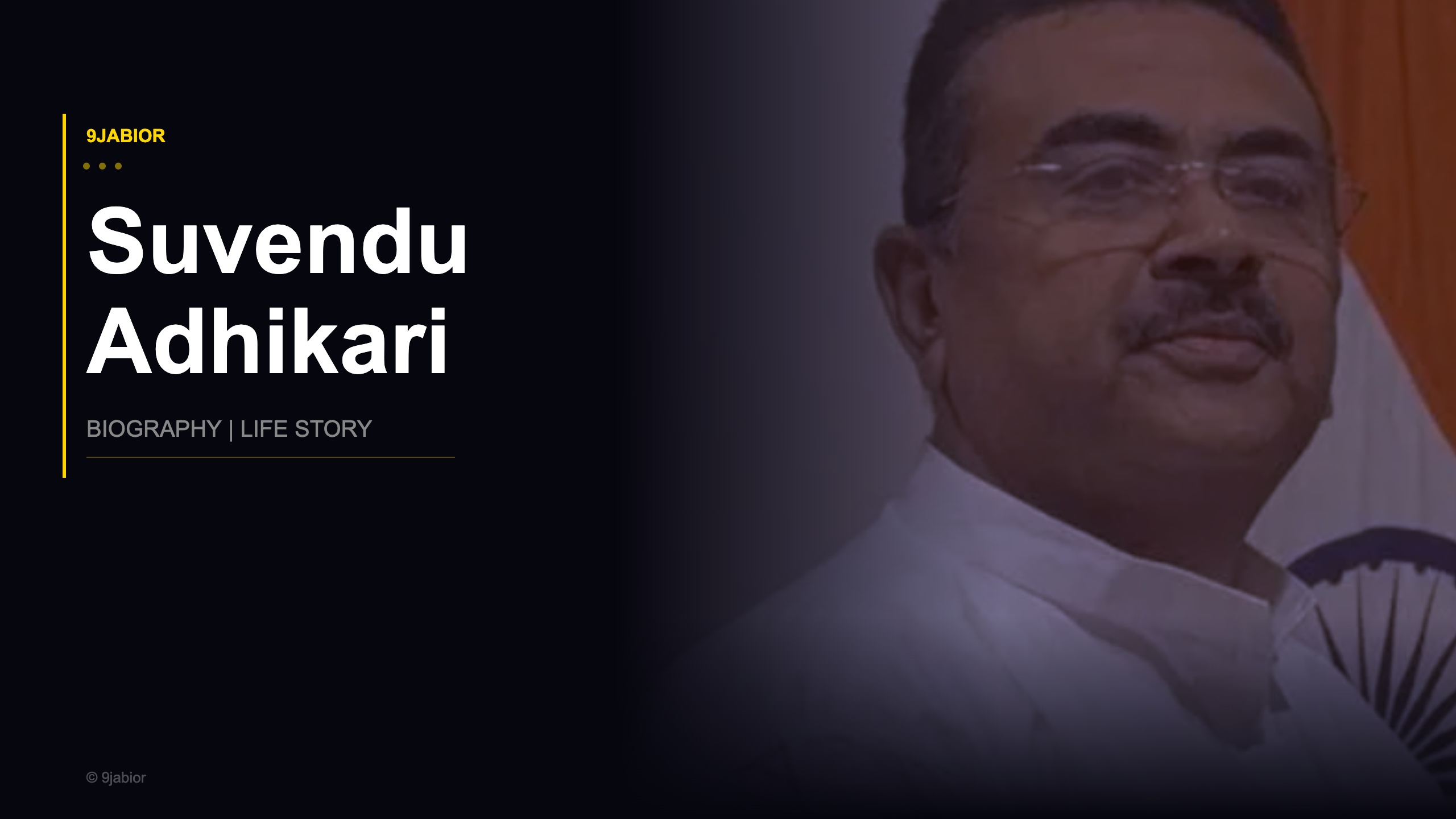
Suvendu Adhikari Biography-If you’ve been following West Bengal politics for even a few years, you’ve heard the name Suvendu Adhikari — probably more than once, and probably in the middle of some political storm. He’s one of those rare politicians who doesn’t just participate in history. He makes it.
Born into a family that breathes politics, shaped by a land movement that rewrote Bengal’s future, and bold enough to walk away from one of India’s most powerful regional leaders at the peak of his career — Suvendu Adhikari’s biography is as dramatic as the state he represents. Today, as the Leader of the Opposition in West Bengal and the BJP’s most recognizable face in the state, his story offers a window into how modern Indian politics really works — full of idealism, strategy, ambition, and sometimes controversy.
This is the most complete guide to Suvendu Adhikari’s life, career, and political journey available anywhere. Let’s get into it.
Who Is Suvendu Adhikari? A Quick Overview
Suvendu Adhikari is an Indian politician currently serving as the Leader of the Opposition in the West Bengal Legislative Assembly and the state president of the Bharatiya Janata Party in West Bengal. He was born on December 15, 1970, in Karkuli, Purba Medinipur, West Bengal. His political journey spans three parties — Congress, Trinamool Congress, and BJP — across three decades.
He became a national headline in 2021 when he defeated West Bengal Chief Minister Mamata Banerjee in the Nandigram constituency by a margin of 1,956 votes. That single result changed the political conversation in Bengal overnight. Since then, he’s been the face of the BJP’s ambition to eventually unseat the TMC government.
Early Life, Family Roots, and the Making of a Political Mind
Born Into Politics — The Adhikari Household
Suvendu Adhikari didn’t discover politics as an adult. He was born into it. His father, Sisir Kumar Adhikari, is a veteran politician who held the position of Union Minister of State for Rural Development in the Manmohan Singh government and went on to represent the Kanthi constituency in Lok Sabha. Growing up in Karkuli in Purba Medinipur, political conversations weren’t occasional — they were daily. Elections, constituency work, public meetings — these were part of the family routine.
This kind of environment does something to a person. It either turns you away from public life completely, or it pulls you in deep. For Suvendu, it pulled him in.
Education and Formative Years
Suvendu studied at P.K. College in Contai before going on to complete his Master of Arts degree from Rabindra Bharati University in Kolkata, with his postgraduate qualification completed in 2011. His academic background in humanities gave him a foundation, but political observers will tell you that his real education happened on the ground — in village meetings, at booth-level organizing sessions, and during movements like Nandigram, where raw political instincts matter far more than textbook knowledge.
Growing Up in Purba Medinipur’s Political Cauldron
Purba Medinipur isn’t just any district. It’s historically one of West Bengal’s most politically charged regions — a district where the CPI(M) once had an iron grip, and where the battle to break that grip defined a generation of politicians. Growing up here, Suvendu saw firsthand what it takes to win people’s trust in a place where loyalty is hard-earned and quickly lost.
The Adhikari Political Dynasty — A Family That Runs Bengal
Father Sisir Adhikari — The Patriarch
You can’t understand Suvendu without understanding his father. Sisir Kumar Adhikari has been one of Purba Medinipur’s most dominant political figures for decades. He was elected to Lok Sabha from Kanthi, served as a Union Minister, and laid the groundwork for what became a powerful family political network across the district. He joined BJP in March 2021, completing the family’s ideological migration.
Brothers in Politics — Dibyendu and Soumendu Adhikari
Here’s what makes the Adhikari family genuinely unique in Bengal politics — different brothers represent different parties, at least for a time. Dibyendu Adhikari, the youngest brother, was a Trinamool Congress MP from Tamluk and only switched to BJP in 2024. Soumendu Adhikari, another brother, was the chairman of Kanthi Municipal Corporation under TMC before following Suvendu into the BJP. It’s a family that has shown it can operate across party lines while maintaining extraordinary local influence.
Why the Adhikari Name Carries So Much Weight in Medinipur
The Adhikari family isn’t just politically connected — it’s institutionally embedded in the social fabric of Purba Medinipur. Their influence extends to local bodies, sports organizations, community events, and grassroots political networks. When Suvendu speaks in Medinipur, people listen not just because of his party affiliation, but because of decades of family credibility built at the village level.
Starting From Zero — Suvendu’s Entry Into Politics With Congress
Suvendu Adhikari didn’t start with the BJP or even the TMC. In 1995, he took his first political step by contesting as a councillor in the Kanthi Municipality under the Indian National Congress banner. He won. That early victory wasn’t glamorous, but it was foundational. He learned what local governance actually looks like — drainage complaints, street lights, voter lists, constituency management. The stuff that doesn’t make headlines but builds political careers.
By 1998, he had already decided that Congress wasn’t the vehicle he wanted. When Mamata Banerjee broke away from Congress to form the All India Trinamool Congress, Suvendu was among the earliest leaders to join her. That early bet on Mamata would define the next two decades of his life.
Joining Trinamool Congress and Rising Through the Ranks
How He Earned Mamata Banerjee’s Trust
Joining TMC in its early days wasn’t a safe choice. The party was new, the CPI(M) was deeply entrenched in power, and defying the Left Front in Bengal came with real risks. Suvendu threw himself into organizational work — building TMC’s presence in areas where it had almost no foothold, mobilizing youth, and connecting the party to farmers and working-class communities. Mamata recognized his organizational talent and gave him increasing responsibility.
Winning Lok Sabha Twice From Tamluk (2009 and 2014)
The numbers tell part of the story. In 2009, riding the anti-Left wave, Suvendu won the Tamluk Lok Sabha seat for TMC. He repeated the feat in 2014, becoming a two-term MP while the TMC consolidated power in Kolkata under Mamata’s chief ministership. His parliamentary career, while not marked by heavy legislative debate, gave him national exposure and reinforced his status as a reliable TMC heavyweight.
His Ministerial Record — Transport, Irrigation, and More
After winning the Nandigram MLA seat in 2016, Suvendu transitioned from Parliament to state politics. He was given the Transport portfolio and later the Irrigation and Water Resources ministry in the West Bengal government. His tenure as Transport Minister was notable for infrastructure decisions and department-level reorganization. He also chaired the Jute Corporation of India from 2020 to 2021. These are real administrative responsibilities — not decorative titles.
The Nandigram Movement — The Moment That Changed Everything
What Was the Nandigram Agitation of 2007?
To understand Suvendu Adhikari’s political identity, you have to understand Nandigram. In 2006–07, the Left Front government in West Bengal announced plans to acquire approximately 10,000 acres of agricultural land in Nandigram, Purba Medinipur, to build a Special Economic Zone for a chemical hub. Farmers and residents were outraged. They didn’t want to give up their land.
The protests that followed were intense, sometimes violent, and ultimately politically explosive. The CPI(M) government’s handling of the situation — including a police crackdown in March 2007 that left multiple people dead — turned Nandigram into a national symbol of government overreach.
Suvendu’s Role on the Ground
Suvendu Adhikari was at the center of the resistance. He helped lead the Bhumi Uchhed Pratirodh Committee, the organization formed to coordinate opposition to the land acquisition. He was on the ground, at village meetings, coordinating logistics, energizing protesters, and giving the movement a political voice. This wasn’t behind-the-scenes party work. He was visible, physically present, and personally taking on political risk.
The Nandigram movement catapulted Suvendu from a promising local politician to a statewide figure. His ability to connect with ordinary farmers under pressure showed a quality that voters remember — the willingness to show up when things are hard.
How Nandigram Shaped His Political Identity
Nandigram became Suvendu’s political origin story. It established his core brand: a leader who stands with the people against the establishment, regardless of which party forms that establishment. Ironically, this same brand would later be turned against the very TMC government he helped bring to power — first in 2011 and then again in 2016.
The Great Fallout — Why Suvendu Left Mamata and TMC
Internal TMC Power Struggles Nobody Talks About
Most coverage of Suvendu’s TMC exit focuses on the dramatic public moments. But the cracks had been forming for years. Within TMC, there were growing tensions between the old guard — leaders who had built the party from scratch in the 1990s — and a newer power center increasingly organized around Abhishek Banerjee, Mamata’s nephew and a rising force within the party.
Leaders like Suvendu, who had earned their influence through decades of groundwork, reportedly felt sidelined. Decisions that should have involved them were being taken over their heads. Patronage networks they had built were being reorganized. It wasn’t just personal ambition — it was a structural conflict within a party that had grown too powerful to stay unified.
The Breaking Point in Late 2020
By late 2020, things came to a head. Suvendu resigned from the Transport Ministry on November 27, 2020. Weeks later, on December 16, he tendered his resignation as MLA from Nandigram — though the Speaker initially declined to accept it. On December 17, he resigned from TMC’s primary membership. Two days after that, on December 19, 2020, he formally joined the BJP at a high-profile event attended by Home Minister Amit Shah.
That sequence of events — spread over less than a month — was executed with the kind of political precision that told observers this was a long-planned move, not an impulsive decision.
Resignation, Drama, and a Historic Decision
The departure shook TMC. Suvendu wasn’t just any leader leaving. He was the man who held Purba Medinipur together for the party. His exit signaled to hundreds of local-level TMC workers that switching sides was now an option, and many followed. The BJP’s Bengal organization, which had struggled to build genuine roots in rural districts, suddenly had a powerful and experienced operator in its corner.
Joining BJP — December 2020 and What It Meant for Bengal
The Amit Shah Factor
Suvendu Adhikari’s formal induction into BJP happened in the presence of Amit Shah — not a local or state-level BJP functionary, but the Union Home Minister himself. That setting sent a deliberate message. This wasn’t just a new member joining the party. This was a strategic acquisition being endorsed at the highest level. Shah’s visible involvement told both the BJP cadre and the wider political world that Suvendu would be central to the party’s Bengal blueprint.
How His Entry Reshaped BJP’s Bengal Strategy
Before Suvendu, BJP in West Bengal was largely urban and upper-caste in its support base. His arrival gave the party genuine rural penetration, particularly in Midnapore, Jhargram, and nearby districts where Adhikari family influence ran deep. He brought with him not just his own reputation but networks of local leaders, booth-level workers, and community organizations that had been cultivated over two decades. That kind of infrastructure can’t be built overnight.
Immediate Impact on TMC’s Organization
TMC had to react fast. Local leaders who had been loyal to Suvendu suddenly had reason to reconsider their party affiliation. Several switched to BJP in the months following his departure. The ruling party was forced to invest significant energy in plugging organizational gaps in areas it had long considered safe — a distraction it didn’t need just months before a crucial assembly election.
The Nandigram Battle of 2021 — David vs Goliath or Strategy vs Power?
Why Mamata Chose Nandigram
When Mamata Banerjee announced she would personally contest from Nandigram in the 2021 assembly elections, it was a bold and symbolic choice. Nandigram was where the anti-Left movement had been born — a place she associated with her own political rise. By choosing to fight there, she was trying to reclaim that narrative and strike at Suvendu on his home ground.
The Campaign, the Tension, and the Counting Day Drama
The Nandigram campaign was one of the most charged contests in recent Indian electoral history. Both candidates drew enormous crowds. The rhetoric was personal and intense. The national media set up camp. The constituency became a referendum on the state’s political direction.
On counting day, results seesawed. At one point, early trends showed Mamata leading. Then Suvendu pulled ahead. Then there were reports of recounting. The entire process was watched by every major political commentator in the country.
Winning by 1,956 Votes — What Really Happened
When the final numbers came in, Suvendu Adhikari had won by 1,956 votes. The margin was narrow, but the symbolic weight was enormous. A sitting Chief Minister, contesting in a constituency she had chosen herself, had been defeated by a man she once considered a loyalist. It was the kind of result that political historians write chapters about.
The Recount Controversy and Legal Challenges
Mamata Banerjee did not accept the result without challenge. She filed an election petition in the Calcutta High Court questioning the counting process. The legal proceedings dragged on. While the courts deliberated, Suvendu continued to serve as MLA and build his role as Leader of the Opposition. The controversy added another layer of complexity to an already dramatic story — and it kept Nandigram in the political conversation long after the votes were counted.
Leader of the Opposition — What He’s Done Since 2021
His Role Inside the West Bengal Assembly
As Leader of the Opposition, Suvendu Adhikari has been one of the most vocal critics of the TMC government inside the assembly. He’s raised questions about law and order failures, post-poll violence against BJP workers, corruption in government schemes, and administrative inefficiency. His floor performance is combative — he doesn’t shy away from direct confrontation, and he’s willing to walk out of sessions when he believes decorum is being violated.
In September 2025, he was suspended from the assembly for interrupting proceedings during a debate where a minister made remarks he felt were insulting to the Indian Army. He walked out of the suspension with a public statement saying he was proud to be punished for defending the armed forces — a move that generated significant public sympathy.
Taking on the TMC Government on Corruption and Law and Order
Suvendu has consistently highlighted central agency investigations into TMC-connected figures, including CBI and Enforcement Directorate actions. He’s pointed to the April 2024 Sandeshkhali raid, which uncovered weapons linked to attacks on ED personnel, as evidence of what he calls systematic lawlessness under the ruling party. Whether or not you agree with his political framing, his willingness to engage on specifics rather than generalities gives him credibility with an audience frustrated by vague opposition rhetoric.
His Stand on CAA, NRC, and Infiltration Issues
Suvendu Adhikari has been one of the strongest voices in West Bengal for the implementation of the Citizenship Amendment Act. He’s argued that persecuted Hindu refugees from Bangladesh deserve citizenship and has repeatedly accused the TMC government of facilitating illegal infiltration for electoral purposes. His rhetoric on Rohingya settlement and fake voter lists is controversial but has resonated strongly within the BJP’s core voter base in the state.
Suvendu Adhikari’s Political Style — What Makes Him Different
Grassroots Organizer or Top-Down Leader?
He’s genuinely both, which is rarer than it sounds. Suvendu has the ability to operate at the booth level — he understands ward politics, local grievances, and community networks. But he can also work at the strategic level, thinking about how district-level dynamics fit into a state-wide electoral picture. That combination made him valuable to both TMC and BJP at different times.
His Speaking Style and Mass Communication
Suvendu’s public communication style is direct and aggressive. He doesn’t use the careful, hedged language of career bureaucrats-turned-politicians. He speaks to crowds the way someone who has spent years at public meetings learns to speak — with energy, repetition of key points, and a clear sense of who the enemy is. This style works well in Bengal’s politically charged atmosphere, where neutrality is often seen as weakness.
How He Compares to Other BJP Leaders in Bengal
Compared to someone like Dilip Ghosh — the former BJP state president known for provocative one-liners — Suvendu is seen as more organizationally serious and less purely rhetorical. He’s the person the BJP turns to when they need actual electoral machinery built, not just media soundbites. That’s why, despite his 2024 Lok Sabha loss from Kanthi, he remains the party’s most important state-level figure.
Controversies and Legal Challenges
The Saradha Chit Fund Scam Connection
In 2014, Suvendu’s name surfaced in connection with the Saradha Group financial scam, one of West Bengal’s biggest chit fund frauds. A sting operation filmed several TMC leaders, including Adhikari, allegedly receiving cash from a company representative. Suvendu denied the allegations and challenged the authenticity of the footage. The CBI and ED investigated. The case remains officially open, though no formal charges have been filed against him.
Allegations of Maoist Links
In 2010, during the aftermath of the Nandigram movement, allegations surfaced connecting Suvendu to Maoist groups. The CID reportedly investigated claims that he had supplied firearms to Maoist operatives during the agitation period. He denied these allegations categorically. The case didn’t result in formal charges, but it added to the political noise around him during his TMC years.
Model Code of Conduct Violations — 2024
In November 2024, the Trinamool Congress filed a formal complaint with the Election Commission claiming that Suvendu made communal speeches ahead of bypolls, violating the Model Code of Conduct. The Election Commission reviewed the complaint. This kind of allegation is common in the final stretch before West Bengal elections and reflects how intensely polarized the state’s political environment has become.
Suvendu Adhikari and the 2026 West Bengal Assembly Elections
The Bold Dual Constituency Move — Nandigram and Bhabanipur
In one of the boldest pre-election moves of the 2026 cycle, Suvendu Adhikari announced his intention to contest from both Nandigram — his established political stronghold — and Bhabanipur, the constituency that Mamata Banerjee holds in Kolkata. Contesting from Bhabanipur is an audacious move. It’s Mamata’s home turf, a seat she had to win in a 2021 bypoll after losing Nandigram. Taking the fight to her backyard signals Suvendu’s willingness to play offense on every front.
Is He the BJP’s CM Face in Bengal?
It’s the question everyone in Bengal politics is quietly debating. Suvendu hasn’t formally been declared the BJP’s Chief Ministerial candidate for 2026, but the party’s entire organizational strategy in the state revolves around him. His name is the one TMC leaders respond to, his constituency performance is what BJP workers talk about, and his public profile is the highest of any state-level BJP leader in Bengal. Whether or not the BJP formally anoints him, he’s functionally the CM face.
What His 2024 Kanthi Loss Tells Us
Suvendu ran for the Kanthi Lok Sabha seat in the 2024 general elections and lost. It was a setback that his critics seized upon. But context matters. The 2024 elections saw BJP underperform significantly in West Bengal despite strong national results for the party elsewhere. Multiple factors — including TMC’s organizational resilience and a shift in anti-incumbency sentiment — affected BJP candidates across the state. His loss was significant, but it didn’t fundamentally alter his standing within the party or his public profile.
Personal Life, Interests, and the Man Behind the Politics
Marital Status and Private Life
Suvendu Adhikari is unmarried. He maintains a relatively private personal life, which is somewhat unusual for a politician of his visibility. He doesn’t often feature in the kind of personal lifestyle coverage that follows many politicians. His public identity is almost entirely defined by his political work.
His Love for Football and Cricket
Away from the assembly and campaign trails, Suvendu has a genuine interest in sports — particularly football and cricket. He’s been actively involved in football organizations at the district and sub-divisional level in Purba Medinipur. In a state where football holds cultural significance far beyond what it does in most other parts of India, this isn’t just a hobby — it’s another way of maintaining community connections.
Net Worth and Declared Assets
According to his election affidavit filed for the 2021 West Bengal assembly elections, Suvendu Adhikari declared movable assets of approximately Rs. 59.31 lakh, including a bank balance of Rs. 46.15 lakh. His total declared net worth at the time stood at over Rs. 80 lakh. He holds Z+ security cover in West Bengal — the highest security category — and Y+ protection in other states, a status granted by the Ministry of Home Affairs on the day he joined BJP in December 2020.
Frequently Asked Questions About Suvendu Adhikari
Is Suvendu Adhikari from a political family? Yes. His father Sisir Kumar Adhikari is a veteran politician and former Union Minister. His brothers Dibyendu and Soumendu are also active in politics, with Dibyendu now in BJP after years in TMC and Soumendu having joined BJP after Suvendu.
Which party does Suvendu Adhikari belong to now? He’s currently a member of the Bharatiya Janata Party (BJP), which he joined on December 19, 2020, after resigning from the Trinamool Congress.
Why is Suvendu Adhikari’s Nandigram win so famous? Because he defeated sitting Chief Minister Mamata Banerjee in a constituency she personally chose to contest from — a result that made national headlines and was later challenged in court.
Is Suvendu Adhikari married? No. He is unmarried and maintains a very private personal life.
What is Suvendu Adhikari’s educational qualification? He holds a Master of Arts degree from Rabindra Bharati University, completed in 2011.
What is Suvendu Adhikari’s declared net worth? As per his 2021 election affidavit, his declared net worth was over Rs. 80 lakh, with movable assets of Rs. 59.31 lakh.
Why did Suvendu Adhikari leave Trinamool Congress? The publicly known reasons include ideological differences and growing friction within the TMC over internal power dynamics, particularly regarding the increasing influence of Abhishek Banerjee, Mamata’s nephew. Suvendu and other senior TMC leaders reportedly felt sidelined.
Is Suvendu Adhikari a potential CM candidate for BJP in West Bengal? He hasn’t been formally declared as such, but functionally he’s the BJP’s most prominent state-level face and his 2026 dual constituency move — from both Nandigram and Bhabanipur — signals the kind of political ambition that comes with Chief Ministerial aspirations.

 Ghost Blogger