 Ghost Blogger
Gautam Buddha Biography-There’s a question that haunts every thoughtful person at some point in life — why do we suffer? A prince named Siddhartha Gautama asked this same question over 2,500 years ago. But unlike most of us who eventually push it aside and get on with things, he refused to stop until he found the answer. That obsession cost him his palace, his family, his comfort, and nearly his life. What he found in return became the foundation of one of the world’s greatest spiritual traditions. This is the Gautam Buddha biography — not just a history lesson, but a deeply human story about courage, compassion, and the relentless search for truth.
Who Was Gautam Buddha? A Quick Snapshot
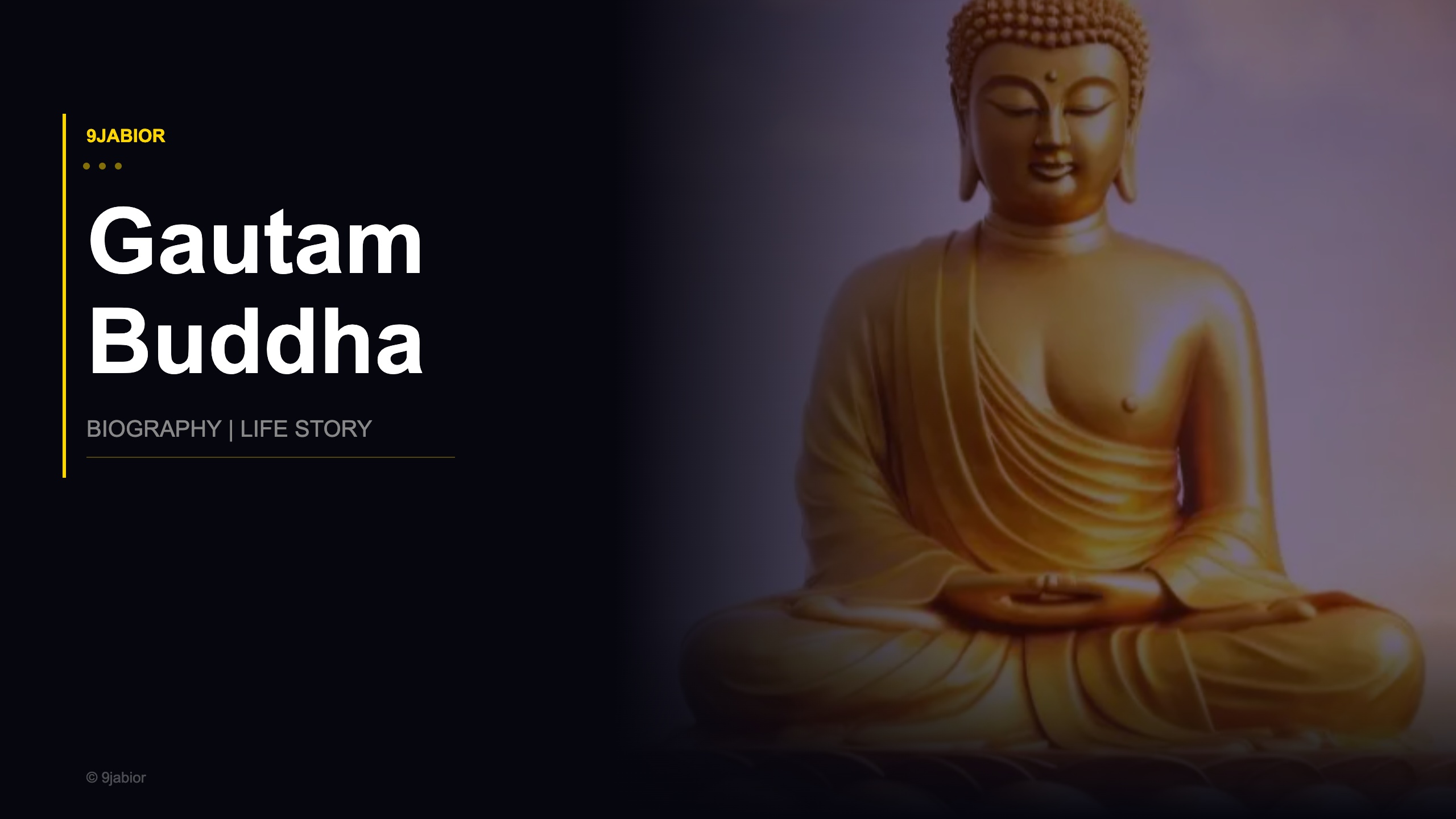
Most people know the image — a serene figure seated in meditation, eyes half-closed, a gentle smile. But the man behind that image was far more complex and fascinating than any statue captures. Gautam Buddha was a real historical person. He wasn’t born enlightened. He didn’t float down from the sky. He was a prince who had everything the world could offer — and chose to give it all up.
What Does the Name “Buddha” Actually Mean?
His birth name wasn’t Buddha. That’s actually a title. The word “Buddha” comes from the Sanskrit root budh, meaning “to awaken” or “to know.” It translates roughly to “the Awakened One” or “the Enlightened One.” His given name was Siddhartha, meaning “one who achieves his aim,” and his family clan name was Gautama. So when you say “Gautam Buddha,” you’re essentially saying “the Awakened One of the Gautama clan.” Throughout his lifetime, he was also called Sakyamuni — the Sage of the Shakyas.
Key Facts About Gautam Buddha at a Glance
- Born: Approximately 563 BCE (some historians say 623 BCE) in Lumbini, present-day Nepal
- Birth name: Siddhartha Gautama
- Parents: King Suddhodana and Queen Maya Devi
- Wife: Yasodhara
- Son: Rahula
- Enlightenment: At age 35, in Bodh Gaya, India
- Teaching ministry: 45 years
- Death: Approximately 483 BCE, in Kushinagar, India, at age 80
- Founded: Buddhism
The World Siddhartha Was Born Into
To understand Buddha’s life, you first need to understand the world he was born into. Sixth-century BCE northern India was a land of kingdoms, castes, and ancient ritual. It was also a time of intense philosophical searching — wandering teachers and ascetics were everywhere, each claiming to have the answer to life’s deepest questions.
The Shakya Clan and the Kingdom of Kapilavastu
Siddhartha’s father, Suddhodana, was the elected chief of the Shakya clan, a powerful aristocratic family whose capital city was Kapilavastu, located in the foothills of the Himalayas in what is now southern Nepal. The Shakyas were Kshatriyas — the warrior-ruler class — and Suddhodana was a man of considerable political influence. He ruled wisely and was admired by both nobles and common people. Into this household of power, tradition, and privilege, a child was about to arrive who would upend everything.
Queen Maya’s Dream and the Prophecy Before His Birth
The night before her conception, Queen Maya Devi had a vivid dream. A magnificent white elephant with six tusks descended from the heavens and entered her womb. When the royal priests and astrologers interpreted this dream, they delivered an astonishing prophecy: the child she carried would grow up to become either a great world emperor or a great spiritual teacher who would enlighten humanity.
King Suddhodana desperately wanted the first option.
The Birth at Lumbini — What Really Happened That Night
Following the custom of the time, Queen Maya traveled toward her parents’ home to give birth. But she never made it. She went into labor in the gardens of Lumbini while resting under a sal tree. According to tradition, the newborn took seven steps and declared, “I am the one who will bring an end to suffering.” Whether or not you take that literally, what we know historically is that Lumbini became one of the most sacred sites on earth. Emperor Ashoka himself later visited and erected a stone pillar to mark the exact spot — a pillar that still stands today.
Growing Up in a Golden Cage — Siddhartha’s Royal Childhood
Queen Maya died seven days after giving birth — a heartbreak that would quietly shape her son’s lifelong sensitivity to suffering. He was then raised by his mother’s sister, Mahaprajapati Gautami, who became his stepmother and foster mother. His father gave him the name Siddhartha and made a quiet, determined vow: his son would never become a wandering monk. He would become a king.
A Father’s Fear: Why King Suddhodana Shielded His Son
Suddhodana’s response to the prophecy was to control the environment. He built three palaces — one for each season — and filled them with every conceivable pleasure. Beautiful servants, music, fine food, sports, education in the arts of war. He planted youth and beauty everywhere the young prince might look and kept old age, sickness, and death carefully hidden from view.
It wasn’t cruelty. It was a father’s terror of losing his son to an invisible calling he didn’t understand.
Young Siddhartha’s Compassion — Early Signs of an Unusual Mind
Even inside his golden bubble, Siddhartha couldn’t quite be ordinary. As a child, he once stopped a companion from hurting a snake. Another time, his cousin Devadatta shot a swan with an arrow. Siddhartha retrieved the bird, nursed it back to health, and let it fly free. When both boys claimed the swan, the young Siddhartha argued simply: “The one who saves a life has a greater claim than the one who tried to take it.” These weren’t just cute childhood stories. They were early signals of a mind wired differently — one that couldn’t stop noticing pain.
The Marriage to Yasodhara and the Birth of Rahula
At sixteen, Siddhartha was married to Yasodhara, a beautiful Koliyan princess who is said to have been born on the same day as him. Their marriage appears to have been loving and real. In time, Yasodhara gave birth to their son, Rahula — a name Siddhartha himself chose, meaning “fetter” or “bond.” The choice of name is telling. Even in a moment of joy, his mind was already circling the question of attachment.
The Four Sights That Changed Everything
Then came the day that shattered the carefully constructed illusion.
A Sick Man, an Old Man, a Corpse, and a Wandering Monk
Against his father’s careful arrangements, Siddhartha rode through the streets of Kapilavastu. In four separate encounters, he saw things he’d never seen: a man bent double with illness; an old man, frail and trembling; a corpse being carried to cremation; and finally, a wandering ascetic — calm, peaceful, and completely unafraid.
His charioteer, Channa, explained each sight patiently. Yes, everyone gets sick. Yes, everyone grows old. Yes, everyone dies. This is the nature of life.
The Emotional Earthquake Inside a Young Prince’s Mind
What hit Siddhartha wasn’t just the information — it was the inevitability. In a single afternoon, every wall his father had built came crashing down. He returned to the palace but couldn’t enjoy anything anymore. The music sounded hollow. The food tasted like ash. The laughter of the servants seemed suddenly cruel in its ignorance.
He couldn’t sleep. He couldn’t stop thinking. If everyone suffers, why is no one trying to fix it?
Why These Four Encounters Were the Real Turning Point
The fourth sight — the peaceful ascetic — was the most important. Because it gave Siddhartha not just a problem but a direction. If a human being could walk through this world of suffering with such serenity, then perhaps suffering wasn’t the final word. Perhaps there was a way through. That possibility became the obsession that drove everything that followed.
The Great Departure — The Night Siddhartha Left It All Behind
On a quiet night when the palace slept, Siddhartha walked to the room where Yasodhara lay with baby Rahula. He stood at the door for a long moment, looking at them. He didn’t go in. He knew that if he held his son, he might not be able to leave. He turned away.
What He Saw as He Left the Palace for the Last Time
He called for his faithful horse, Kanthaka, and his servant Channa. They rode out of the city in silence. At a river at the edge of the kingdom, Siddhartha removed his silk garments, cut off his hair with his sword, and sent the horse home with Channa. He dressed in the simple robe of a monk and disappeared into the forest. He was twenty-nine years old.
This moment is called the Mahabhinishkramana — the Great Departure.
Yasodhara’s Side of the Story — The Wife He Left Behind
History has not been entirely fair to Yasodhara. She’s usually a footnote — the wife who was left. But she deserves more than that. By all accounts, when news reached her, she didn’t collapse in bitterness. She too took off her ornaments and began living simply, mirroring the ascetic life her husband had chosen. When Siddhartha eventually returned years later as the Buddha, she is said to have understood what he’d done — and why. Their reunion was one of quiet dignity, not rage.
She became a nun. She attained liberation in her own right. Her story is one of the most quietly remarkable in all of Buddhist tradition.
Was Leaving His Family an Act of Selfishness or Sacrifice?
This question comes up often, and it’s worth sitting with. From one angle, it looks like abandonment — a husband vanishing in the night, leaving a young wife and newborn son. But Siddhartha saw it differently. He wasn’t fleeing responsibility. He was trying to solve the problem of suffering for every being who had ever lived or ever would live. You might disagree with the logic. But it’s hard to call the motivation selfish.
Six Years of Searching — The Road to Enlightenment
The forest was not a retreat. It was a laboratory.
Learning Under Alara Kalama and Udraka Ramaputra
Siddhartha didn’t walk blindly into the wilderness. He sought out the greatest teachers of his time. His first teacher, Alara Kalama, was a famous sage who taught deep states of meditation — the “sphere of nothingness.” Siddhartha mastered this so quickly that Alara offered to make him a co-teacher. But Siddhartha felt something was missing. This was not the end of suffering. It was only a temporary escape from it.
He moved on to Udraka Ramaputra, who taught him to reach even deeper meditative states — the “sphere of neither perception nor non-perception.” Again, Siddhartha mastered it. Again, he politely declined the offer to stay, took what he’d learned, and kept searching.
The fact that he studied under brilliant teachers but wasn’t satisfied with their answers tells you something important about his intellectual independence.
The Experiment With Extreme Asceticism — and Why It Failed
Next, Siddhartha joined a group of five ascetics and threw himself into the most extreme physical deprivation imaginable. He held his breath until he nearly blacked out. He slept on thorns. He ate one grain of rice a day. His body became skeletal. His ribs showed through his skin like a ruined fence.
And none of it brought him closer to understanding.
The body, he discovered, was not the enemy. You can’t think clearly when you’re starving. You can’t meditate when you’re in agony. Extreme deprivation was just another kind of self-indulgence — punishing yourself for existing, which was no wiser than losing yourself in pleasure.
The Bowl of Rice That Saved His Life (and His Mission)
He was sitting by a river, so weak he could barely lift his head, when a young woman named Sujata appeared. She’d been preparing a bowl of rice milk as an offering for a tree spirit. Seeing the emaciated man, she offered it to him instead.
He took it. He ate it.
The five ascetics who had been following him were disgusted. They thought he’d given up. They left. But Siddhartha understood something they didn’t: the path to truth couldn’t be paved with suffering. It had to be something else entirely. Something balanced.
The Night Under the Bodhi Tree — What Really Happened
He walked to a large pipal tree in Bodh Gaya, spread grass beneath it, and sat down. He made himself a vow: he would not move until he understood the truth of suffering — or died trying.
Through the night, he meditated. Buddhist tradition describes the forces of delusion — personified as the demon Mara — attacking him with doubt, temptation, and fear. Visions of desire. Storms of self-questioning. He watched them all rise and fall like waves, without being swept away. By dawn, as the morning star rose over the horizon, something broke open inside him. He understood. Everything.
He was thirty-five years old. He had become the Buddha.
The Awakening — What Did Gautam Buddha Actually Realize?
Enlightenment isn’t a magic trick. Let’s actually look at what Buddha figured out, because it’s more practical and brilliant than most people realize.
The Discovery of the Middle Path (Madhyama Pratipad)
The first thing he understood was structural. He had lived at both extremes — the total indulgence of the palace and the total deprivation of the forest. Neither worked. The path to wisdom, he realized, ran straight down the center: not too tight, not too loose, like a musician’s lute string. This is the Middle Path — perhaps his most important contribution before he even said a word about spirituality.
The Four Noble Truths — Explained in Plain Language
These are the heart of Buddhism, and they’re actually quite simple:
- Dukkha (Suffering): Life involves suffering. Pain, loss, disappointment, death — none of us escape them. This isn’t pessimism. It’s honesty.
- Samudaya (The Origin of Suffering): Suffering arises from craving and attachment. We suffer because we desperately want things to be permanent when they’re not.
- Nirodha (The Cessation of Suffering): Suffering can end. This is the hopeful part. When craving ends, peace begins.
- Magga (The Path to Cessation): There’s a practical method for ending suffering. It’s called the Eightfold Path.
Think of it like a doctor’s approach: here’s the illness, here’s the cause, here’s the fact that it can be cured, and here’s the prescription.
The Eightfold Path — A Practical Map, Not a Religion
The Eightfold Path isn’t eight separate rules. It’s eight interconnected dimensions of a whole way of living:
- Right View — understanding reality as it is
- Right Intention — committing to kindness and non-harm
- Right Speech — speaking truthfully and gently
- Right Action — living ethically
- Right Livelihood — earning a living without causing harm
- Right Effort — cultivating a positive mind
- Right Mindfulness — paying full attention to the present moment
- Right Concentration — developing deep focus through meditation
What makes this remarkable is that it’s not a belief system. You don’t have to believe anything. You simply practice. Watch. Notice. That’s why so many non-religious people today find something valuable in it.
From Enlightened Monk to World Teacher — The 45-Year Ministry
For seven weeks after his enlightenment, Buddha sat quietly in the forest. Then he made a decision that changed history: he would teach. He would share what he’d found with anyone willing to listen.
The First Sermon at Sarnath — Turning the Wheel of Dharma
He walked to the Deer Park at Sarnath, near Varanasi, where his five former ascetic companions had gone after abandoning him. When they saw him coming, they planned to ignore him — a man who’d broken his vows didn’t deserve their respect. But as he drew near, something in his presence was so altered, so utterly calm and luminous, that they stood up involuntarily.
He sat down and taught them the Four Noble Truths and the Eightfold Path. This first teaching is known as the Dhammachakkappavattana — “Setting the Wheel of Dhamma in Motion.” All five became his first followers. The world’s first Sangha — community of Buddhist monks — was born that afternoon in a deer park.
Angulimala — The Murderer Buddha Refused to Run From
One of the most dramatic stories of Buddha’s ministry involves a serial killer. Angulimala was a bandit who wore a necklace of human fingers — anguli means finger, mala means garland — and terrorized the region near Shravasti. Entire villages had emptied at his approach. Kings had failed to stop him.
Buddha walked straight toward him.
Angulimala chased him but couldn’t catch up — even though Buddha appeared to be walking at a normal pace. Finally, Angulimala shouted, “Stop!” And Buddha replied, calmly: “I have stopped. It is you who have not stopped.”
That cryptic reply cracked something open. Buddha explained that he had stopped causing harm — and he challenged Angulimala to consider what he was doing with his life. The conversation that followed led one of history’s most feared criminals to put down his weapons, weep, and become a monk. He later became an arhat — a fully liberated being.
This story isn’t just dramatic. It’s a window into how Buddha worked. He never ran from darkness. He walked toward it with complete composure.
How Buddha Returned Home and Faced His Father and Wife
Two years after his enlightenment, Buddha returned to Kapilavastu at his father’s request. The homecoming was complicated and deeply human. His father, though proud, was also wounded — his son had chosen the path of the wandering monk over the throne. His son Rahula, now a child, ran toward him asking for his inheritance. Buddha told him gently: “I have something more valuable than wealth to give you — the Dhamma.” Rahula joined the Sangha and became one of Buddha’s chief disciples. His half-brother Nanda joined too. So did his cousins Ananda and Anuruddha.
The entire royal family was transformed.
The Sangha — Building the World’s First Spiritual Community
Over forty-five years, Buddha walked thousands of miles across northern India. He taught in forests, palaces, markets, and river banks. He spoke in Pali — the language of ordinary people, not the Sanskrit of the elites — because he wanted everyone to understand. Kings and beggars sat beside each other in his audience. Women were admitted to the Sangha — revolutionary for the era. He broke caste barriers openly and consistently. Every door was open.
By the time of his death, the Sangha had tens of thousands of monks and nuns. He had built not just a philosophy but a functioning community, a practical institution, a living tradition.
How Emperor Ashoka Took Buddhism to the World
Buddha’s teachings might have remained a regional tradition of northern India. Then came Ashoka.
From Warrior King to Devoted Buddhist
Ashoka Maurya was one of the most powerful emperors in Indian history. In 261 BCE, he conquered the kingdom of Kalinga in a war of staggering violence — over 100,000 people were killed. Ashoka walked the aftermath and was horrified by what he saw. He encountered the teachings of Buddhism and they broke him open. He renounced war. He converted.
The Pillars, the Edicts, and the Missionaries
Ashoka then used his empire as a platform for Buddha’s message. He erected stone pillars and rock edicts across the subcontinent, inscribing the Dhamma in public places so everyone could read it. He sent Buddhist missionaries to Sri Lanka, Central Asia, Egypt, and Greece. He built thousands of stupas to enshrine the relics of the Buddha. He is, arguably, the single most important reason Buddhism became a world religion rather than an Indian footnote.
The Final Days of Gautam Buddha — Mahaparinirvana
At eighty years old, Buddha knew his time was ending. His body was failing. He gathered his monks.
The Last Meal, the Last Journey, the Last Words
Near the town of Kushinagar, he accepted a meal from a blacksmith named Chunda — mushrooms or dried pork, depending on the tradition — and fell seriously ill. He lay down between two sal trees, on his right side, in the position now known as the “reclining Buddha.” As his disciples wept around him, he spoke his final words:
“All conditioned things are impermanent. Strive on with mindfulness.”
Then he entered a series of deep meditative states and passed away peacefully. This passing is called Mahaparinirvana — the Great Final Liberation. It was around 483 BCE.
What Happened to His Relics After Death?
After his cremation, Buddha’s physical relics — bone fragments — were divided among eight royal families and groups of followers. Centuries later, Emperor Ashoka is said to have redistributed them into 84,000 stupas across Asia. This is why you find Buddhist stupas from Sri Lanka to Japan — each one, tradition holds, containing a fragment of the awakened one.
What Gautam Buddha’s Life Means for You Today
You don’t have to be Buddhist to find something useful in Gautam Buddha’s life story.
Mindfulness, Mental Peace, and the Modern World
The mindfulness movement that has swept through psychology, medicine, and corporate wellness over the last three decades draws almost entirely from Buddhist meditation practices. Apps, therapists, hospitals, and school programs all now teach techniques that trace back to that fig tree in Bodh Gaya. The science backs it up: mindfulness-based approaches have demonstrated real benefits for anxiety, depression, chronic pain, and attention disorders.
Why Millions Still Follow His Path 2,500 Years Later
Buddhism today has approximately 500 million followers worldwide. But beyond formal religion, Buddha’s core ideas — that suffering is real, that it has a cause, that it can end, and that there’s a practical path to peace — resonate with people across every culture and belief system. His was a message of radical personal responsibility: don’t wait for a god to save you. Wake up. Pay attention. Be kind. Do the work.
It’s still good advice.
Frequently Asked Questions About Gautam Buddha
What is Gautam Buddha’s real name? His real name at birth was Siddhartha Gautama. “Buddha” is a title meaning “the Awakened One.” He was also called Sakyamuni, meaning “the Sage of the Shakyas.”
Where was Gautam Buddha born? Gautam Buddha was born in Lumbini, located in what is now southern Nepal, in the foothills of the Himalayas. Lumbini is today a UNESCO World Heritage Site and one of the most important Buddhist pilgrimage destinations in the world.
Why did Gautam Buddha leave his family? After witnessing suffering — sickness, old age, and death — for the first time in his life, Siddhartha became consumed by the question of why beings suffer and whether there’s a way out. He left his family not out of indifference, but out of an urgent, compassionate desire to find a solution that would benefit all of humanity.
How old was Buddha when he attained enlightenment? Siddhartha Gautama was approximately 35 years old when he attained enlightenment under the Bodhi tree in Bodh Gaya, Bihar, after six years of searching and one night of deep, uninterrupted meditation.
What are the Four Noble Truths of Buddhism? The Four Noble Truths are: (1) life involves suffering (Dukkha); (2) suffering is caused by craving and attachment (Samudaya); (3) suffering can end (Nirodha); and (4) there is a practical path to end it — the Eightfold Path (Magga). They function like a medical diagnosis: identify the disease, find the cause, confirm it can be cured, prescribe the treatment.
Was Gautam Buddha a Hindu? Buddha was born into a Hindu-influenced cultural context and was familiar with Vedic traditions. However, his teachings departed significantly from mainstream Hinduism — he rejected the caste system, denied the authority of the Vedas, and did not teach belief in a creator God or a permanent soul (Atman). Buddhism is considered a distinct spiritual tradition, not a branch of Hinduism.
How did Gautam Buddha die? Gautam Buddha died at approximately age 80 in Kushinagar, India. He fell ill after a meal and passed away peacefully while in deep meditation. His death is called Mahaparinirvana — the Great Final Liberation — and is considered the moment he permanently transcended the cycle of birth and death.
What is the significance of the Bodhi tree? The Bodhi tree in Bodh Gaya, Bihar is the pipal tree (Ficus religiosa) under which Siddhartha Gautama attained enlightenment. A descendant of the original tree is believed to still grow at the site today, near the Mahabodhi Temple — a UNESCO World Heritage Site. For Buddhists, it represents the place where the most important awakening in human history occurred.

 Ghost Blogger