 Ghost Blogger
There’s a man in New Delhi who spent seven years living a lie in Pakistan. He ate non-vegetarian food despite being a vegetarian Brahmin. He walked through the Golden Temple disguised as a Pakistani ISI agent. He once stepped into a mausoleum in Lahore, and an old man looked him dead in the eye and said — “You’re a Hindu.” The man disagreed, and walked away alive.
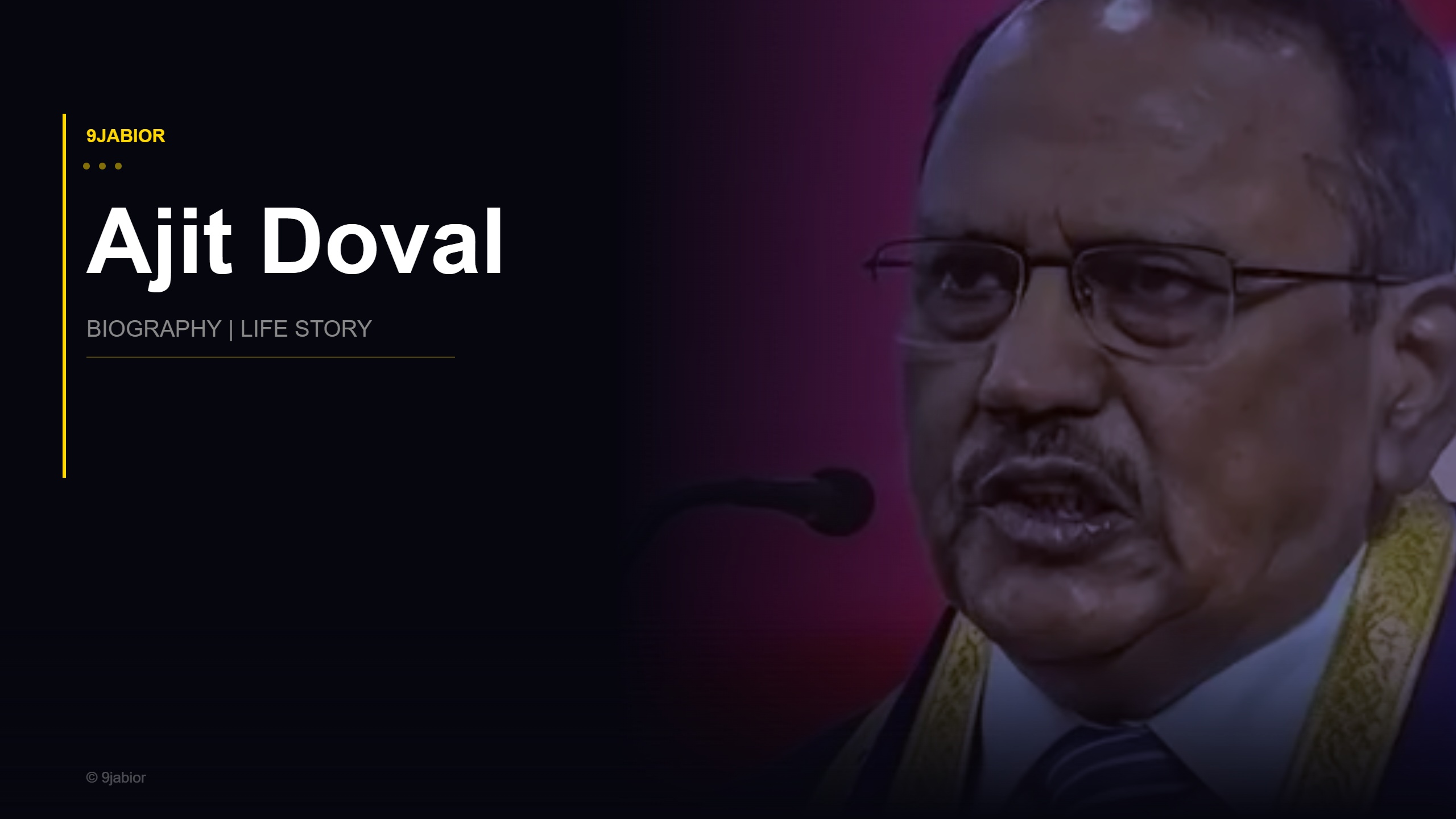
That man is Ajit Doval — and if you’ve been following Indian news, you already know his name. He’s India’s longest-serving National Security Advisor, the architect of the 2016 surgical strikes, and one of the key minds behind Operation Sindoor in 2025. If you’re looking for the complete Ajit Doval biography, from his village childhood in Uttarakhand to shaping India’s national security doctrine in the 21st century, you’re in exactly the right place.
Who Is Ajit Doval? A Quick Overview
The Man the Nation Calls India’s James Bond
Ajit Kumar Doval isn’t just a bureaucrat. He’s a spymaster who turned field intelligence into national policy. Over a career spanning more than five decades, he went from a young police officer in Kerala to the most powerful national security figure India has ever seen. He’s been called the “Indian James Bond” so often that the comparison has almost become cliché — but it’s grounded in real, documented missions that would seem far-fetched if they appeared in a spy novel.
He doesn’t tweet. He doesn’t give interviews often. He carries no visible weapon and never wears a uniform. Yet India’s most consequential military decisions of the last decade have been made in rooms where Doval sat.
Ajit Doval Age, Full Name, and Basic Facts
| Detail | Information |
|---|---|
| Full Name | Ajit Kumar Doval |
| Date of Birth | January 20, 1945 |
| Age (2025) | 80 years old |
| Birthplace | Ghiri Banelsyun village, Pauri Garhwal, Uttarakhand |
| Nationality | Indian |
| Religion | Hindu (Garhwali Brahmin) |
| Education | Ajmer Military School; M.A. Economics, Agra University (1967) |
| IPS Batch | 1968, Kerala cadre |
| Current Position | National Security Advisor (NSA) to PM Narendra Modi |
| NSA Tenures | 2014–2019, 2019–2024, 2024–present |
| Wife | Aruni Doval (married 1972) |
| Sons | Shaurya Doval, Vivek Doval |
Early Life and Family Background
A Village Boy from the Garhwal Hills
Ajit Doval was born on January 20, 1945, in Ghiri Banelsyun — a small village tucked away in Pauri Garhwal district, which is now part of Uttarakhand. It wasn’t a famous place. There was no fanfare, no privileged background. It was a mountain village with a modest way of life and a strong culture of duty.
The India he was born into was still only months away from independence. The country was young and fragile, surrounded by uncertainty on every border. Doval grew up in that atmosphere — one where national identity wasn’t taken for granted and security wasn’t abstract. It was personal.
Father’s Military Influence and Childhood Values
Doval’s father, Major Gunanand Doval, served in the Indian Army’s Bengal Sappers for 36 years. His mother was Indra Doval. Growing up in an army household meant Ajit’s childhood was shaped by discipline, early mornings, and the unspoken expectation that a son of a soldier would serve something larger than himself.
His father’s career required the family to move around, and Doval got exposure to different parts of the country from a young age. That mobility, that early lesson in adapting to new environments — it would prove invaluable later in ways none of them could have predicted.
Education That Built a Spymaster
Ajmer Military School — Where Discipline Began
Doval’s formal schooling began at the King George’s Royal Indian Military School in Ajmer, Rajasthan — now known as Ajmer Military School. Military schools aren’t like ordinary ones. The emphasis on structure, punctuality, and mental toughness leaves a mark that doesn’t fade. Doval’s time there built the foundation of the personality the intelligence community would come to rely on for decades.
Master’s Degree in Economics from Agra University
After military school, Doval went on to pursue higher education at the University of Agra (now Dr. Bhimrao Ambedkar University). He graduated with a Master’s degree in Economics in 1967. It might seem like an unusual choice for someone who’d go on to become a spymaster, but understanding economics — how resources move, how states behave, how incentive structures work — turns out to be deeply relevant to intelligence work and national security strategy.
Later in life, the same institution would honour him with a doctoral degree in December 2017. Kumaun University and Amity University followed with honorary doctorates in 2018, recognising his contributions to the nation.
Joining the IPS — The Start of a Legendary Career
The 1968 UPSC Exam and Kerala Cadre Posting
In 1968, Ajit Doval cracked the Union Public Service Commission (UPSC) examination and joined the Indian Police Service. He was allotted the Kerala cadre, which meant his first posting was far from home — in the southern tip of the country, a region whose language, culture, and politics were entirely different from his Uttarakhand roots.
His first assignment was as Assistant Superintendent of Police in Kottayam district, Kerala. This wasn’t the glamorous posting it might sound like. It was ground-level policing in a new environment. But Doval settled in quickly and started making impressions on people who mattered.
The Thalassery Riots — Doval’s Very First Test
One of the earliest, and least talked-about, stories about Doval involves the 1971 Thalassery communal riots in Kerala. While the local administration was still figuring out how to respond, the young IPS officer walked into the middle of the communal tension — alone, without backup, without a gun drawn. He didn’t come in with force. He came in with his ear to the ground and the ability to talk to people on all sides.
He listened. He negotiated. He restored peace. Delhi noticed. That story, quiet as it is, captures something essential about who Doval is: someone who believes that intelligence — human intelligence, the ability to understand people — is always more powerful than firepower alone.
India’s Most Daring Undercover Missions
Seven Years in Pakistan — Living the Double Life
Here’s where the biography gets surreal. At some point in the early 1980s, Ajit Doval arrived in Pakistan — not as a diplomat, not as a journalist, but as a cover. He was posted to the Indian High Commission in Islamabad, yes, but before that official posting, he had spent years operating inside Pakistan in disguise. He lived as a Muslim. He spoke Urdu fluently. He built relationships, gathered intelligence, and managed to move through one of the world’s most hostile environments for an Indian spy without being detected — for approximately seven years in total.
Think about what that actually means. Seven years of never letting your guard down. Seven years of living someone else’s identity so completely that it becomes second nature. He’s confirmed this himself. When an audience member once told him he’d heard Doval spent five years in Pakistan, Doval corrected him: “Seven years.”
He gave up vegetarianism during this time out of operational necessity — a small but telling detail about just how completely he inhabited his cover.
What He Actually Did Inside Pakistan’s Nuclear Heartland
Reports have suggested — and Doval hasn’t denied — that his intelligence work in Pakistan included gathering information near the Kahuta nuclear plant, where Pakistan was developing its nuclear weapons programme. This was extraordinarily high-risk work. Getting caught in that environment meant almost certain death.
The intelligence he gathered during this period shaped India’s understanding of Pakistan’s nuclear capabilities at a critical juncture in South Asian history.
The Lahore Mausoleum Incident — A Story He Tells Himself
In a lecture in Pune, Doval shared a personal story from his time in Pakistan. Walking past a mausoleum in Lahore, he went inside since he was living as a Muslim. An old man with a long white beard sitting in the corner caught his eye and said, quietly: “You’re a Hindu.”
Doval denied it. The man insisted. He took Doval down several streets to a small private room, closed the door, and said it again. The old man claimed he could tell from Doval’s eyes.
What happened next? Doval walked out alive. He’s never fully explained how. It’s one of those stories that speaks for itself.
Operation Black Thunder — The Mission That Made Him a Legend
Infiltrating the Golden Temple as a Pakistani Agent
In 1988, the Indian government faced one of its most sensitive domestic crises: Khalistani militants had fortified themselves inside the Golden Temple in Amritsar. Any direct assault would be a political and religious catastrophe. The government needed intelligence — real, inside intelligence — before any action could be taken.
Doval volunteered for something that almost no one else would have dared. He entered the Golden Temple compound posing as a Pakistani ISI agent, with the goal of establishing contact with the Khalistani militant leadership. He met them. He gained their trust. He stayed long enough to map out their positions, understand their weapons cache, and feed misleading information back to disrupt their plans.
Then, quietly, he disappeared. Nobody outside a small circle of intelligence officials knew who he really was.
When Operation Black Thunder II was launched by the National Security Guards to flush out the militants, it succeeded — partly because of the intelligence Doval had gathered from inside.
Why This Operation Earned Him the Kirti Chakra
In 1989, Ajit Doval became the first police officer in Indian history to receive the Kirti Chakra — a gallantry award previously given only to military personnel. His official citation described him as having exhibited “remarkable resourcefulness and devotion to duty” while risking his life on multiple occasions, including times when his actual whereabouts were unknown even to his own superiors, who feared he might have been caught and tortured.
He was also the youngest police officer in India to receive the Police Medal for Meritorious Service — awarded after just six years in service, compared to the standard seventeen. Indira Gandhi personally presented that award to him.
Intelligence Bureau Years — Rising to the Top
Mizoram and the Flipping of Laldenga’s Commanders
Long before Operation Black Thunder, Doval was deployed to the troubled northeast of India. In Mizoram, a sustained insurgency led by Laldenga’s Mizo National Front had been waging a guerrilla war against the Indian state for years. Doval’s role, working with Indian intelligence, involved flipping some of Laldenga’s key commanders — turning them from adversaries into informants and eventually into negotiating partners.
This kind of counter-insurgency work doesn’t get the flashy headlines. But it’s arguably harder than any military operation because it requires getting inside someone’s head and convincing them to switch sides.
The Sikkim Merger and Doval’s Role in It
After Mizoram, Doval was posted to Sikkim at a historically important moment — just as India was engineering the merger of the tiny Himalayan kingdom into the Indian Union in 1975. His role in the Subsidiary Intelligence Bureau there placed him at the centre of one of India’s quietest but most significant geopolitical acts of the 20th century.
IC-814 Kandahar — The 1999 Hostage Negotiation
When Indian Airlines Flight IC-814 was hijacked in December 1999 and forced to land in Kandahar, Afghanistan, India sent a negotiating team that included Ajit Doval. The hijackers demanded the release of three terrorist leaders, including Masood Azhar. The negotiation ended with the exchange being made and the hostages freed — a deeply controversial outcome, but one that saved 176 lives.
Doval’s role was in the intelligence preparation and on-ground negotiation. It added another chapter to a career already overflowing with them.
Handling 15 Indian Airlines Hijackings
This is a detail that almost never makes it into Doval biographies: he was reportedly involved in handling all 15 hijackings of Indian Airlines flights that took place between 1971 and 1999. That’s fifteen separate incidents, each with its own set of demands, hostages, and potential for catastrophe. His accumulated experience in hostage and crisis situations was unmatched.
Director of the Intelligence Bureau (2004–2005)
By 2004, Ajit Doval had reached the top of India’s internal intelligence apparatus. He was appointed Director of the Intelligence Bureau — the chief of India’s primary domestic intelligence agency. He held the position until January 2005, when he retired. After a career like that, most people would stop. Doval didn’t stop.
Life After the IB — The Think Tank Phase
Founding the Vivekananda International Foundation
In December 2009, Doval founded the Vivekananda International Foundation (VIF) in New Delhi. The VIF was established as a public policy think tank aligned with India-first strategic thinking. Doval served as its founding director and used the platform to continue shaping discourse on national security, foreign policy, and counter-terrorism.
The think tank attracted serious strategic thinkers and became a credible voice in India’s policy ecosystem during the UPA years. It also quietly incubated many individuals who would later take up important government roles when the BJP came to power in 2014.
The Congress Controversy and VIF’s Growing Influence
In 2012, the Congress-led government became suspicious of Doval’s Vivekananda International Foundation and its alleged connections to the anti-corruption movements led by Anna Hazare and Baba Ramdev. The Intelligence Bureau reportedly kept an eye on the organisation during this period.
When Narendra Modi won the 2014 general election, many VIF associates moved into key government positions almost overnight. The think tank, in effect, had been seeding the next generation of India’s security architecture.
National Security Advisor — A New Era for India
What Does India’s NSA Actually Do?
India’s National Security Advisor is the Prime Minister’s principal advisor on all matters of national security — external threats, internal security, border management, intelligence coordination, and strategic affairs. The NSA chairs the National Security Council and is involved in every major defence and foreign policy decision at the highest level.
Think of it as the job where all the threads come together. The IB reports upward. RAW provides intelligence. The military provides options. The NSA synthesises all of it and helps the Prime Minister decide.
How Doval Transformed the NSA Role Forever
Before Doval, India’s NSAs were largely seen as advisors — strategic thinkers who sat at the table but didn’t always shape outcomes. Doval changed that. He brought field experience, operational muscle, and a doctrine-driven approach to a role that had previously been more diplomatic than strategic.
He was the first NSA who had actually done what he was advising others to do. He’d been a spy, a negotiator, a counter-insurgency specialist, and an intelligence chief. That background gave him authority in rooms where theory alone wasn’t enough.
First NSA to Hold Cabinet Minister Rank — Why It Mattered
On June 3, 2019, when Doval was reappointed to a second five-year term, he was also elevated to the personal rank of Cabinet Minister — a first in the history of the NSA position in India. Previously, the role carried the status of Minister of State.
This wasn’t just ceremonial. Cabinet rank meant Doval could sit in Cabinet meetings, directly interface with ministers, and exercise a level of institutional authority that no NSA before him had possessed. It was a formal recognition of what had already become an informal reality: Ajit Doval was the most powerful official in India after the Prime Minister.
In June 2024, he was reappointed for a third consecutive five-year term, cementing his status as India’s longest-serving NSA.
The Doval Doctrine — Understanding His Security Philosophy
Defensive Offence Explained in Plain Language
Doval has articulated his strategic philosophy across various lectures and writings. At its heart is a concept he calls “defensive offence” — the idea that the best way to defend India isn’t to wait for attacks and respond, but to make the costs of aggression so severe that no adversary considers it worthwhile.
In traditional thinking, defence means protecting what you have. In Doval’s framework, it means taking the fight to the enemy on your terms, below the threshold of full-scale war. Pre-emptive, targeted, deniable, and decisive.
He once said that India needs to shift from being reactive to being proactive — not just in responding to attacks but in denying enemies the infrastructure, the space, and the confidence to plan attacks at all.
Amorality, Offence, and Militarism — The Three Pillars
Critics have described the Doval Doctrine through three lenses. First, a realpolitik view that in questions of state survival, morality must yield to strategy. Second, a preference for offence over defence when threat neutralisation is the goal. Third, a belief in the credibility of hard power — that nations are respected not for their restraint but for their demonstrated willingness to act.
These are controversial positions. But they are consistent positions, and they’ve directly shaped how India has responded to terrorism under the current government.
Major Operations Under Doval’s NSA Tenure
Rescuing 46 Indian Nurses from ISIS-Controlled Iraq (2014)
Just weeks into his NSA role, Doval faced a real-world crisis. Forty-six Indian nurses were trapped in a hospital in Tikrit, Iraq, after ISIS seized Mosul. Their families had lost contact with them. The situation was desperate.
On June 25, 2014, Doval flew to Iraq on a top-secret mission. He moved through high-level contacts in the Iraqi government, assessed the ground situation firsthand, and worked the back channels that only someone with his experience could access. On July 5, the nurses were handed over to authorities at Erbil City and flown home to Kochi. Not a single life was lost.
Operation Hot Pursuit — Striking Myanmar Militants (2015)
In 2015, following an ambush by militants on an Indian Army convoy in Manipur, Doval helped plan a cross-border operation into Myanmar. Indian Army special forces crossed the international boundary, struck militant camps, and returned — India’s first acknowledged offensive cross-border operation in the east. The Myanmar government was informed. The message to insurgent groups was clear.
The 2016 Surgical Strikes Across the LoC
After the Uri attack of September 2016, in which Pakistani-backed militants killed 19 Indian soldiers, India did something it had never done publicly before. Indian Army special forces crossed the Line of Control and struck Pakistani-controlled terrorist camps in a series of surgical raids. Doval was central to the planning and authorisation of these strikes. His “defensive offence” doctrine, in action.
Balakot Airstrike 2019 — One of Only Seven Who Knew
Following the Pulwama suicide attack in February 2019, which killed 40 CRPF personnel, India launched an airstrike on a Jaish-e-Mohammed training camp in Balakot, Pakistan. This was the first Indian airstrike on Pakistani soil since 1971. Doval was one of only seven people who knew about the operation in advance — alongside the Prime Minister, and the chiefs of the three armed services.
Abhinandan’s Release — Doval’s Quiet Diplomacy
When Indian Air Force pilot Wing Commander Abhinandan Varthaman was captured by Pakistan after his aircraft went down in the aerial skirmish that followed Balakot, Doval worked behind the scenes. He held talks with the US Secretary of State and National Security Advisor to apply pressure for the pilot’s safe return. Abhinandan was released within 60 hours of capture — a diplomatic outcome that Doval’s connections and credibility helped engineer.
Revoking Article 370 — The Security Architecture
The revocation of Jammu and Kashmir’s special status in August 2019 required one of the most complex internal security operations in post-independence India. Thousands of additional troops were deployed to the Valley. Communication lines were preemptively cut. A complete security blanket was thrown over the region to prevent unrest. Doval was the man overseeing that security architecture.
Doklam Standoff Resolution with China
In 2017, Indian and Chinese troops faced off at the Doklam plateau in Bhutan for 73 tense days. The standoff threatened to escalate into open conflict on the Himalayan border. Doval engaged in backchannel diplomacy with his Chinese counterparts and helped engineer a withdrawal that neither side could publicly frame as a defeat. It’s widely credited to him.
Operation Sindoor 2025 — India’s Boldest Counter-Terror Strike
In April 2025, Pakistan-based terrorists carried out a deadly attack in Pahalgam, Jammu and Kashmir, killing 26 civilians — the deadliest attack in India since Pulwama. The response came in May 2025 in the form of Operation Sindoor: a series of precision airstrikes targeting nine terrorist camps spread across Pakistan and Pakistan-occupied Kashmir.
Doval coordinated the entire strategic response. He worked with the Defence Planning Committee, synchronised inputs from the Army, Navy, and Air Force, and briefed international interlocutors including US officials. India used a combination of indigenously developed weapons — the Akash missile system, BrahMos supersonic cruise missiles — alongside imported platforms. The operation lasted approximately 23 minutes.
It was the most direct military action India had taken against Pakistan in decades. Doval later stated that terrorism in India had been “effectively countered” and that India was prepared to “retaliate resolutely” if Pakistan escalated.
Ajit Doval’s Wife, Sons, and Personal Life
Aruni Doval — The Woman Behind the Spymaster
Ajit Doval married Aruni Doval (also referred to as Anu Doval) in 1972. She is from Uttarakhand and has been described as a social activist. Reports suggest she too had an IPS background, though the couple has always kept their personal life intensely private. Doval has repeatedly deflected questions about his family. In the intelligence world, keeping loved ones out of the spotlight isn’t just preference — it’s protection.
Sons Shaurya and Vivek — Following Different Paths
Ajit Doval has two sons. Shaurya Doval followed a path into politics and investment banking and has been associated with the India Foundation, a think tank close to the BJP. Vivek Doval is a Chartered Financial Analyst based in Singapore. In 2019, allegations surfaced linking Vivek to an offshore fund in a story published by The Caravan magazine. The Doval family denied the allegations, and legal action followed. Doval himself remained above the controversy in public perception.
Doval has admitted that his career imposed enormous demands on family life. The years in Pakistan, the classified assignments, the long periods of unexplained absence — none of that was easy for the people waiting at home.
One personal detail he’s shared in public: he largely doesn’t use the internet for work and only uses his phone for family communication and international calls. For a man who helped shape India’s cyber security doctrine, that’s a quietly striking piece of information.
Awards and Honours Received by Ajit Doval
Doval’s decoration shelf tells the story of a career lived at the sharp end:
- Police Medal for Meritorious Service — awarded after just six years of service, when the norm is seventeen
- President’s Police Medal — India’s highest peacetime police honour
- Kirti Chakra (1989) — India’s second-highest peacetime gallantry award; Doval was the first police officer ever to receive it, as it had previously been given only to military personnel
- Padma Shri (2014) — awarded by the Government of India for distinguished service to the nation
- Padma Bhushan (2019) — one of India’s highest civilian honours
- Uttarakhand Gaurav Samman (2022) — felicitated by his home state government
- Honorary Doctorates — from Dr. Bhimrao Ambedkar University (2017), Kumaun University (2018), and Amity University (2018)
No Indian intelligence officer has collected a CV quite like this.
Ajit Doval in Pop Culture — Films, Web Series, and Books
Paresh Rawal as Doval in Uri: The Surgical Strike
The 2019 Bollywood blockbuster Uri: The Surgical Strike brought the story of the 2016 surgical strikes to mainstream audiences. Paresh Rawal played a character clearly modelled on Doval — the sharp-eyed, quiet civilian who outmanoeuvres generals. It’s one of the most commercially successful Indian political films of recent years, and it gave a whole new generation a glimpse of the man behind the operations.
Dhurandhar, Salakaar, and the Rise of Spy Dramas
Doval’s story has captured the imagination of India’s entertainment industry in a big way. The 2025 film Dhurandhar and its sequel Dhurandhar: The Revenge (2026) feature a character named “Ajay Sanyal,” widely understood to be based on Doval, played by R. Madhavan. The JioHotstar web series Salakaar (2025) goes even further, dramatising his covert operations inside Pakistan in the 1970s. His cover name in the series is “Adhir Dayal.”
India’s appetite for stories about its real-life intelligence heroes has never been higher, and Doval — secretive, decorated, and genuinely remarkable — sits at the centre of it all.
Frequently Asked Questions About Ajit Doval
Who is Ajit Doval and what does he do? Ajit Doval is India’s National Security Advisor, a position he has held since 2014 under Prime Minister Narendra Modi. He’s responsible for advising the PM on all matters of national and external security. He’s also a retired IPS officer and former Director of the Intelligence Bureau, known for his decades of undercover intelligence work.
Why is Ajit Doval called the James Bond of India? The nickname comes from his extraordinary undercover career — particularly the seven years he spent living inside Pakistan disguised as a Muslim, gathering intelligence for India while operating under constant risk of exposure and death. His daring missions, cool-headedness under pressure, and multiple decorated operations earned him this informal title.
How long did Ajit Doval work undercover in Pakistan? Doval himself confirmed that his total time operating in and around Pakistan, including his posting at the Indian High Commission in Islamabad and prior undercover work, amounted to approximately seven years.
What is the Doval Doctrine? The Doval Doctrine is a strategic philosophy of “defensive offence” — the idea that India should take pre-emptive, proactive action against threats rather than waiting to absorb attacks and respond. It prioritises hard power, deterrence through action, and a willingness to operate below the threshold of all-out war.
What was Ajit Doval’s role in Operation Sindoor 2025? Doval was the central coordinator of Operation Sindoor, India’s precision military strike on nine terrorist camps in Pakistan and Pakistan-occupied Kashmir following the April 2025 Pahalgam attack. He worked across the Defence Planning Committee and international diplomatic channels to plan and execute the operation.
What awards has Ajit Doval received? His major awards include the Kirti Chakra (1989), Padma Shri (2014), Padma Bhushan (2019), President’s Police Medal, Police Medal for Meritorious Service, and the Uttarakhand Gaurav Samman (2022).
Who is Ajit Doval’s wife? Doval is married to Aruni Doval (also called Anu Doval), a social activist from Uttarakhand. They married in 1972 and have two sons — Shaurya and Vivek.
What is Ajit Doval’s educational qualification? He holds a Master’s degree in Economics from Agra University (1967) and received honorary doctoral degrees from three universities between 2017 and 2018. He also completed early education at Ajmer Military School and received advanced training at India’s National Defence College.

 Ghost Blogger