 Admin
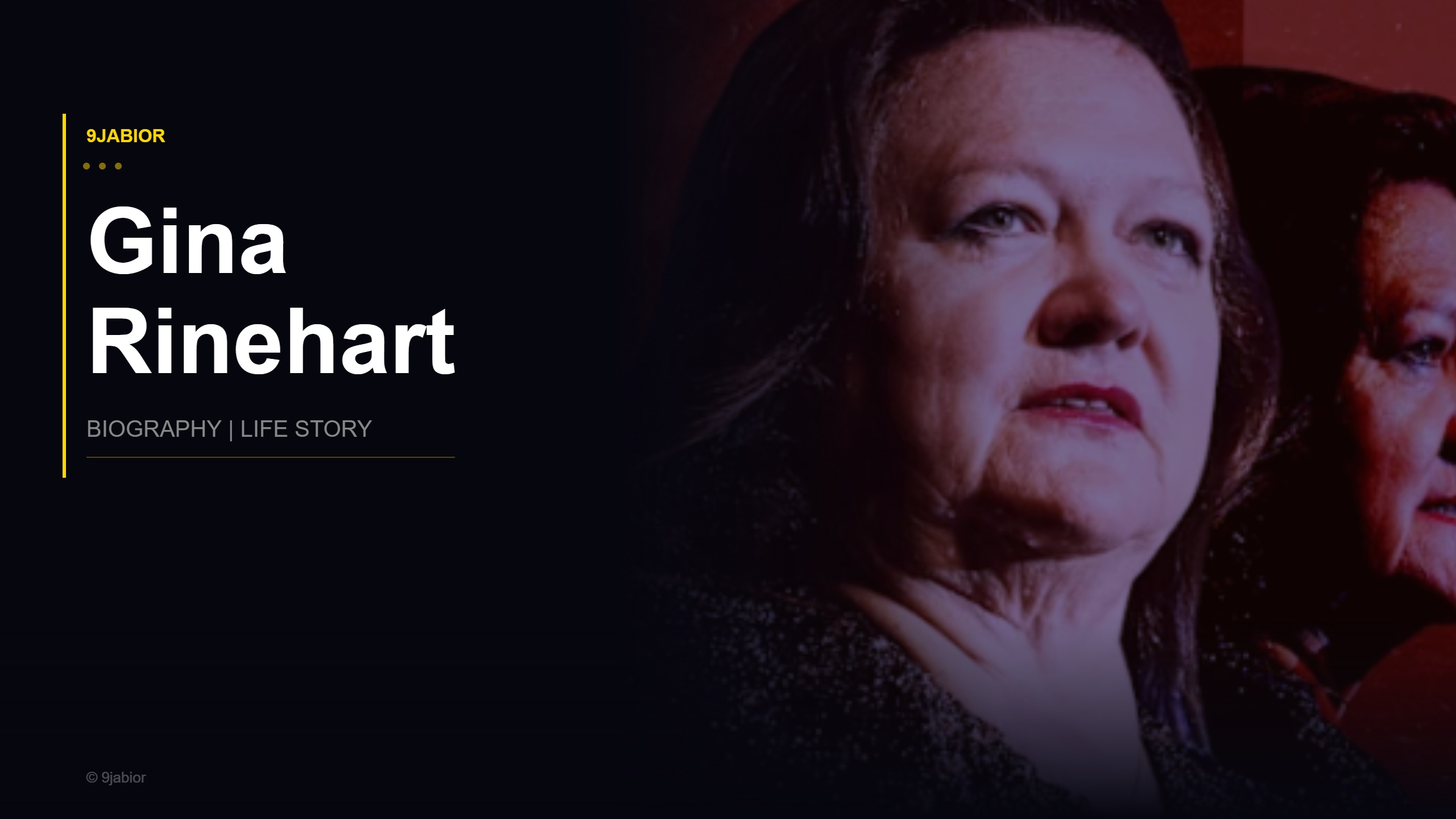
AdminWhen most people inherit their parents’ company, there’s usually one of two outcomes: they run it well, or they run it into the ground. Gina Rinehart did something far more impressive—she inherited a bankrupt, debt-ridden mining company and transformed it into one of the world’s largest privately-held enterprises worth tens of billions of dollars. Today, at 72 years old, she’s Australia’s richest person and one of the wealthiest women alive. But her journey to the top is anything but a simple story of privilege and inheritance. It’s one of bold decisions, ruthless business strategy, family drama, and staying power.
Who Is Gina Rinehart?
Georgina Hope Rinehart, known as Gina, is the Executive Chairman of Hancock Prospecting, a privately-owned mineral exploration and extraction company. She’s ranked as Australia’s wealthiest person with a net worth estimated between A$38 billion and A$25 billion (depending on commodity prices and the fluctuating value of iron ore). Her influence extends beyond mining into media, agriculture, sports patronage, and political activism. You’ve probably heard her name in Australian news cycles, often connected to controversy. But there’s much more to her story than the headlines suggest.
What makes Gina unique isn’t just her wealth—it’s how she built it. Unlike many billionaires who inherited massive fortunes, she inherited massive debt.
Early Life in the Outback: Growing Up Hancock
Born into Mining Royalty
Gina was born on February 9, 1954, in Perth, Western Australia, the only child of Lang Hancock and Hope Margaret Nicholas. Her father, Lang Hancock, wasn’t just a wealthy man—he was a legend. In 1952, while flying his small aircraft over the Pilbara region to escape a storm, he spotted deep red formations in a river gorge. What he’d discovered was one of the world’s largest iron ore deposits, worth billions in today’s money. This single discovery would shape Gina’s entire life.
Growing up, Gina spent her early childhood between the Pilbara and Perth. The Pilbara wasn’t a glamorous place—it was remote, rough, and unforgiving. But for a young girl interested in business, it was the perfect classroom. Her father took her everywhere, including mining operations, business meetings, and exploration sites. She wasn’t just being shown the family business; she was being prepared to run it.
St. Hilda’s School and University Life
At age eight, Gina was sent away to boarding school at St. Hilda’s Anglican School for Girls in Perth. This was common for wealthy Australian families at the time, but it meant leaving the Pilbara behind. According to school records, she was a top student—bright, capable, and serious about her education. Her teachers noted her focus and determination, qualities that would define her career later.
After finishing secondary school, Gina enrolled at the University of Sydney to study economics. It seemed like the natural path—get a degree, then step into a leadership role at the family company. But she had other ideas. University life didn’t appeal to her. She wanted real-world experience, not theory. So she dropped out and returned to work with her father at Hancock Prospecting.
Learning the Family Business
This decision to leave university turned out to be pivotal. While other young people her age were finishing degrees, Gina was gaining hands-on knowledge of the mining industry. She worked alongside her father, learning about exploration, mining operations, finance, and the complex world of international mining agreements. She studied not from textbooks but from real projects, real challenges, and real negotiations.
By her early twenties, she had extensive knowledge of iron ore mining that most people would need a decade of experience to acquire. More importantly, she’d earned her father’s trust and respect. He wasn’t just training his daughter to inherit a business—he was preparing her to save one.
Inheriting a Bankrupt Empire: The 1992 Turning Point
Lang Hancock’s Death and Gina’s Challenge
On March 29, 1992, Lang Hancock died. Gina was 37 years old. She’d been widowed twice already (divorced from her first husband and having lost her second husband, Frank Rinehart, two years earlier in 1990), but this loss was different. Lang Hancock wasn’t just her father—he was her mentor, her business partner, and the patriarch of an empire.
What happened next shocked everyone involved. When the estate was settled, it turned out that Hancock Prospecting wasn’t the gleaming jewel most people imagined. The company was technically insolvent. It carried significant debt. The mining leases and assets—while potentially valuable—were underdeveloped. Many of the company’s historic royalty agreements had been sold or mortgaged.
Gina Rinehart was expected to take over a bankrupt company and somehow keep it afloat.
A Company in Crisis
To understand how bad things were, you need to know that during the 1980s, mining wasn’t booming. The Australian government had restrictions on iron ore exports. International prices were volatile. The company had borrowed heavily to fund exploration, but the payoff hadn’t materialized. Banks were nervous. Partners were skeptical. Everyone wondered whether this woman—a widow with four children—could possibly manage a company that was hemorrhaging money.
Her competitors thought she’d fold. They thought she’d sell off assets to settle debts, just like other mining families had done. That’s what everyone expected. But Gina had other plans.
The Tough Decisions Ahead
She made a radical decision: she wasn’t going to sell the company’s best assets to settle debt. Instead, she was going to invest. While everyone else was being cautious, she decided to develop the company’s most promising projects. This was risky. It was brave. It was exactly the kind of move her father would have made.
She took out exploration licenses and began drilling to test the feasibility of projects that had been sitting dormant. One of those projects would become Roy Hill—a name that would define her success.
Building an Empire: How Gina Transformed Hancock Prospecting
Strategic Vision and Risk-Taking
Gina’s strategy was simple but incredibly risky: develop new iron ore mines, secure joint venture partnerships to fund development, and position Hancock to profit from the inevitable commodity boom. Most people would have called her crazy. The Australian mining sector was in a lull. Nobody was talking about a boom. But Gina had studied her father’s playbook, and he’d always said: “Buy when everyone else is afraid, not when everyone is excited.”
She maintained tight control over the company’s operations. She made every major decision herself. She wasn’t the kind of executive who delegated and stepped back—she was hands-on, sometimes to the point of micromanagement. This style frustrated some people, but it was also exactly what the company needed during its recovery.
The Roy Hill Iron Ore Project: A $10 Billion Gamble
In 1993, five months after her father’s death, Gina applied for the Roy Hill mineral tenements in the Pilbara. She acquired them the same year. On paper, Roy Hill was just another iron ore deposit. In reality, it would become her crowning achievement.
Developing Roy Hill meant one thing: raising massive amounts of capital. She needed billions of dollars to finance exploration, feasibility studies, mine construction, processing facilities, and transportation infrastructure. Most companies in similar situations would have called in outside shareholders or sold controlling interests. Gina did something different.
She held onto ownership control and instead secured the largest debt financing ever arranged for a greenfield mining project. In 2014, she announced a $7.2 billion debt-funding package arranged through 19 of the world’s largest banks and five export credit agencies. This wasn’t just impressive—it was historic. No single person (a woman, in particular) had ever arranged such a massive financing package for a mining project before.
Roy Hill started producing and shipping iron ore to Asian markets in 2015. It became profitable almost immediately. The mine uses some of the largest mining equipment in the world and operates at a scale most people can’t even imagine. Today, it’s one of the world’s lowest-cost iron ore producers.
Hope Downs and Joint Ventures with Rio Tinto
But Roy Hill wasn’t the only project. Gina also developed the Hope Downs mine in partnership with Rio Tinto, one of the world’s largest mining companies. Hancock Prospecting and Rio Tinto each own 50% of the operation. The Hope Downs mine produces around 30 million tonnes of iron ore annually and became crucial to Gina’s wealth building.
She also developed the Nicholas Downs project in partnership with Mineral Resources Limited, which produces ferruginous manganese. Each successful project added to her financial foundation.
Expanding Beyond Iron Ore
By the early 2000s, Gina had proven she wasn’t just managing inherited assets—she was creating entirely new ones. As her wealth grew, she diversified. Hancock Prospecting’s operations expanded into coal, potash, gold, copper, oil, and gas. She also expanded into agriculture, eventually acquiring Fossil Downs, a massive cattle station covering 4,000 square kilometers, after it was placed on the market for the first time in 133 years (estimated price: A$25-30 million).
This diversification made sense. It reduced her dependence on iron ore prices (which are notoriously volatile) and positioned her to profit from multiple commodities and industries.
From Mining to Media: Diversifying Her Empire
Why Media Investments Matter
In 2010, when Gina was at the height of her wealth, she made an unexpected move. She started buying stakes in Australian media companies. At first, people thought it was strange. What does a mining magnate want with newspapers and television networks? The answer: influence, and control of the narrative.
Fairfax Media: Becoming Australia’s Largest Shareholder
Gina first bought a 10% stake in Ten Network Holdings in 2010. Later that year, she began purchasing shares in Fairfax Media, one of Australia’s largest media organizations. By 2012, she’d accumulated over 12% of Fairfax, making her the largest shareholder. Fairfax owned major newspapers, magazines, and digital media properties.
This investment made headlines, and not all positive ones. Critics worried about Gina’s influence on editorial decisions. She’d been publicly critical of government policies that affected mining, and people feared she’d use her media influence to push pro-mining, pro-business narratives.
Ten Network Holdings Stake
Her stake in Ten Network (one of Australia’s major television broadcasters) was another significant investment. Again, questions arose: Would she use television to advance her political and business interests? Would she pressure editorial teams?
What Happened to Her Media Interests
It’s worth noting that Gina’s media enthusiasm eventually cooled. In 2014, she resigned from the board of Ten Network Holdings. By 2015, she’d reduced her stake in Fairfax Media. She sold off portions of her media holdings and focused her attention back on what she knew best: mining and agriculture.
The media adventure lasted about five years. Whether she lost interest, found the media business unprofitable compared to mining, or realized that media ownership brought more controversy than benefit, she eventually stepped back from major media involvement.
The Wealth Journey: From Millionaire to Billionaire
How Her Net Worth Grew Over Time
Gina Rinehart didn’t become wealthy overnight. Here’s how her fortune grew:
- 2007: First appeared on Forbes Asia’s richest list with US$1 billion in wealth
- 2008: Wealth more than doubled to US$2.4 billion
- 2011: Despite the 2008 financial crisis, her wealth reached US$9 billion; she was named Australia’s wealthiest person by both Forbes and Business Review Weekly (the first woman to hold the top position)
- 2012: Her fortune doubled to approximately US$18 billion
- 2013-2014: Slight fluctuations due to iron ore price volatility; still estimated between US$17-17.6 billion
The growth wasn’t linear. It was tied directly to iron ore prices, which rise and fall based on global economic conditions, especially demand from China.
2012: World’s Richest Woman
At her peak in 2012, Business Review Weekly (BRW), an Australian publication, ranked Gina as the world’s richest woman, surpassing Walmart heiress Christy Walton. Forbes called her the 37th most powerful woman in the world. She’d become a household name globally.
This achievement was significant because most of the world’s wealthiest women inherited their fortunes from fathers, husbands, or fathers-in-law. Gina had actually built hers through strategic business decisions. She wasn’t just an heiress—she was an entrepreneur in her own right.
Today’s Net Worth and Rankings
Current estimates of Gina’s net worth vary widely depending on iron ore prices:
- The Australian Financial Review (2025): A$38.11 billion
- Other estimates (2024-2025): Between A$25-30 billion
- Forbes: Around US$23 billion
She remains Australia’s #1 richest person and typically ranks in the top 100 richest people globally. Global rankings fluctuate based on iron ore prices—when prices rise, so does her net worth ranking. When prices fall, her ranking drops.
Personal Life: Marriages, Children, and Family Drama
First Marriage to Greg Milton
When Gina was 19 years old, she met Greg Milton while both were working in Wittenoom. Milton later changed his surname to Hayward (his earlier family name). They married in 1973. Two years later, in 1976, they had a son, John Langley. In 1977, their daughter Bianca Hope was born. The marriage lasted until 1981.
Second Marriage to Frank Rinehart
In 1983, Gina married Frank Rinehart, an American corporate lawyer who’d worked for Arco (Atlantic Richfield Company). Frank was a Harvard graduate who’d earned his degree while working full-time jobs—an impressive accomplishment in itself. Together, they had two children: Hope (born 1986) and Ginia (born 1987). This marriage lasted until Frank’s death in 1990. She was widowed at age 36.
Her Four Children
Gina has four adult children: John Langley Hancock, Bianca Hope Hayward, Hope Rinehart Welker, and Ginia Rinehart. Given the massive wealth involved, family dynamics have been complicated. By all accounts, Gina is protective of her business control and has not delegated significant decision-making authority to her children.
The Controversial 2011-2015 Family Trust Dispute
In 1988, when Gina’s youngest child was just one year old, her father Lang Hancock established the Hope Margaret Hancock Trust. This trust, named after Gina’s mother, held 23.6% of Hancock Prospecting’s shares. According to the trust document, Gina was to act as trustee until her youngest child, Ginia, turned 25 in 2011. At that point, the trust was supposed to vest, and the children would have greater access to the wealth.
Except Gina delayed the vesting date.
In March 2012, when the court suppression order was lifted, the public learned that Gina had moved the vesting date further into the future. This prompted legal action by three of her four children—John, Bianca, and Hope—who argued their mother was denying them access to wealth their grandfather intended for them. They alleged misconduct and filed court cases.
The dispute was messy, public, and deeply painful. Gina maintained that she had the right to manage the trust as trustee. Her children disagreed. The case dragged on for years, involving multiple court hearings, allegations of dishonesty, and extensive media coverage.
Finally, in May 2015, the New South Wales Supreme Court ruled that Bianca would be appointed as the new trustee, replacing her mother. This was a significant blow to Gina’s authority over the trust, though she retained control of the broader Hancock Prospecting company.
The dispute highlighted tensions within the Hancock family and raised questions about succession and control that remain relevant today. In recent years (2026), additional legal disputes have arisen involving her children and other claimants over mining rights and royalties related to the Hope Downs project.
Controversies and Public Battles: The Polarizing Figure
Government Opposition and Political Activism
Gina is not shy about her political views. She’s a vocal critic of government regulation, high taxes, and environmental restrictions—particularly those affecting the mining industry. In 2010, when the Australian federal government proposed the Resource Super Profits Tax (aimed at the mining industry), Gina led vocal opposition. The government backed down, and the tax was shelved.
The “Africans Work for $2 a Day” Controversy
The “Africans Work for $2 a Day” Controversy
In 2012, Gina made controversial comments about labor costs. In a speech at the Sydney Mining Club, she argued that Australia needed to reduce labor costs to remain competitive. She pointed out that African workers are “willing to work for less than $2 a day” and suggested Australia couldn’t compete with such low-cost labor.
The comments sparked outrage. Australia’s Green Party leader blasted her. Prime Minister Julia Gillard responded, saying that it wasn’t the “Australian way” to pay workers a gold coin (a few dollars) and ask them to work all day. Media outlets ran headlines suggesting Gina wanted to push down Australian wages.
Gina’s intent was to highlight Australia’s competitive disadvantage against developing nations, but the messaging fell flat. The incident became a defining moment in how she’s perceived publicly—as someone out of touch with ordinary workers’ concerns.
Legal Battles Over Mining Rights and Royalties
Beyond family disputes, Gina has been involved in numerous legal battles with business partners and former partners over mining rights, royalties, and contractual obligations. These disputes are complex and technical, involving decades-old agreements and competing interpretations of who owns what.
A major case involved claims from the heirs of Peter Wright, a former business partner of her father Lang Hancock. The case centered on Hope Downs and went to trial in 2023 after decades of dispute. In 2026, the Supreme Court of Western Australia ruled that while Gina retained ownership of the mining rights, she must share portions of royalties with the Wright family heirs.
The National Gallery Portrait Dispute (2024)
In May 2024, Gina made headlines for an unusual reason: she demanded removal of her portrait from an exhibition at the National Gallery of Australia. The portrait, painted by Indigenous artist Vincent Namatjira, was part of a major exhibition. Gina objected to how she was depicted and requested its removal.
The National Gallery declined her request. The dispute sparked a broader conversation about artistic freedom, censorship, and the rights of subjects depicted in artwork. Ultimately, the portrait remained on display, further cementing her reputation as a polarizing figure.
Philanthropy and Giving Back: The Hidden Generous Side
Despite her controversial public image, Gina is actually quite generous philanthropically. The difference is: she doesn’t advertise it. In fact, she actively avoids the spotlight for charitable giving.
Olympic Sports Patronage
Gina has been a major patron of Australian Olympic sports. She’s donated over A$80 million to Australian Olympic athletes and programs since 2012. She’s patron of four Olympic teams and is the largest single non-government contributor to Australia’s Olympic efforts in the nation’s history.
In 2014, the Australian Olympic Organisation honored her with an Order of Merit. Swimmer Cate Campbell, a four-time Olympian, said: “I don’t say this lightly, but Gina Rinehart saved swimming.” That statement is remarkable—it shows the real impact her funding has had.
Swimming and Volleyball Funding
Beyond general Olympic support, Gina has specifically funded swimming and volleyball programs. Swimming Australia announced a A$10 million funding arrangement over four years through the Georgina Hope Foundation (her personal charitable foundation). These funds have gone toward athlete development, training facilities, and competition opportunities.
Cambodia Girls’ Orphanages and Human Trafficking Prevention
Gina is on the expert advisory board of SISHA, a Cambodian non-profit organization working to combat human trafficking and provide support to sexually exploited women and children. She’s known to visit girls’ orphanages in Cambodia regularly and has provided significant financial support.
This work is deeply personal to her, and she deliberately keeps a low profile about it. According to those who know her charitable work, she does this partly to protect her privacy and partly because she believes genuine charity doesn’t require publicity.
Why She Keeps It Quiet
In a 2006 Business Review Weekly article, it was noted that Gina “prefers to keep a low profile, partly to avoid being harassed by other charities and partly for reasons of privacy.” This preference for quiet giving stands in stark contrast to how some billionaires use philanthropy as a public relations tool.
Leadership Style: What Makes Her Different
The Hands-On Executive
Gina isn’t the type of CEO who arrives at the office for meetings and then disappears. She’s known as a 24/7 workaholic who’s deeply involved in company operations. She reviews decisions at granular levels. She’s demanding of her team. This style can be intimidating, but it’s also part of why Hancock Prospecting is so successful.
Her Frugal Habits (Despite $38 Billion Wealth)
Her Frugal Habits (Despite $38 Billion Wealth)
Here’s something most people don’t know: despite being worth tens of billions of dollars, Gina is frugal. She’s famously known to reuse tea bags, which seems almost absurd given her wealth. She watches household expenses carefully. She lives relatively modestly compared to other billionaires.
Love of Horses and Horse Racing
Love of Horses and Horse Racing
One of Gina’s passions is horses and horse racing. She owns a successful racing stable and has owned several winning racehorses. This interest has given her something outside of business to focus on—a hobby and escape.
Frequently Asked Questions About Gina Rinehart
What is Gina Rinehart’s current net worth? As of 2025, estimates range from A$25 billion to A$38 billion, depending on iron ore prices. She’s Australia’s wealthiest person and typically ranks in the top 100 globally.
How did Gina Rinehart become rich? She inherited Hancock Prospecting from her father in 1992, but the company was deeply indebted. Through strategic business decisions, development of new mining projects (especially Roy Hill), joint venture partnerships, and solid execution, she transformed the company into a multibillion-dollar enterprise. Her wealth grew exponentially during the 2000s mining boom.
How many children does Gina Rinehart have? She has four adult children from two marriages: John Langley Hancock, Bianca Hope Hayward, Hope Rinehart Welker, and Ginia Rinehart.
What company does Gina Rinehart own? She’s the Executive Chairman and majority owner of Hancock Prospecting, a privately-held mining company that operates iron ore mines (Roy Hill, Hope Downs), coal projects, and other mineral exploration ventures.
Why is Gina Rinehart controversial? She’s controversial due to her political activism against government regulation and higher taxes, her comments about labor costs and wages, her opposition to environmental restrictions on mining, her family disputes over wealth, and legal battles. She’s a polarizing figure in Australian public life.
What is the Roy Hill project? Roy Hill is an iron ore mine in the Pilbara region that Gina developed starting in 1993. It’s one of her flagship achievements—a $10 billion project funded through the largest debt package ever arranged for a greenfield mining project. It began producing ore in 2015 and is now one of the world’s lowest-cost iron ore producers.
Is Gina Rinehart self-made? Partially. She inherited the company and the family name, but she inherited a bankrupt, debt-ridden company. She didn’t inherit massive wealth that she could simply live off. She had to rebuild and strategically develop new projects. So while she had advantages, her wealth is largely built through her own business decisions and leadership.
What happened to Gina Rinehart’s media investments? She invested in Fairfax Media (becoming the largest shareholder by 2012) and Ten Network Holdings (10% stake) in 2010-2011. By 2014-2015, she reduced these holdings significantly. She eventually stepped back from media involvement, refocusing on mining and agriculture.
Final Thoughts: The Woman Who Built a Mining Empire
Gina Rinehart is one of Australia’s most important business figures, yet she remains relatively unknown outside of Australia and mining industry circles. Her story is fascinating—not because she inherited wealth (many people do that), but because she inherited debt and built a fortune anyway.
She’s brilliant at spotting opportunities that others miss. She’s willing to take risks when others are afraid. She’s disciplined about details. She’s controversial because she’s vocal about her political beliefs. She’s misunderstood because she doesn’t seek the spotlight.
Whether you admire her or disagree with her politics, one thing is undeniable: Gina Rinehart is one of the most successful businesspeople of her generation. She proved that a woman could build a multibillion-dollar mining empire. She proved that bankrupt inheritances could become global assets. And she proved that one person’s vision, determination, and strategic thinking can reshape an entire industry.
Her legacy will likely be complex—celebrated in business circles, debated in political discourse, and studied in case studies about leadership, wealth management, and corporate governance. But there’s no question that Gina Rinehart has earned her place as one of Australia’s most significant figures.

 Ghost Blogger