 Ghost Blogger
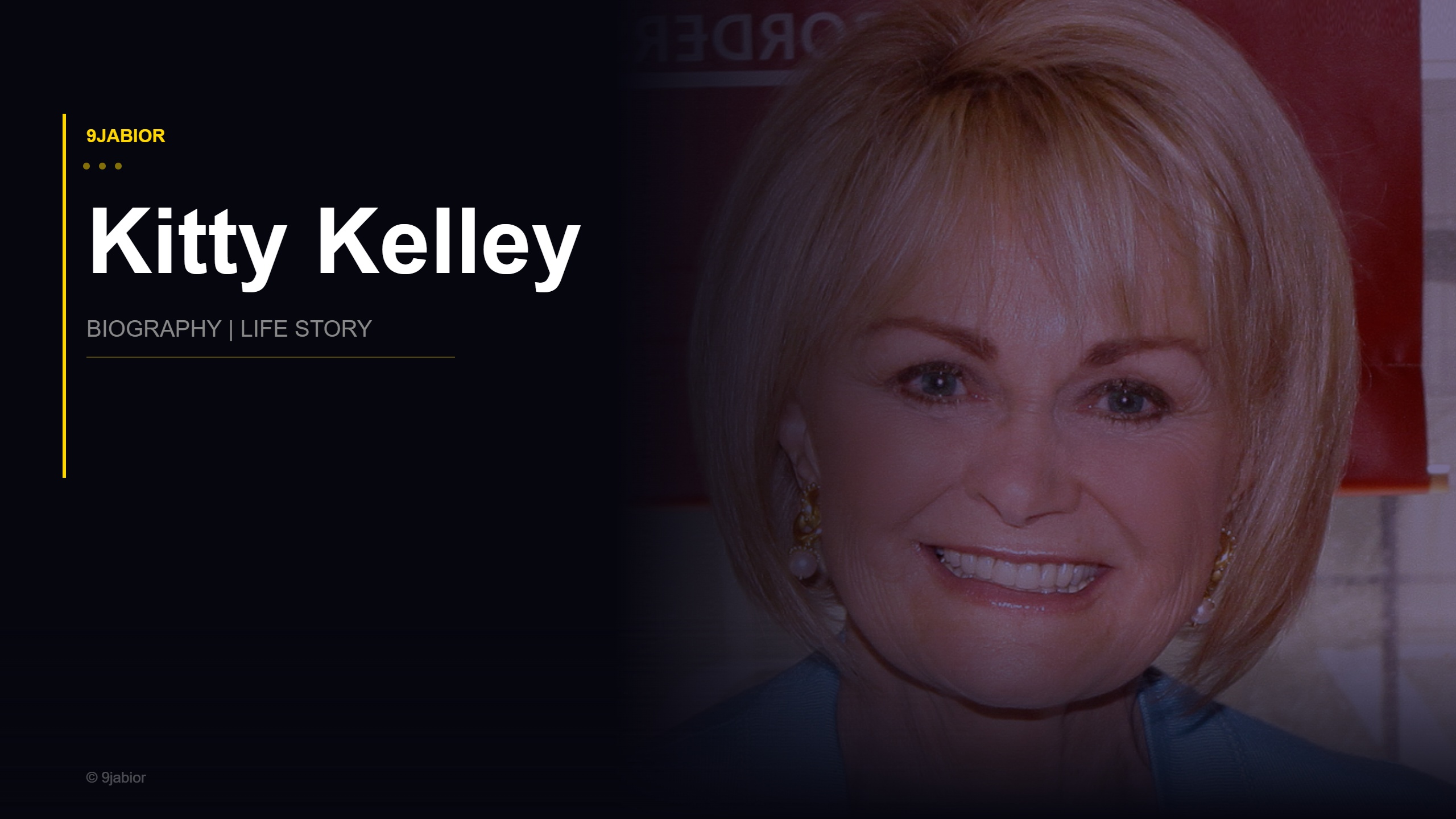
There’s something almost poetic about a woman who spent her career exposing the secrets of the rich and powerful — and became just as famous as her subjects in the process. Kitty Kelley didn’t just write celebrity biographies. She reinvented what a celebrity biography could be. Bold, deeply researched, and almost always controversial, her books made presidents squirm, rock legends file lawsuits, and millions of readers race to the bookstore.
Born Katherine Kelley on April 4, 1942, she grew up far from the glittering world of Hollywood and Washington — in Spokane, Washington, in a household shaped by both privilege and pain. She went on to become one of the most talked-about writers in American history, with five New York Times number one bestsellers to her name and not a single lost lawsuit after decades of writing the kinds of things powerful people desperately didn’t want printed.
This is the full Kitty Kelley biography — from her complicated childhood to her towering literary legacy.
Who Is Kitty Kelley?
A Quick Overview of America’s Most Feared Biographer
Kitty Kelley is an American journalist, investigative biographer, and author. She’s best known for writing unauthorized biographies — books written without the cooperation or approval of the subject. Her targets? Some of the most recognizable names of the 20th century: Jacqueline Kennedy Onassis, Frank Sinatra, Elizabeth Taylor, Nancy Reagan, the British Royal Family, the Bush dynasty, and Oprah Winfrey.
Critics have called her a “poison pen” writer and “the consummate gossip monger.” But here’s the thing — she’s never been successfully sued. Not once. And many of her most explosive claims have later been confirmed as true.
Kelley didn’t see herself as a tabloid writer. She saw herself as a First Amendment journalist doing the kind of investigative work that mainstream media was too cautious — or too cozy with power — to do.
Early Life and Childhood in Spokane, Washington
Family Background and a Difficult Home
Kitty Kelley was the eldest of seven children. Her father, William Vincent Kelley, was a respected lawyer who served as president of the Spokane Bar Association. On paper, the Kelleys looked like a solid, upstanding family — lawyers, lakeside cottages, European vacations.
Reality was more complicated. Kitty’s mother, Adele Kelley, struggled with alcoholism. It wasn’t just a private battle. According to accounts from Kelley herself, her mother’s drinking was public and disruptive. As the oldest child, Kitty stepped into a caretaking role early, looking after five sisters — Mary Cary, Ellen, Margaret, Adele Monica, and Madeleine Sophie — and a brother named John.
That early experience of managing chaos, holding a family together, and reading the gap between a family’s public image and private reality? Some biographers would say that shaped everything that came after.
School Years and Early Signs of Grit
Kelley attended St. Augustine’s Elementary School before moving on to Holy Names Academy, a private Catholic prep school in Spokane. She was clearly intelligent, driven, and socially aware. But her path wasn’t exactly a straight line.
Education and the Bumpy Road to Washington, D.C.
University of Arizona, the University of Washington, and a Fresh Start
Kelley enrolled at the University of Arizona, but her time there ended abruptly. According to George Carpozi Jr.’s biography Poison Pen, she was expelled in 1962 under circumstances involving accusations of theft. Her parents refused to take her in afterward, and she was sent to live with her maternal grandparents in Seattle. She suffered a breakdown during this period, spending time in a wheelchair.
It’s a difficult chapter she’s rarely discussed publicly. But it didn’t stop her. She resurfaced at the University of Washington, where she earned a Bachelor of Arts degree in English. That degree, and the resilience she’d built getting it, would become the foundation of everything.
From World’s Fair Hostess to Senate Press Secretary
After graduation, Kelley worked as a VIP hostess at the 1964 New York World’s Fair. From there, she made her way to Washington, D.C., landing a job as a receptionist-press secretary for Senator Eugene McCarthy — the progressive senator who nearly derailed Lyndon Johnson’s 1968 presidential campaign.
Kelley spent four years in McCarthy’s orbit. It was a front-row seat to American political life at one of the most turbulent moments in modern history — the Vietnam War, the assassinations of Martin Luther King Jr. and Robert F. Kennedy, the riots at the 1968 Democratic National Convention. If she wasn’t already suspicious of how powerful people managed their public image, she certainly became so during those years.
The Career That Changed Celebrity Biography Forever
Her Time at The Washington Post
After leaving McCarthy’s office, Kelley joined The Washington Post as an editorial page researcher. She sat in on editorial conferences, helped writers shape their arguments, and worked just down the hall from legendary editor Ben Bradlee.
It was exactly the kind of environment that sharpened a young writer’s instincts — for storytelling, for knowing what readers wanted, and for understanding the difference between what official Washington said and what it actually did.
Going Freelance and Finding Her Voice
Kelley left the Post to build a freelance career, contributing articles to The New York Times, The Wall Street Journal, Newsweek, People, Ladies’ Home Journal, McCall’s, the Los Angeles Times, and the Chicago Tribune. That’s a remarkable spread of publications — and a testament to how quickly she established herself as a skilled, versatile journalist.
In 1976, she married Michael Edgley, a media director for the National Council on Aging. He’d eventually leave his job to help her with her books, throwing himself into her research with admirable — and occasionally eyebrow-raising — dedication. More on that later.
The Books That Made Kitty Kelley a Household Name
Jackie Oh! (1978) — Where It All Began
Kelley’s first major biography came at the request of publisher Lyle Stuart. Jackie Oh! was a deep dive into the life of Jacqueline Kennedy Onassis, and it didn’t hold back. The book discussed JFK’s womanizing, Onassis’s personal struggles, and made several claims that drew immediate controversy — including allegations about psychiatric treatment.
Despite the backlash, the book landed on the New York Times Best Seller list. Readers couldn’t put it down, even as journalists debated whether Kelley had played fast and loose with certain facts. It set the template for everything that followed: exhaustive research, explosive claims, massive sales, and fierce denials from the subject’s camp.
Elizabeth Taylor: The Last Star (1981)
Taylor herself made clear she wasn’t cooperating. When Kelley reached out, the actress reportedly responded with sharp disapproval. That didn’t stop Kelley from producing a detailed portrait of one of Hollywood’s most complicated stars — multiple marriages, a lavish lifestyle, and a career that somehow survived all of it.
Taylor later called Kelley a “fantasist.” The book still sold.
His Way: The Unauthorized Biography of Frank Sinatra (1986)
This is widely considered the crown jewel of Kelley’s career. His Way dug into Sinatra’s marriages, his countless affairs, and his rumored connections to organized crime. Kelley spent three years on it — interviewing more than 800 people, digging through government wiretap records, and sifting through Mafia-related documents.
Before she’d written a single word, Sinatra sued her for $2 million, claiming she’d falsely told sources that he’d authorized her to write the book. The lawsuit dragged on and cost Kelley $100,000 in legal fees before Sinatra unceremoniously dropped it.
The book debuted at number one on the New York Times Best Seller list and went on to top charts in England, Canada, Australia, and France. It’s been called the biggest-selling biography in publishing history at the time of its release. William Safire of The New York Times called it “the most eye-opening celebrity biography of our time.”
Nancy Reagan: The Unauthorized Biography (1991)
Kelley was paid $3.5 million to write this one — a figure that tells you how much publishers believed in its commercial potential. The book did not disappoint in terms of controversy. It claimed Nancy Reagan had an affair with Frank Sinatra, relied heavily on astrology to guide White House decisions, lied about her age, and had a troubled, sometimes violent relationship with her children.
On publication day, President Ronald Reagan and Nancy herself stood outside their church to denounce the book and its author. Nixon sent Reagan a letter of support. The book was featured on the covers of Time, Newsweek, and Entertainment Weekly simultaneously. It became the centerpiece of a national conversation about the press, privacy, and power.
And many of its claims were later confirmed. Nancy Reagan’s reliance on astrologers, for instance, was eventually corroborated by Reagan’s own chief of staff, Don Regan, in his memoir.
The Royals (1997) — The Book Britain Banned
The Royals tackled the British royal family with the same fearless approach Kelley had applied to American icons. The book was so explosive — alleging affairs, questioning parentage, and exposing decades of palace secrets — that it was never published in the United Kingdom. British libel laws, which place the burden of proof on the writer rather than the accuser, made it too risky to release there.
In America, it was a bestseller. The timing wasn’t bad either. The book came out during the same period as the ongoing drama surrounding Princess Diana — a public fascination with royal dysfunction that Kelley had anticipated years before it became a cultural obsession.
The Family: The Real Story of the Bush Dynasty (2004)
Published shortly after George W. Bush’s re-election, The Family examined the Bush political dynasty over multiple generations. Kelley announced the book in 2000 and spent four years researching it.
George H.W. Bush called her a “liar” when the book was released. When she produced his own writing as evidence for one of her claims, his response was succinct: “She’s still a liar.” The book debuted at number one regardless.
Oprah: A Biography (2010)
The New Yorker called it “one of those King Kong vs. Godzilla events in celebrity culture” before it was even published. And for a while, it looked like that battle would go Oprah’s way.
Kelley had difficulty booking her promotional tour. Larry King refused to have her on his CNN show. Oprah’s fanbase was enormous, organized, and protective. Even the moderator on Oprah’s message board called the book an “unauthorized biography” in a tone that functioned like a warning label.
The book alleged an early affair between Winfrey and John Tesh of Entertainment Tonight fame, among other claims. It sold around 300,000 copies — less than Kelley’s previous blockbusters, though still a significant commercial showing.
Oprah dismissed it. Kelley stood by her reporting.
Later Works: Camelot, Civil Rights, and Children’s Books
After Oprah, Kelley pivoted to photography books. Capturing Camelot: Stanley Tretick’s Iconic Images of the Kennedys (2012) and Let Freedom Ring: Stanley Tretick’s Iconic Images of the March on Washington (2013) celebrated the work of her late friend, photojournalist Stanley Tretick.
In 2017, she published Martin’s Dream Day, a children’s book using Tretick’s photographs from the 1963 March on Washington. In 2019, she contributed a piece to The New Yorker titled “A Reparations Movement Begat at Georgetown.”
She’s shown remarkable range beyond the scandal-driven biographies that made her famous.
Kitty Kelley’s Research Method — How She Actually Did It
Hundreds of Interviews, Court Records, and Trash Cans
Part of what makes Kelley’s work so hard to dismiss — even for her harshest critics — is the sheer volume and variety of her research. For the Nancy Reagan book, she conducted more than 1,000 interviews over four years. For the Sinatra biography, she reviewed government documents, Mafia-related files, and wiretap transcripts, while interviewing over 800 people.
Her first husband, Michael Edgley, got so invested in the research that he quit his job to help her. During the Elizabeth Taylor book, he reportedly went through the garbage outside Taylor’s home — hunting for details that might not appear in any press clipping.
That’s the level of commitment involved. These weren’t books cobbled together from old magazine profiles. They were exhaustive investigations, conducted with the rigor of a serious journalist.
For each book, Kelley also obtained court records, birth certificates, financial records, tax documents, and what she describes as copies of Oprah’s legendary confidentiality agreements. She was building cases, not telling stories.
Why She Only Wrote About Living People
Here’s a detail that surprises a lot of readers: Kitty Kelley made a deliberate choice to write exclusively about people who were still alive.
Her reasoning was principled, not sensational. She believed the unauthorized biography was most valuable — and most justified — when the subject still had the power to dispute, correct, or respond. The living powerful have lawyers and press offices and the ability to fight back. They’re not helpless.
Her philosophy, stated clearly in The American Scholar: she did not want to live in a world where information about influential people is “authorized, sanitized, and homogenized.” To her, the unauthorized biography was a democratic act — a way of ensuring that public figures who shaped people’s lives couldn’t fully control the narrative of those lives.
Lawsuits, Controversies, and a Perfect Legal Record
Frank Sinatra’s $2 Million Threat
Before His Way was even published, Sinatra’s lawyers came after Kelley. The lawsuit alleged she’d misrepresented herself to sources, claiming Sinatra had authorized her to write the biography. She denied it. The lawsuit ground on for years, costing her significant money, stress, and time.
Sinatra dropped it before trial. The book was published. It sold a million copies in hardback.
Reagan’s Denial and the Nixon Letter
When Nancy Reagan: The Unauthorized Biography landed, the reaction from the Reagan camp was swift and fierce. The former president addressed it publicly. Nixon wrote a letter of support. The White House machine did everything it could to discredit both the book and its author.
And yet — many of the book’s central claims were eventually confirmed. Nancy Reagan’s reliance on astrologers, initially laughed off as a Kelley fabrication, was later confirmed in the memoirs of senior White House staff.
Why She’s Never Lost a Single Case
This is one of the most remarkable facts in Kitty Kelley’s story. Despite writing about some of the most litigious people in America — celebrities, presidents, royalty — she’s never lost a lawsuit. She’s never been forced to retract a single published statement.
Critics can argue about her methods. They can question her tone or her sourcing. But the legal record speaks for itself. She’s undefeated.
The Biographer Who Became Famous Herself
Spoofed on Saturday Night Live
You know you’ve hit a certain level of cultural saturation when Saturday Night Live does a sketch about you. That’s exactly what happened to Kitty Kelley. The show that made careers — and occasionally ended them — turned its comedic lens on the “poison pen biographer,” a signal that Kelley had become not just a writer but a character in the American cultural story.
It’s a rare distinction. Most biographers are invisible. Kelley became as notorious as the people she wrote about.
The Book Written About Her — George Carpozi’s Poison Pen
The ultimate irony: the woman who made a career investigating others became the subject of an investigation herself. George Carpozi Jr. wrote Poison Pen: The Unauthorized Biography of Kitty Kelley in 1991, attempting to expose alleged inaccuracies and fabrications in her work.
The book made waves — but it didn’t dent Kelley’s reputation or her sales. She kept writing. The lawsuits kept not sticking.
Kitty Kelley’s Personal Life
First Marriage to Michael Edgley
In 1976, Kelley married Michael Edgley, then media director for the National Council on Aging. Their partnership extended well beyond their home life into her professional one. Edgley became deeply involved in helping Kelley research her books, at times taking extraordinary steps to gather information — including, reportedly, digging through the trash of Elizabeth Taylor and her then-husband, Senator John Warner.
The couple divorced in 1989, around the time Kelley was deep in research for the Nancy Reagan biography.
John Zucker — The Love of Her Life
In 1992, Kelley married John Zucker, a well-known Washington allergist who gave daily pollen reports on local TV and radio. By all accounts, it was a deeply happy marriage — a counterpoint to the combative professional world Kelley inhabited.
Friends described Zucker as smart, funny, charming, and devoted to Kitty. He was, in the words of those close to them, “the great love of her life.”
Life After Loss
In 2011, while the couple was vacationing in the California desert, Zucker died suddenly of a heart attack at the pool. The loss devastated Kelley. By her own account, she couldn’t account for the couple of years that followed — grief, she said, knocked her completely off her feet.
It also goes a long way toward explaining why she hasn’t published a major biography since Oprah in 2010. It wasn’t the backlash. It wasn’t Oprah’s fanbase. It was personal loss on a profound scale.
She’s remained in Georgetown, Washington, D.C., active in the literary community and contributing book reviews to various outlets, including The Washington Independent Review of Books.
Awards, Legacy, and the Dissertation Fellowship
Major Honors and Recognition
Despite the controversies — or perhaps because of them — Kelley has accumulated an impressive list of professional honors.
Her most significant awards include the 2005 PEN Oakland/Gary Webb Anti-Censorship Award, the Outstanding Author Award from the American Society of Journalists and Authors for “courageous writing on popular culture,” the Philip M. Stern Award for outstanding service to the writing profession, the Medal of Merit from the Lotos Club of New York City, the 2014 Founders’ Award for Career Achievement from the American Society of Journalists and Authors, a 2016 Lifetime Achievement Award from The Washington Independent Review of Books, and the 2023 BIO Award from Biographers International Organization — the most prestigious honor in the field, awarded to writers who have made “major contributions to the advancement of the art and craft of biography.”
Vanity Fair also inducted her into its Hall of Fame as part of its “Media Decade” recognition. In 1993, Brandeis University’s National Women’s Committee established a major book collection at the university in her honor.
The $25,000 Kitty Kelley Dissertation Fellowship
One of the less-discussed but genuinely meaningful parts of Kelley’s legacy is her Kitty Kelley Dissertation Fellowship in Biography. The fellowship provides $25,000 annually to a doctoral student writing a dissertation in English focused on biography.
It’s a direct investment in the future of the genre she dedicated her life to — and a sign that she’s thinking about what comes after her, not just what she’s already accomplished.
What She Did at Oxford and Harvard
In 1993, Kelley was invited to debate at Oxford University on the premise “This House Believes That Men Are Still More Equal Than Women.” She led her team to a decisive victory with a margin of 143 to 78 — a result that surprised some who underestimated the Spokane-born freelancer with no postgraduate degree.
In 1998, she spoke at Harvard University’s Kennedy School of Government on the topic “Public Figures: Are Their Private Lives Fair Game for the Press?” — positioning herself not as a tabloid curiosity but as a legitimate voice in debates about journalism, privacy, and accountability.
Kitty Kelley’s Net Worth and Life Today
Kitty Kelley’s net worth is estimated at around $10 million, built almost entirely through her books — many of which commanded advances in the millions. The Nancy Reagan biography alone brought in a $3.5 million advance, which was extraordinary even by today’s standards.
She lives in Georgetown, Washington, D.C., in the same neighborhood where she’s lived for decades. At 83, she remains active in literary circles, writes book reviews, and participates in events tied to biography and press freedom.
Her red 1987 Mercedes-Benz 560 SL convertible, bearing the personalized license plate “MEOW” — a gift from her late husband John Zucker, who wanted “KITTY K” but was warned by DMV officials it might put her in danger — remains one of the more charming footnotes in her story.
What’s Kitty Kelley Working On Next?
The most tantalizing rumor circulating in the literary world as recently as 2022 was that Kelley had been quietly gathering material for a biography of Amazon founder Jeff Bezos. No official announcement has followed, and Kelley has been characteristically coy about her plans.
What’s clear is that she hasn’t said she’s done. She hasn’t found a subject worthy of the effort — or at least, hasn’t committed to one publicly. Given her track record, if she does publish another biography, it’ll land like a bomb.
Bezos, if you’re reading this: you’ve been warned.
Frequently Asked Questions About Kitty Kelley
What is Kitty Kelley best known for? Kitty Kelley is best known for writing unauthorized biographies of major public figures, including Frank Sinatra, Nancy Reagan, the British Royal Family, and Oprah Winfrey. Her books are famous for being deeply researched, highly controversial, and commercially successful — five of her seven biographies reached number one on the New York Times Best Seller list.
How old is Kitty Kelley? Kitty Kelley was born on April 4, 1942. As of 2026, she is 83 years old.
Has Kitty Kelley ever lost a lawsuit? No. Despite writing about some of the most powerful and litigious people in America — including Frank Sinatra, who filed a $2 million lawsuit before His Way was even published — Kelley has never lost a libel case. She has never been forced to retract a published statement.
Did Frank Sinatra really sue Kitty Kelley? Yes. Before His Way: The Unauthorized Biography of Frank Sinatra was published in 1986, Sinatra filed a lawsuit claiming she had misrepresented herself to sources. The lawsuit cost Kelley $100,000 in legal fees before Sinatra dropped it. The book went on to become a number one bestseller.
Is Kitty Kelley still writing? She has not published a major biography since Oprah: A Biography in 2010. The death of her husband John Zucker in 2011 had a significant personal impact on her output. She has continued writing book reviews and essays, and rumors have circulated that she was researching a biography of Jeff Bezos.
What is the Kitty Kelley Dissertation Fellowship? It’s a $25,000 annual fellowship established by Kelley and awarded to a doctoral student writing an English-language dissertation focused on biography. It’s part of her broader commitment to advancing the art and craft of biography as a serious genre.
Why couldn’t The Royals be published in Britain? British libel laws place the burden of proof on the author and publisher rather than the person making the accusation. Because The Royals (1997) contained such explosive claims about the Windsor family, British publishers deemed the legal risk too high. The book was published in America and became a bestseller there.
What did Oprah say about Kitty Kelley’s biography? Oprah Winfrey dismissed Kelley’s 2010 biography as a “so-called biography.” Her team discouraged fans from reading it, and major media figures like Larry King declined to interview Kelley out of deference to Winfrey. The book still sold hundreds of thousands of copies, though it fell short of Kelley’s previous commercial peaks.

 Ghost Blogger