 Ghost Blogger
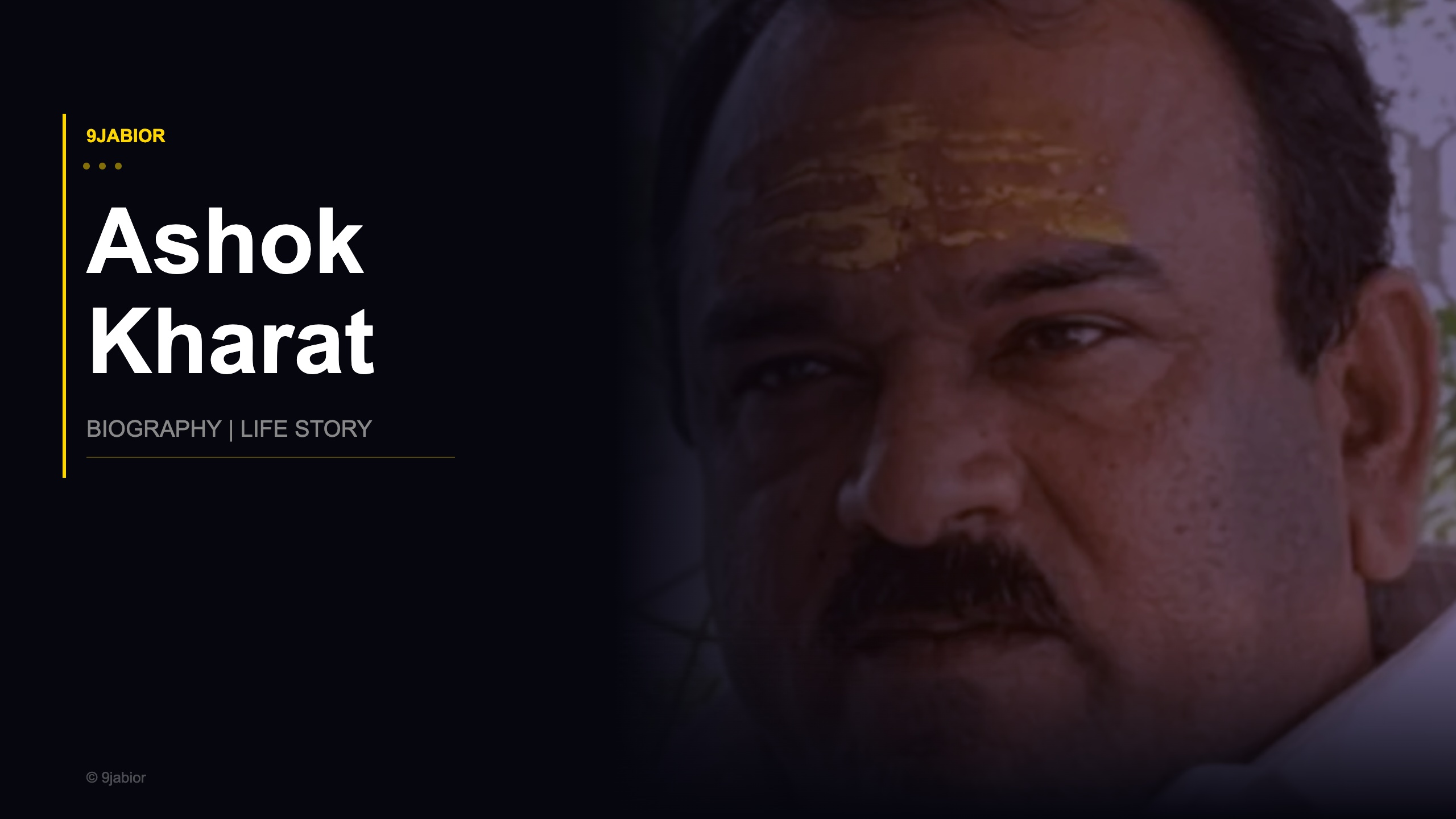
Ashok Kharat Biography-He called himself “Captain.” He’d visited 154 countries, sailed for 22 years, and earned a gold medal out of 277 cadets. When he came home to Maharashtra, he built a temple in the hills, founded a charitable trust, and started telling the powerful what the stars held for them. Ministers came. A chief minister came. The chairperson of the state women’s commission reportedly came — and washed his feet.
Then, on March 18, 2026, police arrested Ashok Kharat at his office in Nashik.
That’s the story of the Ashok Kharat biography in its most compressed form — a sailor who reinvented himself as a godman, built a crore-rupee empire on the back of faith and fear, and is now at the center of one of Maharashtra’s most shocking criminal cases of the decade.
This article covers everything: where he came from, how he built his influence, what the allegations against him actually say, who protected him, and what the ongoing SIT investigation is uncovering.
Ashok Kharat is a 67-year-old former Merchant Navy officer turned self-styled astrologer, numerologist, and spiritual advisor from Nashik, Maharashtra. Widely known as “Captain Kharat,” he spent over two decades at sea before pivoting to a second career as a godman — one that would eventually earn him elite clients, political connections, and an estimated net worth of over ₹100 crore.
He’s been described as a cosmologist, a numerologist, and a healer. He founded the Shri Shivnika Sansthan Trust, which manages the Ishanyeshwar Mahadev Temple in Mirgaon near Sinnar. He reportedly charged up to ₹50 lakh per consultation. He had photographs with some of the most powerful politicians in Maharashtra.
And on March 18, 2026, police arrested him after a 35-year-old woman filed a complaint at Sarkarwada Police Station in Nashik — alleging rape, exploitation, blackmail, and years of abuse carried out under the cover of spiritual rituals.
Two People Named Ashok Kharat: Clearing Up the Confusion
Before going further, it’s worth addressing something that confuses a lot of readers searching for this name online.
There are two separate individuals named Ashok Kharat.
One is a Marathi actor with a career in regional films and television. He has nothing to do with this case, this controversy, or any criminal allegations. If you’re looking for information about the actor, this isn’t the right article.
The Ashok Kharat discussed here is the former Merchant Navy officer and Nashik-based astrologer who was arrested in March 2026. All the controversy, the political connections, the SIT probe — that’s entirely about this person. The two men simply share a name.
Ashok Kharat Early Life: A Village Boy from Kahandalwadi
Growing Up in Sinnar, Nashik District
Ashok Kharat was born in Kahandalwadi, a small village in the Sinnar tehsil of Nashik district in Maharashtra. It’s a modest, rural part of the state — not the kind of place that typically produces people who end up photographed alongside chief ministers.
His birth year places him in the late 1950s, making him approximately 67 years old as of 2026. Details about his parents and siblings aren’t widely documented, and Kharat himself kept his family background relatively private throughout his public life. What’s clear, though, is that he didn’t come from wealth or political influence. Whatever he built, he built from scratch.
What Shaped His Early Ambitions
From a young age, Kharat showed an interest in education and travel. That combination, unusual for a boy from rural Maharashtra at the time, eventually steered him toward one of the most structured and disciplined careers available — the Merchant Navy. The sea would shape him in ways that would prove crucial to everything that came afterward.
Ashok Kharat Education and Merchant Navy Training
The Gold Medal Achievement Among 277 Cadets
This detail doesn’t get nearly enough attention in most articles about him, but it says a lot.
When Ashok Kharat completed his Merchant Navy training, he didn’t just pass. He topped his cohort. Out of 277 cadets, he took home the gold medal — a remarkable achievement that signals not just technical competence but the kind of performance-under-pressure that would later become central to his personality and public image.
The Merchant Navy requires rigorous preparation. It’s not simply learning to sail. It involves navigation science, marine law, emergency protocols, and the kind of technical certification that takes real commitment to earn. Kharat had all of it.
22 Years at Sea and 154 Countries: What the Navy Gave Him
By his own accounts, Kharat spent 22 years in the Merchant Navy and visited 154 countries. Even accounting for some exaggeration typical of self-promoting personalities, the core of it is credible. Merchant Navy officers do travel extensively, and a long career would place a person across dozens of ports on multiple continents.
What did those years actually give him? Fluency in English, Hindi, and Marathi — useful for communicating with clients from different backgrounds. An internationally shaped worldview that would set him apart from local astrologers. And most importantly, the authoritative, commanding persona that would later become his most powerful tool.
He came home to Maharashtra in the late 1990s. And everything changed.
From Sailor to Spiritual Advisor: How the Career Shift Happened
Why He Left the Merchant Navy
The exact reasons Kharat left maritime service aren’t publicly documented. What’s known is that after approximately 22 years, he returned to his home region in Nashik and began building a completely different kind of life. It’s not an uncommon arc — many retired sailors and military officers seek second careers that let them leverage the authority and gravitas they’ve built. Kharat just chose an unusually lucrative and controversial direction.
Building a Second Career in Astrology and Numerology
He didn’t jump straight into being a godman. He started by positioning himself as a cosmologist and numerologist — slightly more respectable-sounding titles that carry an air of technical knowledge without the baggage of the word “astrologer.” He offered consultations on marriage decisions, business investments, health problems, and family disputes. He combined traditional Vedic astrology with numerology and what he called cosmological analysis.
His navy background gave him instant credibility. “Captain Kharat” sounded serious. It sounded like someone who’d seen the world, who had knowledge beyond what a village pandit would offer. Clients started coming.
Establishing the Shri Shivnika Sansthan Trust and Ishanyeshwar Mahadev Temple
Kharat didn’t just run an astrology practice out of an office. He built infrastructure.
He founded the Shri Shivnika Sansthan Trust, a religious and charitable organization that he used as the institutional backbone of his spiritual empire. The trust manages the Ishanyeshwar Mahadev Temple, built in Mirgaon in the Sinnar hills — roughly the area where Kharat grew up. A godman with a temple carries far more weight than one who simply reads charts. The temple gave him physical presence, religious legitimacy, and a venue for the kind of grand rituals that impressed high-profile clients.
His main consultation office was located at Canada Corner in Nashik, a relatively central and upmarket area of the city. He ran the astrology business out of there while the trust and temple served as the ceremonial center of his public identity.
How Captain Kharat Built His Empire in Nashik
The ₹50 Lakh Per Visit Business Model
This is where things get genuinely staggering.
Reports from the March 2026 investigations suggest Kharat charged clients up to ₹50 lakh — that’s five million rupees — for a single home or office visit. For consultations at his own premises, the fees were still enormous. He also sold what he described as “energized” items: gemstones, blessed seeds, and ritual objects priced at significant premiums.
For clients seeking his services for election-related rituals — politicians wanting astrological advantage over rivals during campaigns — the prices reportedly climbed even higher. At that level of billing, even a modest client roster of influential people generates extraordinary wealth quickly.
Using Vashikaran, Rituals, and Symbolism to Attract Clients
A word that keeps appearing in accounts of Kharat’s practice is Vashikaran. It’s a Sanskrit term for a set of practices drawn from tantra that claim to control or influence the will of another person. In mainstream Hindu spiritual practice, it’s considered fringe. In the world of self-styled godmen catering to desperate or ambitious clients, it’s a selling point.
Kharat reportedly used Vashikaran as part of his pitch — positioning himself as someone who could not just predict the future but actively shape it by influencing the people around his clients. He allegedly combined this with dramatic ritual performances designed to visually impress visitors and reinforce the sense that something supernatural was happening.
This combination of psychological manipulation, symbolic ceremony, and authoritative personality created a very effective trap for vulnerable people.
The Elite Client Base: Politicians, Businessmen, and Public Officials
You don’t charge ₹50 lakh per visit to ordinary people. Kharat’s clientele was carefully cultivated from Maharashtra’s upper tier — real estate developers, businessmen, and most critically, politicians.
The political connections weren’t accidental. Kharat actively positioned himself as someone who could help candidates win elections through astrological intervention. During election seasons, his schedule reportedly filled with sitting MLAs, aspiring candidates, and their fixers. That access gave him leverage, protection, and ever-growing social capital.
Ashok Kharat’s Political Connections and Why They Mattered
When a Chief Minister Came to Visit
In November 2022 — a politically turbulent period in Maharashtra following the split in the Shiv Sena — then Chief Minister Eknath Shinde visited the Ishanyeshwar Mahadev Temple in Mirgaon. He came with his wife, then Revenue Minister Radhakrishna Vikhe Patil, and then Primary Education Minister Deepak Kesarkar. A photo from that visit circulated widely.
Kesarkar later explained it as a temple visit tied to a cowshed construction project. But the optics were clear: the most powerful man in Maharashtra’s government had made a pilgrimage to Kharat’s temple.
The Women’s Commission Chairperson and the Feet-Washing Video
Perhaps the most politically explosive image to emerge after the arrest was a video showing Rupali Chakankar — the Chairperson of the Maharashtra State Women’s Commission — washing Ashok Kharat’s feet at a ceremony. Another image showed her holding an umbrella over him.
The irony was devastating. The government body most responsible for protecting women from exploitation had a leader publicly performing acts of reverence toward a man now accused of serially assaulting women.
Anti-corruption activist Anjali Damania quickly shared the footage on social media with a pointed question: how long had people in official positions known this man, and what exactly was their association with him? Chakankar moved to distance herself, explaining that the trust hosted social programs she’d attended in a general capacity. The political damage, however, was done.
Why Powerful Connections Shielded Him for So Long
When you have photographs with union ministers. When a chief minister visits your temple. When government officials sit on your trust’s membership roster. You don’t get easily investigated. The connection between Kharat’s elite network and his ability to operate for years without serious scrutiny isn’t speculative — it’s the central question the SIT investigation is now trying to answer.
Shiv Sena (UBT) leader Sanjay Raut publicly described the case as “The Epstein File of Maharashtra,” implying that Kharat’s network extended beyond a single accused individual and into a broader ecosystem of protection and complicity.
Ashok Kharat Personal Life: Wife Kalpana and Family
Kharat has kept his personal life intensely private. He is married to Kalpana Kharat, though details of their marriage and family structure aren’t widely documented beyond her name.
After the arrest, Kalpana publicly defended her husband. In a statement, she described his astrology practice as nothing more than a hobby — something he pursued out of personal interest rather than for financial gain. She also claimed that rivals were orchestrating a conspiracy to destroy his reputation.
Authorities questioned family members as part of the investigation. The family’s official position has remained one of denial and conspiracy framing, consistent with the responses often seen in high-profile criminal cases involving public figures.
Ashok Kharat Net Worth and Known Assets
Kharat’s exact net worth has not been officially disclosed, and no verified financial audit has been made public. However, what has emerged through investigation reports paints a picture of substantial accumulated wealth.
Police believe his net worth exceeds ₹100 crore. His known assets reportedly include multiple acres of land in the Nashik region, luxury properties in both Nashik and Shirdi, and the temple complex itself. His primary income streams were consultation fees (reportedly up to ₹50 lakh per visit for house calls), ritual services, sale of energized items, and donations to the Shri Shivnika Sansthan Trust.
The SIT is also investigating whether money from builders and politicians was funneled through the trust, potentially implicating a broader financial network beyond astrology income alone.
The Arrest: What Happened on March 18, 2026
The First FIR: A 35-Year-Old Woman’s Complaint
On March 17, 2026, a 35-year-old woman walked into Sarkarwada Police Station in Nashik and filed a complaint against Ashok Kharat. The next morning, police arrested him.
The woman’s FIR alleged that Kharat had sexually assaulted her repeatedly between November 2022 and December 2025 — a span of over three years. She alleged that he’d first gained her trust through his spiritual consultations, positioning himself as someone with the power to solve her personal problems.
Intoxicants, Threats, and Ritual Exploitation — What the FIR Alleges
According to the FIR, the methods Kharat allegedly used were calculated and systematic. He reportedly summoned her to his office at Canada Corner and, on at least some occasions, gave her drinks that left her feeling disoriented and unable to resist. The assault allegedly occurred under the guise of rituals that she’d been told were essential for solving her problems.
He also allegedly threatened her. The complaint states he warned her that her husband’s life was in danger if she refused or resisted. That kind of threat — combining spiritual fear with physical threat against a loved one — is a textbook coercion strategy that targets people at their most vulnerable.
The 58 Videos Found on a Pen Drive
When investigators searched Kharat’s possession, they found a pen drive. On it: 58 videos featuring women. The nature and content of these videos has not been fully disclosed publicly as of the time of writing, but their recovery significantly strengthened the case against him and indicated that his alleged conduct wasn’t isolated or impulsive. It was documented.
The SIT Investigation: What’s Being Probed
IPS Officer Tejaswini Satpute Leading the Probe
Maharashtra Police didn’t handle this case through routine channels. A Special Investigation Team was formed on March 18, 2026 — the same day as the arrest — under the leadership of senior IPS officer Tejaswini Satpute. The choice of a woman officer to lead the probe was notable and widely remarked upon.
Multiple Victims, Multiple Cases
By March 22, 2026 — just four days after the arrest — two additional cases had been registered. One involved a pregnant woman whose husband had waited outside while she went in for a ritual consultation; she alleged assault spanning November 2023 to December 2025. A second woman alleged incidents going back to 2020. The SIT is actively investigating whether there are further unreported victims who haven’t yet come forward.
Financial Irregularities and Extortion Charges
The SIT’s mandate goes well beyond the sexual assault allegations. It’s also investigating financial crimes — specifically, the flow of illegal money from builders and politicians through Kharat’s network. There’s also an investigation into extortion through Vashikaran: whether Kharat used fear, psychological manipulation, and alleged mind-control practices to extract money from wealthy individuals beyond the standard consultation fees. The full scope of his alleged financial crimes may ultimately dwarf the initial assault case in complexity.
The Maharashtra Black Magic Act 2013 and This Case
Maharashtra is one of the few states in India with dedicated legislation targeting fraudulent spiritual practices. The Maharashtra Prevention and Eradication of Human Sacrifice and Other Inhuman, Evil and Aghori Practices and Black Magic Act, 2013 — commonly called the Black Magic Act — makes it illegal to claim supernatural powers for personal gain, exploit people through ritual fear, or administer substances under the guise of spiritual treatment.
Kharat’s alleged conduct sits squarely in the crosshairs of this law. The alleged use of intoxicants in rituals, the Vashikaran claims, and the exploitation of spiritually dependent clients are precisely the kind of practices the law was designed to prevent. Whether charges under the Black Magic Act are formally included in the final charge sheet remains to be seen, but legal experts have noted its clear applicability to the pattern described in the FIRs.
Public and Political Fallout
Maharashtra Pradesh Congress Committee president Harshwardhan Sakpal was among the first to turn the case into a direct political attack. He circulated images of Kharat alongside Amit Shah, Eknath Shinde, and Rupali Chakankar — addressed directly to Chief Minister Devendra Fadnavis — arguing that the ruling Mahayuti coalition had knowingly protected a criminal.
Even within the Mahayuti coalition, there was pressure. NCP (Ajit Pawar) leader Rupali Thomre Patil called for Chakankar to face consequences for what she termed deliberate neglect, arguing that her visible association with Kharat had given him a shield of credibility.
Anti-corruption activist Vijay Kumbhar framed the entire situation as the unraveling of an elite protection racket. Sanjay Raut’s “Epstein File of Maharashtra” comment was designed to land exactly that implication — that this wasn’t one rogue godman but a system that powerful people had knowingly maintained.
What This Case Teaches Us About Godmen and Blind Trust
India has an ancient tradition of spiritual guidance. That tradition, at its genuine best, offers community, meaning, and real psychological support to millions of people navigating difficult lives. None of that is the problem.
The problem is the architecture of exploitation that bad actors can build on top of spiritual authority — and how easily that architecture is protected when it has political support. Kharat’s case isn’t just about one arrested astrologer. It’s about what happens when the people responsible for oversight become part of the system being overseen.
The charges against him are allegations. The investigation is ongoing. He hasn’t been convicted. But the structural lesson — that spiritual vulnerability plus political patronage creates an environment where abuse can continue for years unchecked — is clear regardless of how the courts ultimately rule.
Frequently Asked Questions About Ashok Kharat
Who is Ashok Kharat? Ashok Kharat is a 67-year-old former Merchant Navy officer from Kahandalwadi village in Nashik district, Maharashtra. He later built a career as an astrologer, numerologist, and self-styled spiritual advisor, earning the nickname “Captain Kharat.” He was arrested in March 2026 on serious criminal allegations.
Why was Ashok Kharat arrested? He was arrested on March 18, 2026, following an FIR filed by a 35-year-old woman at Sarkarwada Police Station in Nashik. She alleged that he sexually assaulted her multiple times between 2022 and 2025 using intoxicants and spiritual coercion. Additional complaints followed, and a Special Investigation Team was formed.
Is Ashok Kharat a Marathi actor? No. There is a separate Marathi actor named Ashok Kharat with no connection to this case. The person discussed here is the Nashik-based astrologer and former Merchant Navy officer arrested in 2026.
What is the Shri Shivnika Sansthan Trust? It’s a religious and charitable trust founded by Ashok Kharat that manages the Ishanyeshwar Mahadev Temple in Mirgaon, Sinnar hills, Nashik. The trust gave Kharat institutional legitimacy and a high-profile venue that attracted politicians and public officials.
Who is leading the SIT investigation into Ashok Kharat? The Special Investigation Team is led by senior IPS officer Tejaswini Satpute. The probe covers sexual assault allegations, financial irregularities, and alleged extortion through spiritual manipulation.
What was found during the investigation? Police reportedly found a pen drive containing 58 videos featuring women in Kharat’s possession. The SIT is also investigating extensive financial networks connecting the accused to builders and politicians.
What is Vashikaran and how is it connected to this case? Vashikaran refers to practices drawn from tantric tradition that claim to influence or control another person’s will. Kharat allegedly offered Vashikaran services to clients seeking advantage over rivals, and the SIT is investigating whether it was used as a tool for extortion and exploitation.
What is Ashok Kharat’s net worth? His net worth hasn’t been officially verified, but police estimates place it above ₹100 crore. Known assets include land and luxury properties in Nashik and Shirdi, built through decades of high-fee consultations and trust donations.

 Ghost Blogger